The Dodge Viper was never meant to be polite. It was not designed to chase lap times through computer assistance or comfort buyers with luxury features.
Instead, it stood as a raw, mechanical statement. Big engine. Rear-wheel drive. Minimal interference. Maximum emotion.
From the moment it debuted in the early 1990s, the Dodge Viper carved out a reputation as one of the most extreme road-legal performance cars America has ever produced.
Even today, years after production ended, the Viper remains a symbol of unapologetic power and old-school driving purity.
This is the complete story of the Dodge Viper, why it mattered, how it evolved, and why it still commands respect among enthusiasts worldwide.
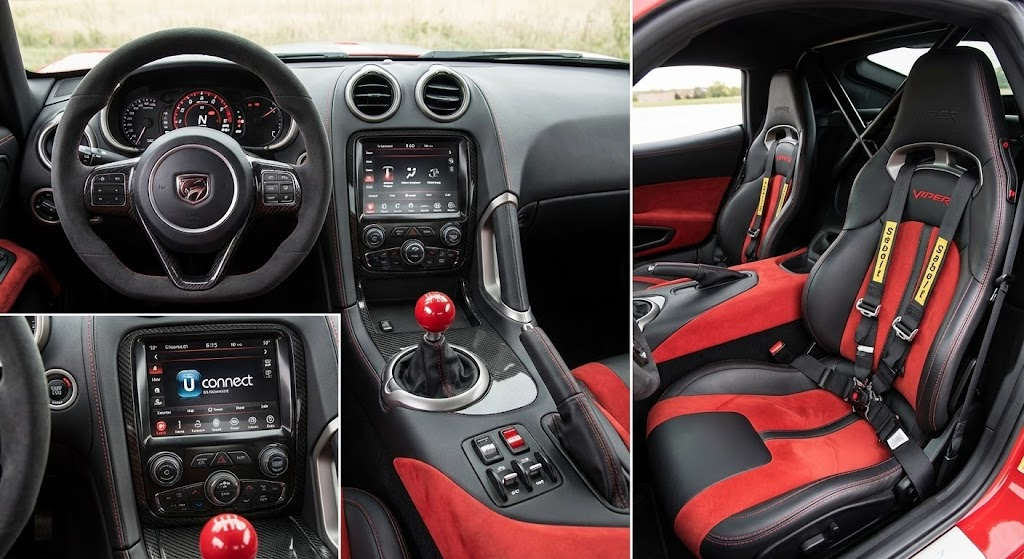
The Birth of the Dodge Viper
The Dodge Viper was born during a time when American performance cars were losing their edge. In the late 1980s, emission regulations and cost cutting had softened muscle cars.
Chrysler wanted something radical. Something that would remind the world what American engineering could do when unchained.
The idea was simple but daring.
Build a modern interpretation of the classic Shelby Cobra. Strip away unnecessary comforts. Focus purely on engine, chassis, and driver connection.
The result was the 1992 Dodge Viper RT/10, a roadster that shocked the automotive world.
- No roof.
- No external door handles.
- No traction control.
- No ABS.
- No excuses.
Dodge Viper Generations Explained
First Generation (1992–1995): Raw and Unfiltered
The original Viper RT/10 was borderline brutal. Under the hood sat an 8.0-liter naturally aspirated V10, developed with help from Lamborghini, which Chrysler owned at the time.
Power output hovered around 400 horsepower, but numbers alone did not tell the story. The torque delivery was instant and overwhelming.
Driving the early Viper demanded respect. There were no electronic safety nets. Driver mistakes were punished quickly. That danger became part of its legend.
Second Generation (1996–2002): Power Meets Structure
The second generation introduced the Viper GTS coupe, now one of the most recognizable American performance cars ever made.
Key improvements included:
- A stiffer chassis
- Better aerodynamics
- Increased power up to 450 horsepower
- Iconic double-bubble roof design
This generation also marked Dodge’s serious entry into motorsports, with the Viper GTS-R dominating endurance racing, including Le Mans class victories.
Third Generation (2003–2006): Bigger, Stronger, Louder
The third generation Viper moved to an 8.3-liter V10, producing 500 horsepower. It returned to a roadster-only layout initially, focusing on weight reduction and improved handling.
While still aggressive, this version began introducing modest refinements such as better braking systems and improved suspension geometry.
Still, the Viper remained a driver’s car first and last.
Fourth Generation (2008–2010): Peak Mechanical Power
Many enthusiasts consider this the golden era of the Viper.
The engine grew to 8.4 liters, pushing out 600 horsepower and massive torque. Despite increasing competition from European supercars, the Viper stayed true to its roots.
- Manual transmission only.
- Rear-wheel drive.
- Naturally aspirated V10.
The Viper ACR from this era became a track monster, setting lap records around the world.
Fifth Generation (2013–2017): Modernized but Still Wild
The final generation brought much-needed updates without diluting the core identity.
- Improved interior quality
- Advanced suspension systems
- Selectable drive modes
- Still no automatic transmission
Power climbed to 645 horsepower, making it one of the most powerful naturally aspirated production cars ever built.
The Viper bowed out in 2017, not because it lacked demand, but because tightening regulations made its existence increasingly difficult.
Dodge Viper Key Specifications
| Specification | Dodge Viper (Final Gen) |
|---|---|
| Engine | 8.4L Naturally Aspirated V10 |
| Power | 645 hp |
| Torque | 600 lb-ft approx |
| Transmission | 6-speed manual |
| Drivetrain | Rear-wheel drive |
| 0–60 mph | Around 3.4 seconds |
| Top Speed | Over 200 mph |
| Weight | Approx 3,400 lbs |
These numbers matter, but what made the Viper special was how it delivered them. No turbo lag. No electric assistance. Just displacement and throttle response.
Why the Dodge Viper Was So Different
No Compromises Philosophy
The Viper did not chase comfort. It chased feeling. Heat from the side-exit exhaust could be felt through the cabin. Steering feedback was heavy and communicative. Every drive felt intense, even at legal speeds.
Naturally Aspirated V10 Character
In a world shifting toward turbocharging and electrification, the Viper’s massive V10 stood as an engineering statement. Linear power delivery, thunderous sound, and mechanical honesty defined its character.
Manual Transmission Loyalty
While rivals adopted dual-clutch gearboxes, Dodge stuck with a manual transmission until the end. This decision limited sales but cemented the Viper’s enthusiast credibility.
Motorsport Legacy
The Dodge Viper was not just fast on paper. It proved itself on the track.
Viper race cars dominated:
- American Le Mans Series
- FIA GT Championship
- 24 Hours of Le Mans class wins
The Viper ACR models, especially, became benchmarks for track performance among road-legal cars.
Why Dodge Killed the Viper
The end of the Viper was not due to lack of passion.
The reasons were practical:
- Stricter safety regulations
- Low production volumes
- High manufacturing costs
- Limited mass-market appeal
Adding advanced safety systems would have compromised the car’s core identity. Dodge chose to end the story rather than dilute it.
Viper vs Modern Performance Cars
Compared to modern supercars, the Viper feels analog.
- No artificial sound.
- No aggressive electronic intervention.
- No luxury focus.
It competes on emotion, not algorithms.
That is precisely why collectors and purists still seek it out.
Ownership Experience Today
Owning a Dodge Viper today is both rewarding and demanding.
Pros
- Incredible driving engagement
- Strong collector value
- Timeless design
Cons
- High maintenance costs
- Limited practicality
- Requires skill and respect
This is not a casual weekend cruiser. It is a commitment.
Why the Dodge Viper Still Matters
The Viper represents an era that is rapidly disappearing.
- Large displacement engines.
- Manual transmissions.
- Driver-first design.
It stands as proof that cars can be emotional machines, not just transportation tools.
Summary
The Dodge Viper was never designed to be perfect. It was designed to be unforgettable. Across five generations, it delivered raw performance, mechanical honesty, and a driving experience that few cars can match.
In today’s world of electrification and digital driving aids, the Viper feels almost rebellious. That rebellion is exactly why its legacy continues to grow.
The Dodge Viper is not just an American supercar. It is a statement that sometimes, less technology and more engine is exactly what driving is all about.