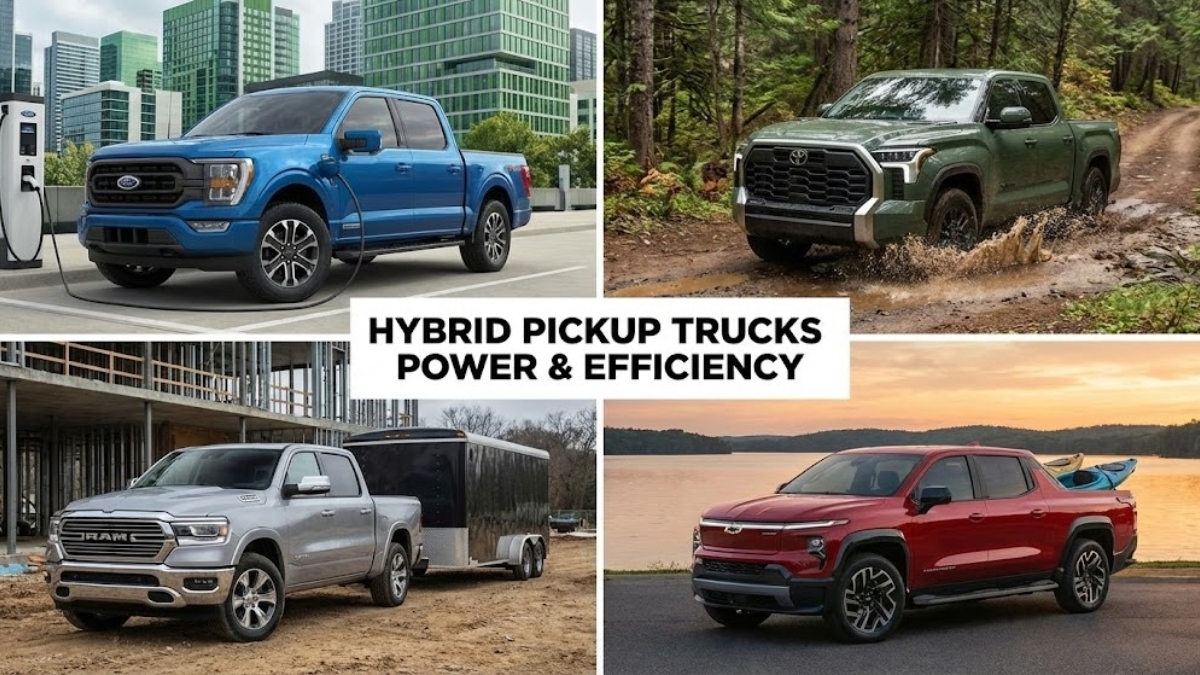
Pickup trucks are evolving fast. Once known primarily for raw strength and gasoline power, today’s pickups are stepping into a new era — that of hybrid powertrains.
These systems combine traditional internal combustion engines with electric motors to deliver improved fuel efficiency, strong low-end torque, refined driving, and everyday practicality without sacrificing capability.
If you love the strength of a pickup but want modern efficiency and lower running costs, hybrid pickups deserve serious consideration.
This guide explains what hybrid pickup trucks are, how they perform, which models dominate the market, and what you should know before buying.
Hybrid Pickup Trucks at a Glance
Here’s a comparison of the most popular hybrid pickup trucks available in 2026:
| Model | Hybrid Type | Est. Fuel / Energy Economy | Max Tow Capacity | Segment | Estimated Starting Price |
|---|---|---|---|---|---|
| Ford F-150 PowerBoost | Full hybrid (V6 + electric assist) | ~20–23 mpg combined | Up to ~12,000 lbs | Full-Size | ~$60,000+ |
| Toyota Tundra i-FORCE MAX | Full hybrid (V6 + electric assist) | ~20–24 mpg combined | ~9,000–12,000 lbs | Full-Size | ~$58,000+ |
| Ram 1500 eTorque | Mild hybrid | ~20–23 mpg | Up to ~11,000 lbs | Full-Size | ~$42,000+ |
| Ford Maverick Hybrid | Full hybrid (I-4 + electric assist) | ~37–40 mpg | ~2,000–4,000 lbs | Compact | ~$29,000+ |
Fuel economy figures are estimates and vary based on load, terrain, driving conditions, and testing standards.
This range shows that hybrid pickups now span from compact budget options to full-size work horses.
What Exactly Is a Hybrid Pickup?
A hybrid pickup truck combines a traditional gasoline (or diesel in some markets) engine with one or more electric motors and a battery pack. The powertrain intelligently alternates between or blends both power sources.
In simple terms:
- Electric motors help at low speeds, improving acceleration and efficiency.
- The engine kicks in for sustained power and high load demands.
- Regenerative braking recovers energy, reducing wasted fuel.
This mix results in better fuel economy without shedding the towing and hauling strengths pickup buyers depend on.
Real-World Performance
Let’s talk about how hybrid pickups perform day-to-day:
Fuel Efficiency You Notice
The biggest advantage is often seen in real-world mpg (miles per gallon). Trucks like the Ford Maverick hybrid can exceed 35 mpg, a figure unheard of in traditional pickups.
Improved Low-End Torque
Electric motors deliver instant torque — helpful when starting from a stop or tugging a loaded trailer. Many hybrid pickups feel punchier in city traffic and on hill starts.
Towing Confidence
Models like the Ford F-150 PowerBoost and Toyota Tundra i-FORCE MAX deliver towing capacities that rival or exceed their non-hybrid counterparts. This means you don’t give up capability when choosing efficiency.
Comfort and Refinement
Hybrids tend to idle more quietly and feel smoother — particularly in stop-and-go traffic — thanks to electric assistance.
However, economies can vary widely depending on how much highway driving, load, and trailer weight are involved. That’s why it’s important to consider your routine before jumping in.
Pros and Cons of Hybrid Pickups
Pros
- Fuel savings in urban and mixed driving.
- Instant torque for acceleration and towing.
- Reduced emissions compared to gasoline-only trucks.
- Modern driving experience with refined power delivery.
Cons
- Higher upfront cost vs basic gas-only models.
- Complex repairs may be pricier outside warranty.
- Battery degradation concerns — though most manufacturers offer strong hybrid warranties.
At the same time, many hybrid owners find fuel savings and smoother performance make the higher purchase price worthwhile over time.
Hybrid Pickups vs Traditional and Electric Trucks
It’s worth comparing hybrids with other options:
- Traditional trucks: Usually cheaper up front, but they lack the fuel efficiency and refined city driving character of hybrids.
- Electric pickups (EVs): Offer zero tailpipe emissions and strong acceleration, but they still face range limits, charging infrastructure issues, and higher prices.
Hybrids sit between these categories. They help reduce fuel costs without range anxiety and retain strong towing and hauling flexibility.
Pricing and Ownership Costs
Hybrid pickups typically command a premium over their non-hybrid siblings — but that gap can shrink quickly through fuel savings, especially for drivers who tow often or have long commutes.
Here’s a sense of pricing in 2026:
- Compact hybrid (e.g., Ford Maverick): Starting near $29,000–$32,000
- Mainstream full-size hybrids: Around $58,000–$65,000
- Higher trims with tech and towing upgrades: Can push $70,000+
Incentives, regional rebates, and dealer offers can shift these figures. Always check current pricing and local incentives before deciding.
Who Should Consider a Hybrid Pickup
Hybrid pickups make sense for:
- Daily commuters who want to cut fuel costs
- Frequent tow-ers who still need strong capacity
- Buyers seeking a modern driving experience
- Fleet buyers looking to reduce operating expenses
If you rarely tow and mostly stick to short city trips, the fuel savings alone often justify the hybrid choice.
Summary
Hybrid pickup trucks are no longer futuristic concepts — they are real, capable, and practical vehicles ready for today’s challenges. With strong towing ability, well-balanced power delivery, and significant fuel savings, they sit between traditional gas trucks and fully electric trucks.
Whether you want a compact hybrid for daily driving or a full-size hybrid for heavy hauling, the choices on the market today prove that efficiency and utility can live under the same hood.