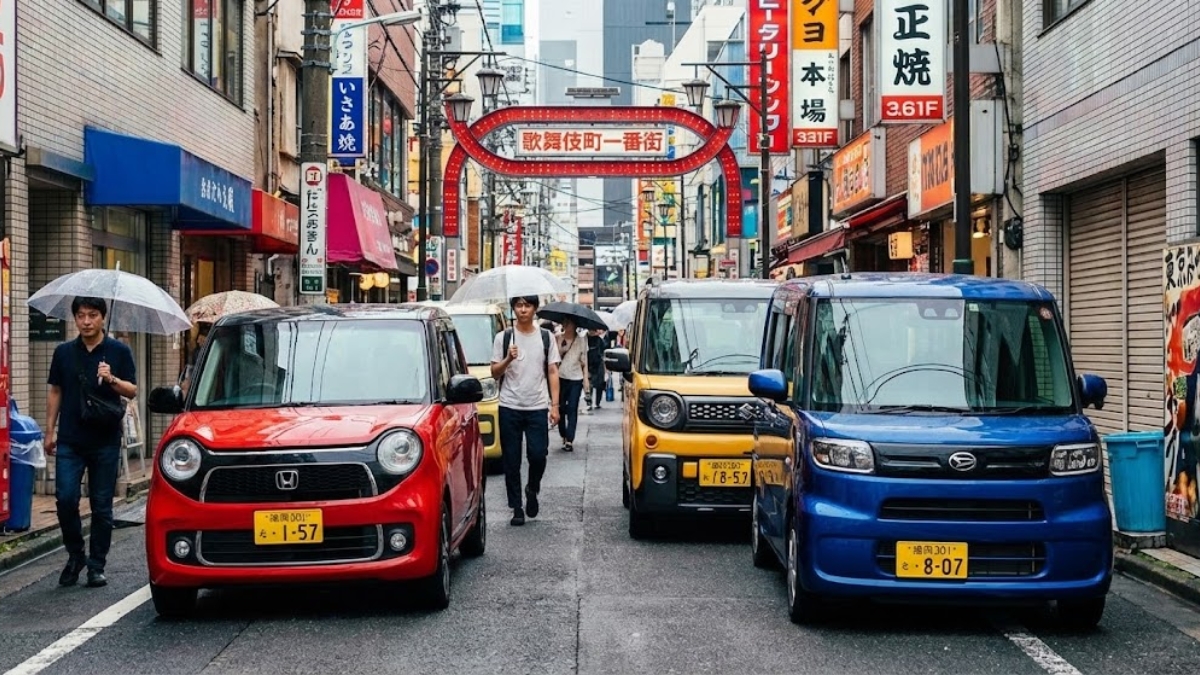
From narrow city streets to parking challenges and high ownership costs, Japan created a unique solution after World War II: Kei cars. These ultra-compact vehicles — officially called keijidōsha or “light automobiles” — dominate a large portion of Japan’s car market thanks to clever regulations, low ownership costs and unmatched urban practicality.
Even today, they account for a massive share of passenger car sales in Japan.
In this article, we’ll explore what Kei cars are, why they’re so popular, how they’re regulated, and which models have become icons in the segment. We’ll also look at their advantages, limitations, and global influence.
What Is a Kei Car?
A Kei car is a special category of ultra-compact, road-legal vehicle in Japan. The term “kei” comes from the Japanese keijidōsha, meaning “light automobile.” Regulations strictly define their physical size and engine characteristics.
To qualify as a Kei car today, a vehicle must meet these legal limits:
- Length: Not more than 3.4 m
- Width: Not more than 1.48 m
- Height: Not more than 2.0 m
- Engine displacement: Up to 660 cc
- Power output: Generally limited to about 64 hp (47 kW) in many models
These parameters ensure the cars are extremely compact and lightweight compared with ordinary passenger vehicles, making them ideal for driving on narrow roads and fitting into tight parking spaces.
How Kei Cars Fit Into Japanese Life
Kei cars were born from practical necessity. After World War II, Japan needed affordable and efficient vehicles for everyday mobility. The government created the Kei category in 1949 to stimulate car ownership and support the domestic auto industry.
Regulations evolved over decades, gradually increasing size and capabilities while maintaining strict limits designed around urban living.
Today, Kei cars are everywhere in Japan. At their peak, they made up around 40 percent of the passenger car market — a remarkable figure for any vehicle class — although that share dipped slightly to around 38 percent in 2024.
Kei Cars vs Regular Cars: Key Differences
Size and Dimensions
Kei cars are noticeably smaller than typical compact vehicles and models you might see on American or European roads. Their limited dimensions make them perfect for urban settings where space is at a premium.
Engine and Power
With engine displacements capped at 660 cc, Kei cars may seem underpowered compared with conventional cars with 1.0 L or larger engines. However, engineers often use turbocharging and lightweight designs to make the most of that small engine, delivering adequate performance for city driving.
Cost and Ownership
One of the biggest appeals of Kei cars is their low total cost of ownership. Compared with standard cars in Japan:
- Taxes and insurance premiums are significantly lower.
- Routine inspections (shaken) cost less.
- Fuel economy is often excellent due to the small engine and lightweight construction.
These advantages help make Kei cars a very affordable choice for young drivers, families and anyone who needs basic, efficient transportation.
Spec Table: Typical Kei Car Limits
| Feature | Kei Car Regulation |
|---|---|
| Maximum Length | 3.4 m (11 ft 2 in) |
| Maximum Width | 1.48 m (4 ft 9 in) |
| Maximum Height | 2.0 m (6 ft 6 in) |
| Maximum Engine | 660 cc |
| Power Output | ~64 hp (typical) |
| License Plate Color | Yellow (private Kei) |
| Tax Benefits | Yes — lower than regular cars |
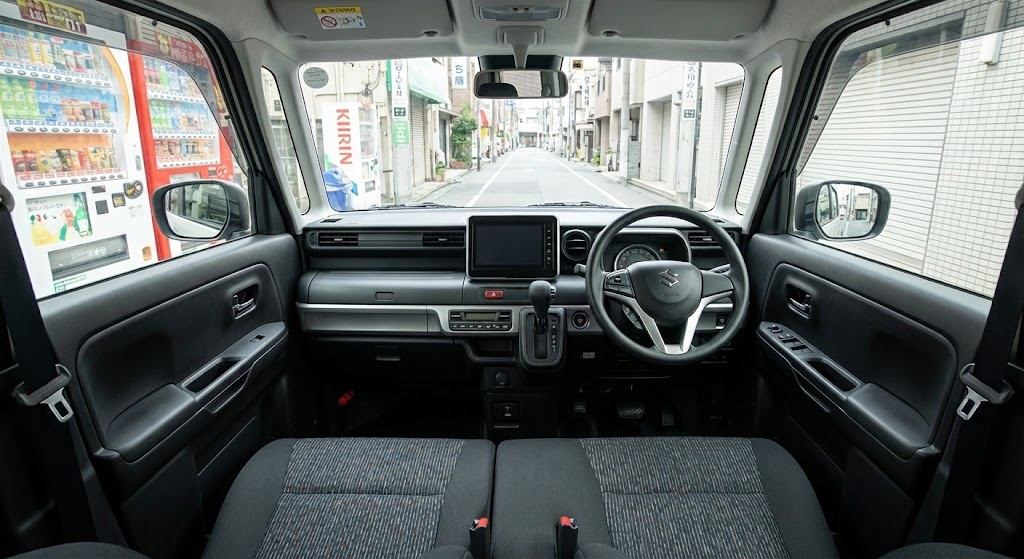
These limits shape every aspect of Kei car design, from engine tuning to interior packaging, ensuring they stay within the category’s cost-saving and space-efficient philosophy.
Why Kei Cars Are So Popular
1. Ease of Driving and Parking
Kei cars shine in crowded urban environments. Their compact size and tight turning radius make maneuvering through narrow streets and dense traffic much easier than in traditional cars. Parking is also simpler, even in tight spaces.
2. Impressive Fuel Economy
Despite their modest engine size, many Kei cars achieve excellent fuel efficiency — often exceeding what larger hatchbacks can manage — thanks to their low weight and engineered efficiency.
3. Lower Total Cost of Ownership
Kei cars are notably affordable to buy, maintain and run. Insurance premiums, annual taxes and shaken inspection costs are lower than those for larger vehicles, which makes them especially attractive to cost-conscious buyers.
4. Environmentally Friendly
Many Kei cars produce less CO2 and other emissions than larger vehicles, which helps reduce the environmental impact of urban traffic. Electric versions and hybrid variants are also emerging, adding to the eco credentials of the category.
Common Types of Kei Cars
Although they must meet common size and engine restrictions, Kei cars come in many body styles:
Hatchbacks and Mini Wagons: Most common format. Examples include Suzuki Wagon R and Honda N-BOX.
Kei Vans: Lightweight vans with cargo space, used for small business deliveries and urban logistics.
Kei Trucks: Mini pickup trucks used on farms and for commercial work.
Mini SUVs and Sports Cars: Unique, fun variants like Suzuki Jimny Kei versions and even sporty models like the Suzuki Cappuccino (historical model).
Popular Kei Car Models
Here’s a snapshot of models that have defined or currently shape the Kei segment:
| Model | Maker | Type |
|---|---|---|
| Honda N-BOX | Honda | Tall Wagon |
| Suzuki Wagon R | Suzuki | Compact Wagon |
| Daihatsu Tanto | Daihatsu | Mini Wagon |
| Nissan Sakura (EV) | Nissan | Electric Kei |
| Mitsubishi eK X EV | Mitsubishi | Electric Kei |
| Suzuki Cappuccino (Classic) | Suzuki | Kei Sports Car |
Electric Kei cars like the Nissan Sakura and Mitsubishi eK X EV show how the category is evolving with electrification. These EV models retain the Kei car size limits while offering quieter, cleaner driving and modern tech.
Advantages and Limitations
Advantages
- Low Purchase Price: Kei cars generally cost less than standard cars in Japan.
- Lower Taxes and Insurance: Government incentives and tax breaks make ownership cheaper.
- Urban Practicality: Easy parking and city maneuvering.
- Fuel Efficient: Smaller engine and lightweight design boost economy.
- Environmental Benefits: Hybrid and EV Kei cars reduce emissions.
Limitations
- Modest Performance: Limited engine size means less power compared with larger cars.
- Space Constraints: Despite smart packaging, interior space can be tight relative to bigger cars.
- Export Challenges: Outside Japan, Kei cars aren’t common and may face regulatory hurdles in many countries.
Kei Cars and Global Influence
While largely confined to Japan, the Kei category has inspired discussions in other markets. For example, industry leaders have compared European “city car” needs to Japan’s Kei philosophy, stressing affordable micro mobility solutions.
In some U.S. states there are movements to legalize Kei trucks and cars for local use, reflecting interest in small, cost-efficient vehicles.
Electric versions of Kei cars are also signaling how the category may evolve globally as cities look for compact, low-emission transportation.
Summary
Kei cars are a uniquely Japanese automotive category defined by strict size and engine limits that encourage affordability, fuel efficiency and urban practicality.
These tiny vehicles, ranging from micro hatchbacks to mini trucks and even electric variants, play a central role in Japan’s automotive market.
Their combination of low ownership costs, ease of use and clever design make them a smart choice for city life and budget-focused drivers.
As the automotive world continues to explore smaller, greener mobility solutions, the Kei car concept remains a fascinating example of innovation shaped by regulation and real-world needs.