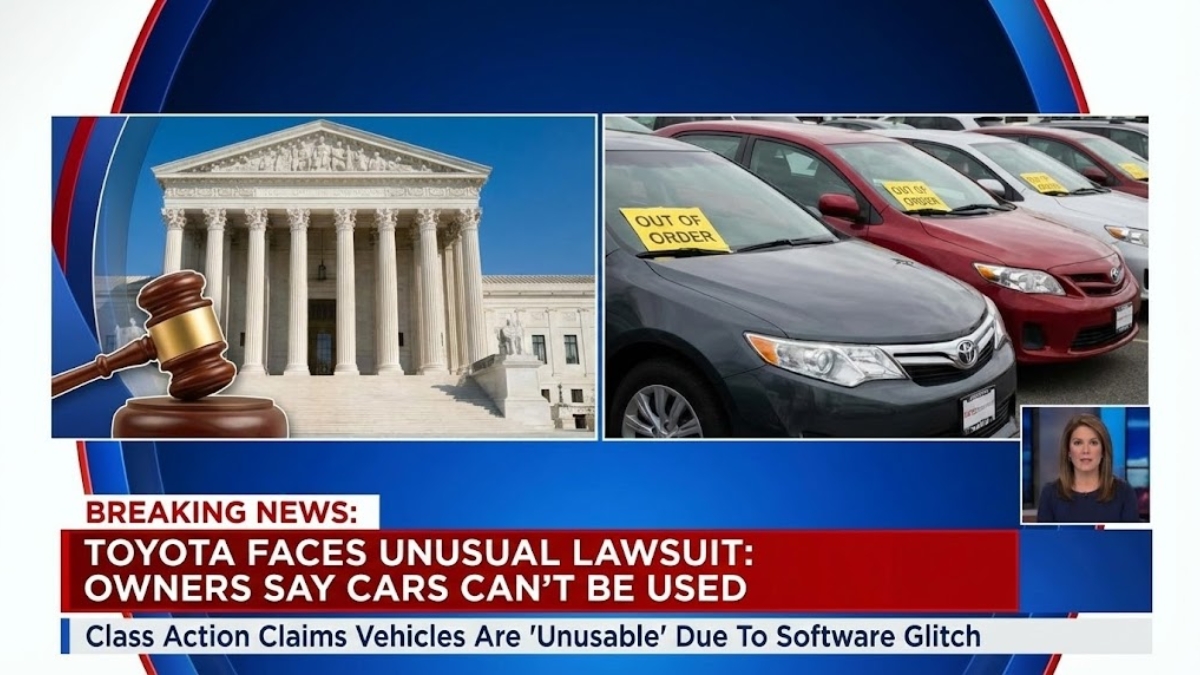
In an unexpected twist for one of the world’s most respected automakers, hundreds of Toyota owners in the United States have filed lawsuits claiming that they were sold vehicles they cannot use in daily life. The dispute centers on Toyota’s hydrogen-fuel-cell sedan, the Mirai.
While the car has won admiration for its engineering and environmental promise, owners say the practical realities of owning one — especially in California, the center of the fuel cell vehicle market — have fallen far short of expectations.
Rather than alleging that the Mirai is mechanically defective in the classic sense, plaintiffs contend that sustained shortages of fuel, near-nonexistent hydrogen refueling infrastructure, ballooning hydrogen costs, inaccurate range estimates, rapid depreciation, and what they describe as misleading marketing have rendered their cars virtually unusable.
In some cases, owners still owe payments on vehicles they rarely drive because they cannot reliably refuel them.
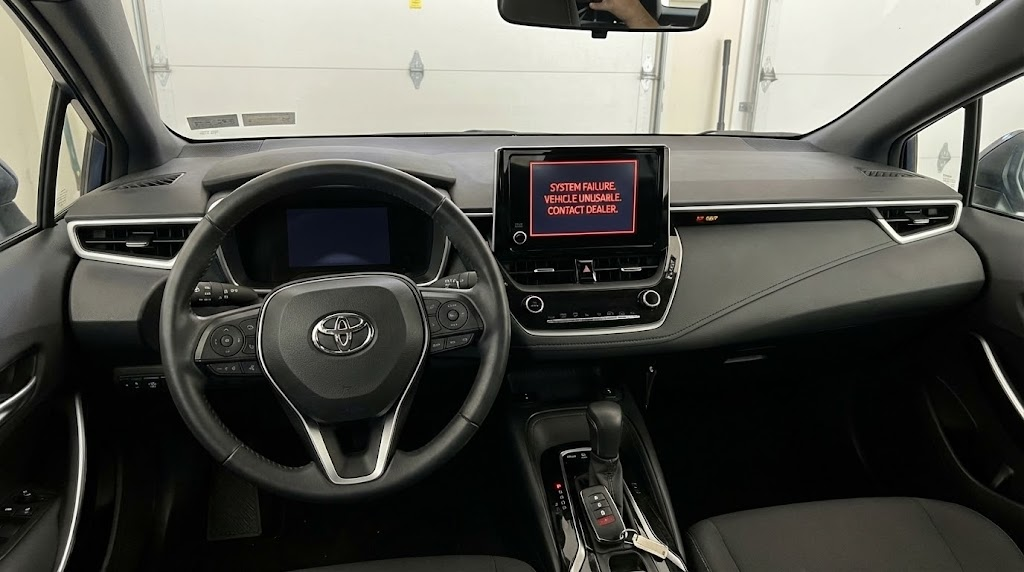
The Hydrogen Promise That Wasn’t
Toyota first introduced the Mirai in 2015, positioning it as a zero-emission alternative to traditional gasoline vehicles and a real competitor to battery-electric cars.
Unlike electric vehicles that need charging ports, hydrogen fuel cell vehicles (FCVs) generate electricity onboard by combining hydrogen with oxygen, producing only water vapor as exhaust. Toyota touted quick refueling times comparable to gasoline cars, commendable range, and environmental benefits.
Early buyers were attracted by the promise of a new mobility future, incentives offered by Toyota, and California’s aggressive clean-vehicle policies designed to support alternative fuel technologies. However, nearly a decade later, the hydrogen future envisioned by many has not materialized.
The network of hydrogen fueling stations has not grown as expected. Some have closed entirely, leaving drivers scrambling for a usable pump.
As one CBS News report noted, owners like Malcolm Boehme have shown up at broken or empty pumps with no hydrogen available, unable to drive their cars home without risking running out of fuel. The lack of reliable stations has forced many to drive long distances or give up using the vehicle altogether.
Owners Say They Were Misled
Plaintiffs argue that Toyota and its dealerships misrepresented the practicality of Mirai ownership. Salespeople reportedly assured buyers that refueling hydrogen would be as convenient as filling up gasoline or charging an EV.
But according to lawsuits filed by attorney Jason Ingber and coverage by outlets like Jalopnik, this simply hasn’t been the case: although there are some hydrogen stations, their number is extremely limited and they are often unreliable.
For drivers in many parts of the U.S., particularly outside metropolitan California, available stations are so sparse that long trips are impossible and short commutes become a gamble.
This is especially frustrating given the Mirai’s premium price tag, which has ranged from roughly $50,000 to as high as ~$67,000 with certain trims and options.
Owners also complain that actual achievable range often falls short of advertised figures, meaning drivers have less usable mileage between refueling stops than they expected when deciding to purchase.
When factoring in the dearth of fueling locations, many feel they have essentially bought a car that can’t meet their transportation needs.
Legal Claims and Arguments
The lawsuits brought by Mirai owners span a range of legal theories, but a common theme is deceptive marketing and fraud.
Plaintiffs claim Toyota overstated the practicality and ease of owning a hydrogen fuel cell vehicle, failing to disclose that the infrastructure necessary to support everyday use — especially outside of limited California regions — would remain woefully insufficient.
In some filings, consumers assert that Toyota’s promotional materials misled them about availability of refueling stations, estimated range, and the likely total cost of ownership.
They also allege that the value of their vehicles has sharply dropped because resale demand is negligible for cars that cannot be refueled reliably.
At least one report suggests owners have seen Mirais depreciate by around 70% or more in short order.
The argument at the heart of many of these claims is that the defect is not in the car’s engineering, but in Toyota’s promise versus reality.
Plaintiffs argue that Toyota engineered a vehicle that, in practice, locks owners out of using it the way they expected because refueling infrastructure and support systems simply do not exist at a level that makes regular use practical.
Mirai Depreciation and Economic Friction
The legal battles have intensified due to financial realities. Owners continue making monthly payments on Mirais that have lost much of their resale value.
With limited fueling options and high hydrogen prices in places where fuel is available, resale markets have dried up, leaving buyers with a depreciated asset they struggle to sell.
This economic friction is central to much of the owner frustration and legal rhetoric. A vehicle that cannot be reliably refueled becomes not only less useful but also financially burdensome.
Some owners — especially those who purchased used Mirais without understanding the pump scarcity — say they would not have bought the car had they known how sparse hydrogen fueling would remain.
Toyota’s Response
Toyota has defended itself by pointing out that hydrogen infrastructure development is a broader industry challenge, not something the automaker alone controls.
The company and its stakeholders have emphasized that they are working with energy providers, government entities, and advocacy groups to support hydrogen station growth. But critics argue progress has been too slow.
In some media interviews on this topic, Toyota representatives have noted that customers can use tools to locate available hydrogen stations and that the company offers occasional assistance with fuel reimbursements or loaner gasoline vehicles in certain cases.
However, for many plaintiffs, these gestures do not address the central claim: the inability to use a car that should be capable of regular, reliable driving.
The Future of Hydrogen Cars in North America
Toyota’s Mirai lawsuit brings to the forefront broader questions about the viability of hydrogen fuel cell vehicles in regions without robust fueling infrastructure. Despite early optimism and decades of research, hydrogen cars have struggled to gain the same market traction as battery EVs.
While California has supported hydrogen development more aggressively than other states, growth has not kept pace with demand and often remains concentrated in limited urban zones.
The situation stands in contrast with battery electric vehicles, whose charging networks have expanded dramatically in recent years thanks to private investment, public subsidies, and industry cooperation.
Hydrogen stations, by comparison, remain costly to build and maintain, and without large fleets of hydrogen cars on the road, there are fewer economic incentives for operators to expand service.
Some automakers, including Toyota, continue to research and advocate for hydrogen as an eco-friendly alternative, especially for heavy-duty applications or where fast refueling is essential. But in the passenger vehicle market, battery EVs have increasingly dominated the conversation.
The Mirai lawsuits may cast a shadow on the prospects for hydrogen cars among everyday consumers, at least in markets where infrastructure remains limited.
Owner Stories Highlight the Human Toll
Reports and interviews with individual plaintiffs reveal the personal and everyday frustrations behind the legal filings. For many owners, the Mirai represented a chance to support clean mobility without investing in a traditional EV.
However, when faced with a lack of usable fueling stations, the emotional and financial toll became apparent.
Owners have shared stories of planning daily errands or weekend trips only to find stations closed or without hydrogen. In some cases, not using the car for a week — due to lack of fuel — drained auxiliary batteries, leaving them unable to start the vehicle even if fuel was nearby.
Others have recounted frustration when dealerships declined buyback requests, arguing that infrastructure issues were beyond warranty coverage.
For some, the lawsuit is not just about financial compensation but recognition of a mismatch between what was promised and what was delivered.
This disconnect has fueled broader discussions about corporate responsibility in marketing advanced technologies that may not yet be ready for mainstream use.
Legal and Industry Implications
While these cases are still unfolding, the Mirai lawsuit highlights important legal and regulatory issues. Should automakers be held responsible if the supporting infrastructure for a new technology fails to materialize?
How much liability attaches to claims made about future mobility solutions when they rely on external entities like energy providers or government-subsidized projects? These questions may become more prominent as more vehicles adopt exotic powertrains.
Moreover, the lawsuits could influence how automakers discuss and market vehicles dependent on public or third-party infrastructure.
Clearer disclosures, more conservative claims about usability, and better coordination with infrastructure partners may become necessities to avoid similar legal scrutiny.
Where Things Stand Now
As litigation progresses, both sides are likely to continue staking out firm positions. Owners want compensation or vehicle buybacks, while Toyota emphasizes ongoing efforts to support hydrogen adoption and defends its technology’s merits.
For now, the Mirai saga serves as a cautionary tale about emerging automotive technologies and the essential role of infrastructure in making them practical for consumers.
Though Toyota’s Mirai remains a technical achievement with potential environmental benefits, the controversy surrounding its usability and alleged misrepresentation raises broader questions about how automakers should balance innovation with consumer expectations and real-world infrastructure realities.