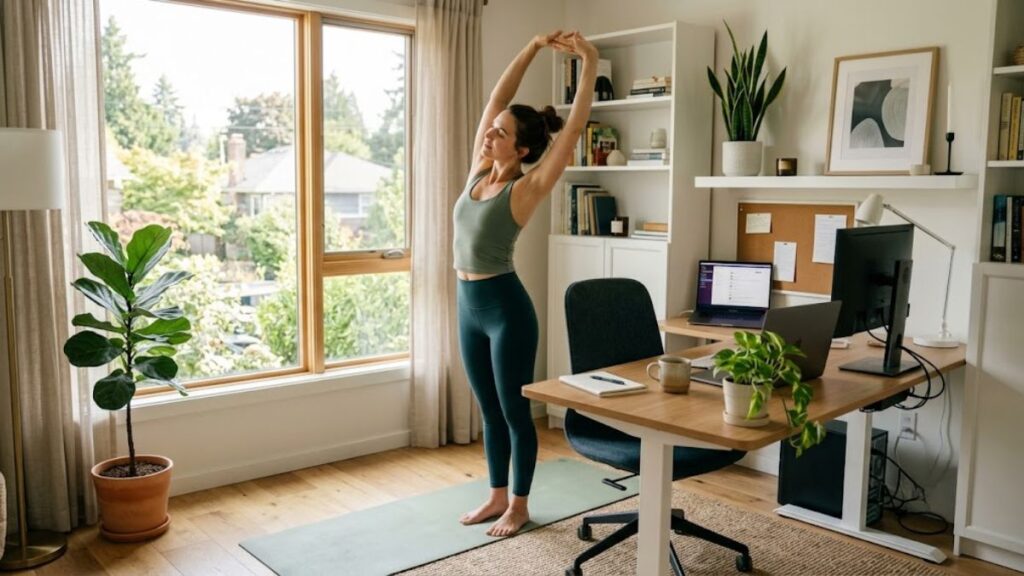
Many people begin their day by sitting almost immediately, whether it’s commuting, working at a computer, or attending online meetings. Spending long hours at a desk can lead to muscle stiffness, poor posture, reduced flexibility, and discomfort in areas such as the neck, shoulders, back, hips, and legs.
A simple morning stretching routine can help prepare your body for the day ahead. Stretching for just a few minutes after waking up or before starting work can loosen tight muscles, improve mobility, encourage better posture, and help you feel more energized.
The best part is that you don’t need a gym, special equipment, or a long workout. A few easy stretches performed consistently can make a noticeable difference in how your body feels throughout the day.
In this article, you’ll learn simple morning stretches for people with desk jobs, their benefits, and tips for creating a stretching routine you can easily maintain.
Why Morning Stretches Are Important for Desk Workers
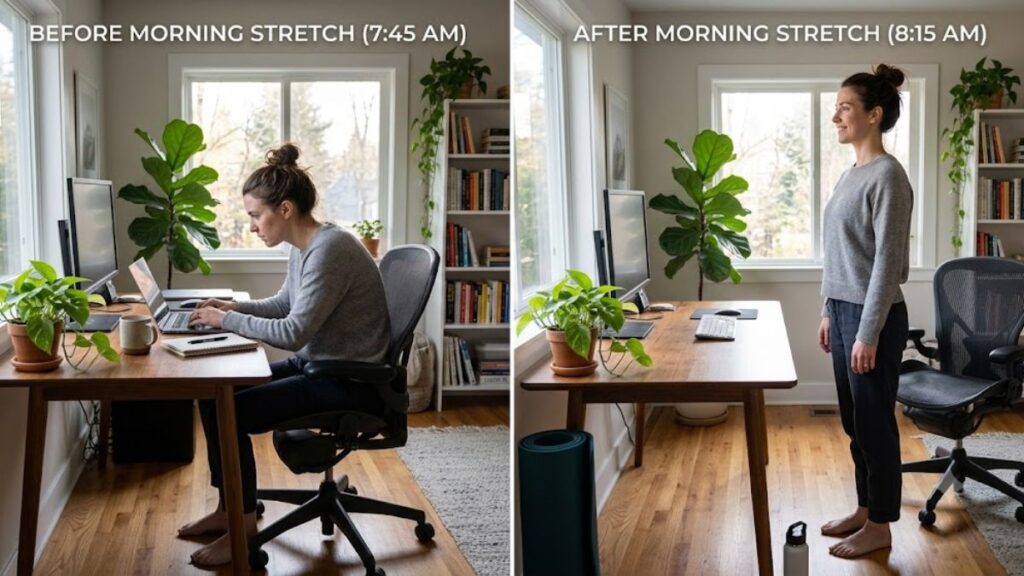
People with desk jobs often spend several hours sitting in the same position, placing stress on muscles and joints that are not designed to remain inactive for long periods.
Long hours of sitting can tighten the neck, shoulders, hips, and lower back while reducing overall mobility. Over time, this may contribute to stiffness, reduced flexibility, poor posture, muscle discomfort, and a greater risk of aches during the day.
Starting your morning with a few gentle stretches helps wake up your muscles and joints before you begin your workday. Stretching encourages movement after a night of sleep, increases blood flow to your muscles, and helps your body transition into daily activities more comfortably. It can also help improve your range of motion, making everyday movements feel easier and less restrictive.
Regular morning stretching may help:
- Reduce muscle stiffness
- Improve flexibility
- Support better posture
- Increase blood circulation
- Improve mobility
- Relieve tension in the neck, shoulders, and lower back
- Prepare the body for daily movement
- Promote relaxation before a busy workday
Even five to ten minutes of stretching each morning can become a valuable habit for supporting your overall physical well-being. When practiced consistently, it can help you feel more comfortable, move more freely, and start your workday with greater ease.
Common Areas That Become Tight During Desk Work
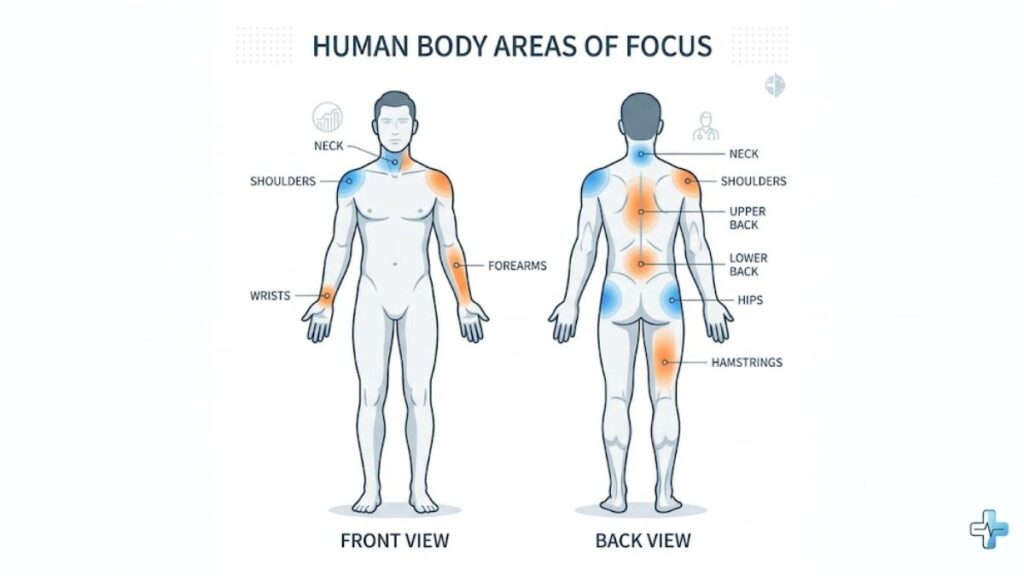
Long hours of sitting mainly affect specific muscle groups. Spending most of the day at a desk limits natural movement, causing certain muscles to tighten while others become weaker. Understanding these commonly affected areas can help you choose stretches that target the muscles most likely to become stiff and uncomfortable.
Neck
Looking at computer screens for extended periods may place extra strain on the neck muscles, especially if your monitor is too high or too low. This can lead to stiffness, reduced mobility, and general discomfort.
Shoulders
Typing, using a mouse, and maintaining the same arm position throughout the day can cause shoulder tension and tightness. Many desk workers also unconsciously raise or round their shoulders, increasing muscle fatigue.
Upper Back
Poor sitting posture and prolonged forward-leaning positions may contribute to stiffness across the upper back and between the shoulder blades. This can make it uncomfortable to sit or stand for long periods.
Lower Back
Prolonged sitting places continuous pressure on the lower back, particularly when posture is not properly supported. Over time, this may contribute to muscle tightness, soreness, and reduced flexibility.
Hips
Hip flexor muscles often remain shortened while sitting, making them feel tight after long periods at a desk. Tight hips can also affect posture and limit comfortable movement when standing or walking.
Hamstrings
Sitting keeps the hamstrings in a shortened position for much of the day, which may gradually reduce flexibility. Tight hamstrings can also increase tension around the hips and lower back.
Wrists and Forearms
Frequent keyboard and mouse use can create tension in the wrists, hands, and forearms. Gentle stretches for these areas may help improve mobility and reduce feelings of stiffness after repetitive tasks.
Benefits of Morning Stretching Before Work
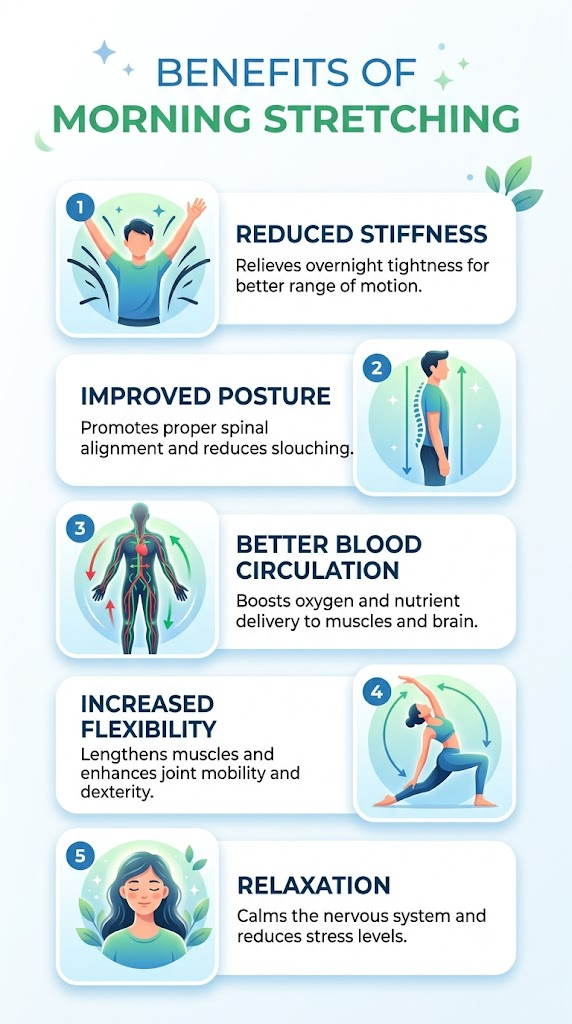
Developing a morning stretching routine offers several advantages beyond improving flexibility. Even a few minutes of gentle movement each morning can help prepare your body for a day of sitting, reduce muscle tension, and make everyday activities feel more comfortable.
Helps Reduce Morning Stiffness
After sleeping for several hours, muscles and joints may feel tight, especially around the neck, back, hips, and legs. Gentle stretching helps loosen these areas, improve mobility, and prepare your body for movement before you begin your workday.
Encourages Better Posture
Stretching muscles that commonly become tight from prolonged sitting, such as the chest, shoulders, hips, and lower back, may support better posture throughout the day. Better posture can also help reduce unnecessary strain on your muscles and joints while working at a desk.
Increases Blood Circulation
Movement encourages healthy blood flow to muscles and joints, delivering oxygen and nutrients where they are needed. This can help your body feel more awake, energized, and ready for daily activities.
Supports Flexibility
Regular stretching gradually improves flexibility and range of motion. Greater flexibility can make everyday movements, such as bending, reaching, standing, and walking, feel easier and more comfortable.
Promotes Relaxation
Slow, controlled stretching combined with deep breathing helps release muscle tension and creates a calm, positive start to the morning. Beginning your day in a relaxed state may also help you feel more focused and prepared for the tasks ahead.
Simple Morning Stretches for People With Desk Jobs
These gentle stretches are suitable for most healthy adults and require little or no equipment. Perform each movement slowly, breathe naturally, and stop immediately if you experience pain. The goal is to feel a gentle stretch, not discomfort.
1. Neck Stretch

The neck is one of the first areas to become stiff after sleeping or spending long hours looking at a computer screen.
How to do it:
- Sit or stand with your back straight and shoulders relaxed.
- Gently lower your right ear toward your right shoulder until you feel a comfortable stretch on the left side of your neck.
- Hold for 15 to 30 seconds.
- Return to the center and repeat on the opposite side.
Tip: Avoid lifting your shoulder toward your ear or forcing the movement. Keep the stretch gentle and controlled.
2. Shoulder Rolls
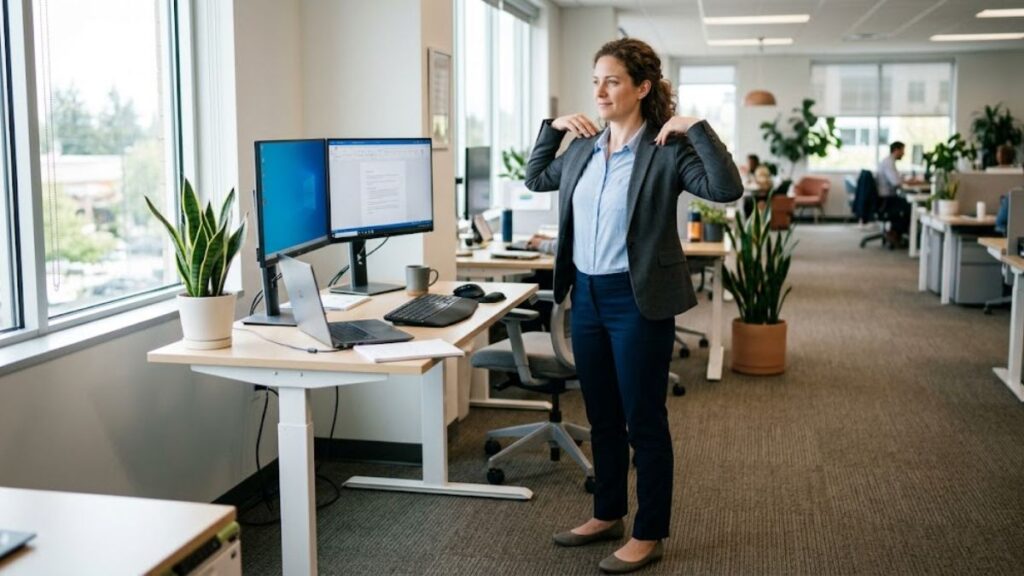
Shoulder rolls help loosen muscles that often become tight from typing, using a mouse, or sitting with rounded shoulders.
How to do it:
- Stand or sit comfortably.
- Lift your shoulders toward your ears.
- Roll them backward in a slow, controlled circle.
- Repeat 10 times.
- Reverse the direction and roll forward another 10 times.
Tip: Focus on making slow, smooth circles rather than quick movements.
3. Chest Opener Stretch
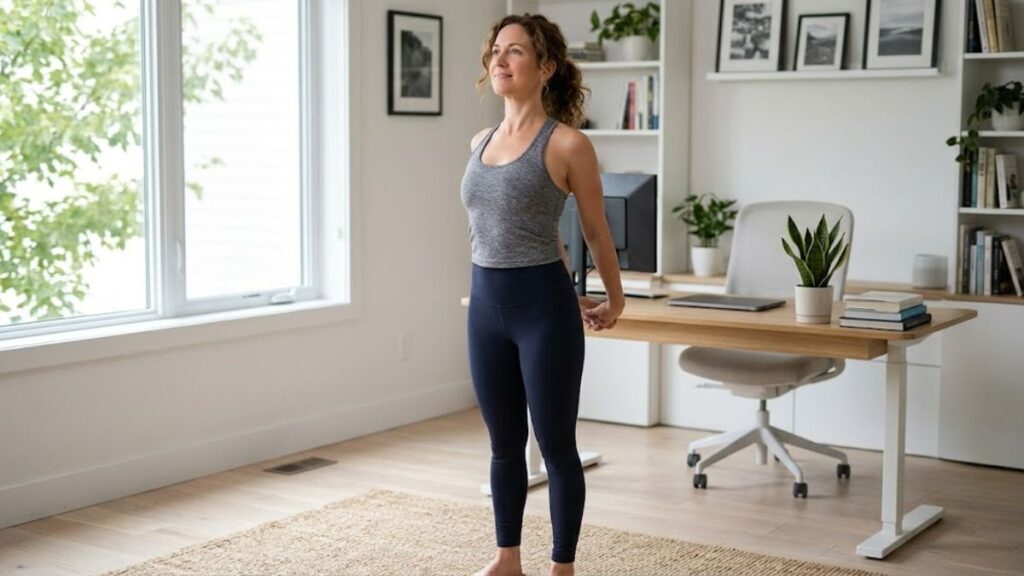
This stretch helps counteract the rounded shoulder posture that commonly develops during desk work.
How to do it:
- Stand tall with your feet shoulder-width apart.
- Clasp your hands behind your back.
- Gently straighten your arms while lifting your chest.
- Keep your shoulders relaxed and away from your ears.
- Hold for 20 to 30 seconds while breathing comfortably.
Tip: Lift your chest gently without arching your lower back.
4. Cat-Cow Stretch
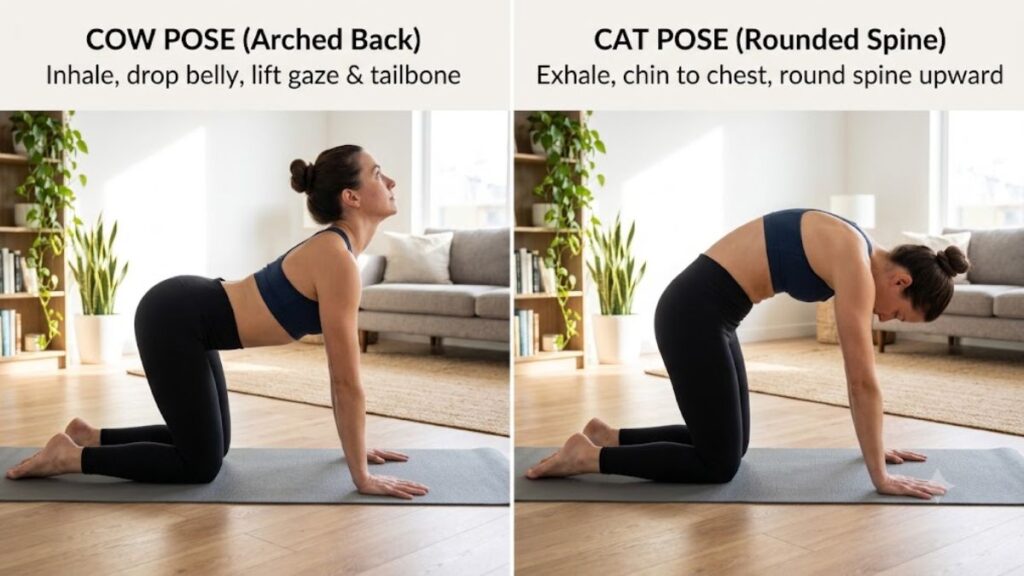
The Cat-Cow stretch improves spinal mobility and helps loosen the neck, shoulders, and back after a night’s sleep.
How to do it:
- Begin on your hands and knees with your hands under your shoulders and knees under your hips.
- Slowly arch your back while lifting your head and tailbone.
- Then gently round your spine while lowering your head and tucking your chin.
- Move smoothly between both positions for 8 to 10 repetitions.
Tip: Coordinate the movement with your breathing by inhaling as you arch and exhaling as you round.
5. Standing Side Stretch
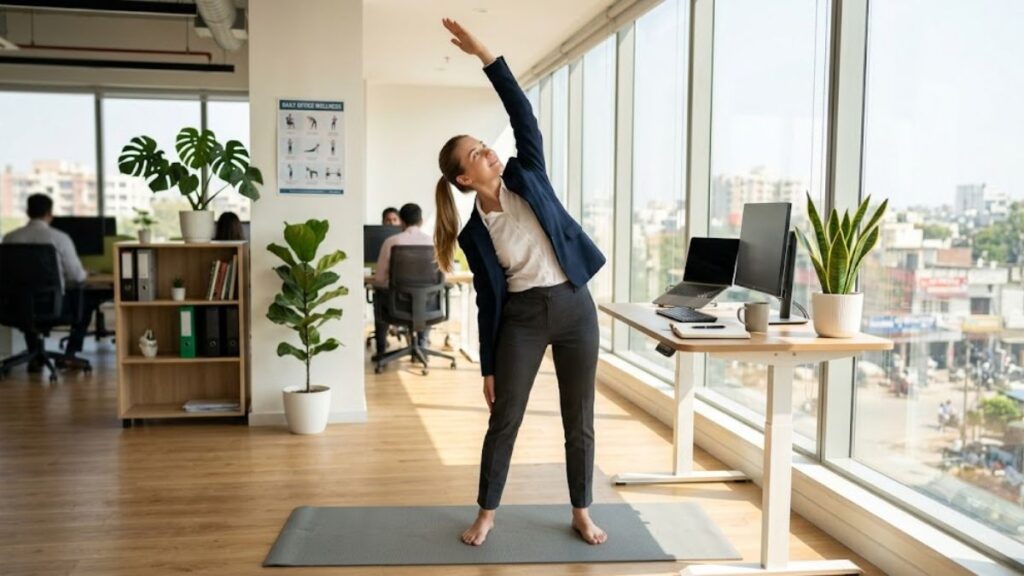
This stretch lengthens the muscles along the sides of your body and improves flexibility in your torso and shoulders.
How to do it:
- Stand with your feet shoulder-width apart.
- Raise one arm overhead.
- Lean gently toward the opposite side without twisting your body.
- Hold for 20 seconds.
- Return to the center and repeat on the other side.
Tip: Keep both feet firmly planted on the floor throughout the stretch.
6. Hip Flexor Stretch
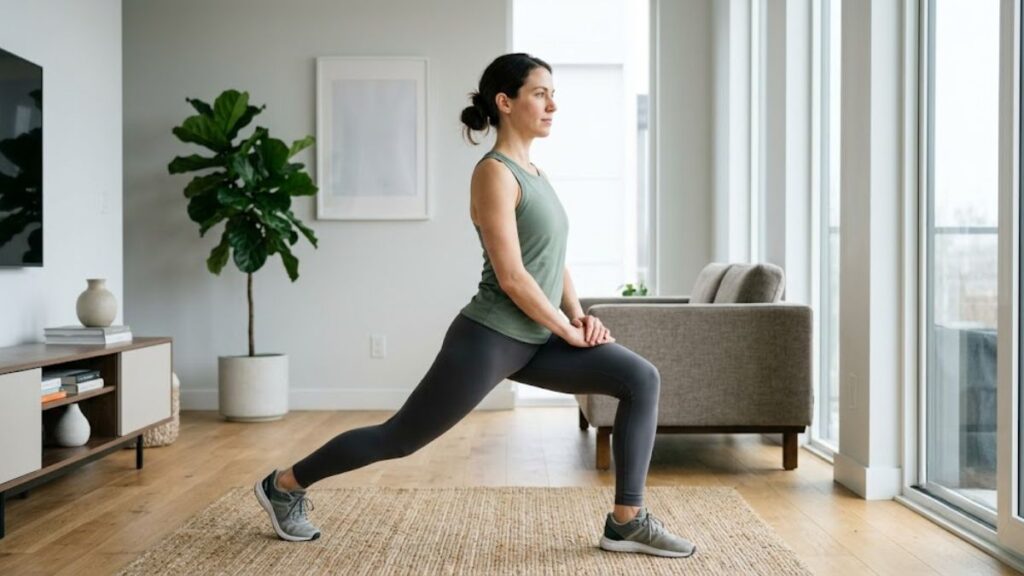
Sitting for long periods can tighten the hip flexor muscles, making standing and walking feel uncomfortable.
How to do it:
- Step one foot forward into a comfortable lunge position.
- Keep your back straight and your front knee over your ankle.
- Gently shift your weight forward until you feel a stretch at the front of your back hip.
- Hold for 20 to 30 seconds.
- Repeat on both sides.
Tip: Keep your hips facing forward instead of turning them to one side.
7. Hamstring Stretch
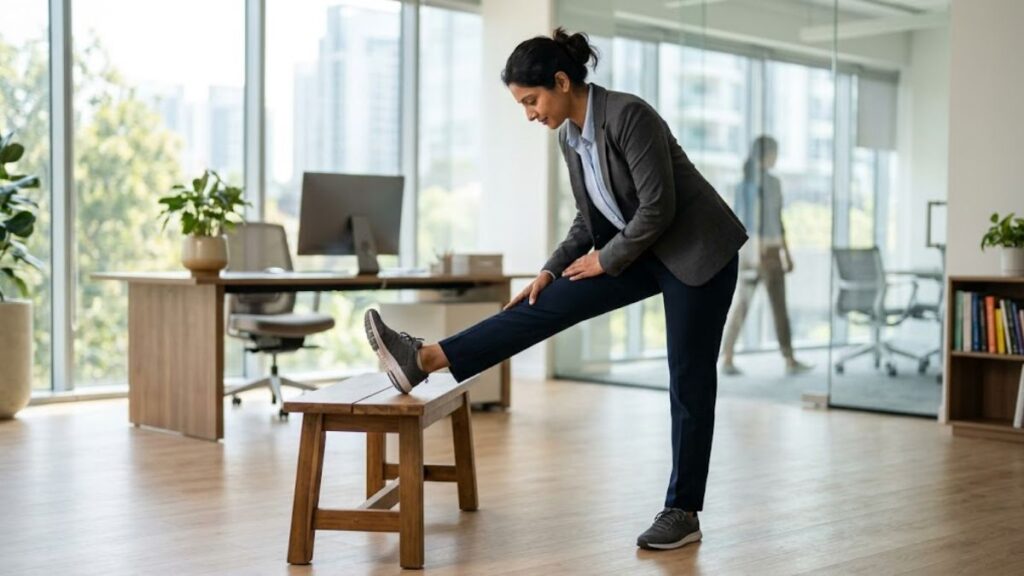
This stretch helps improve flexibility in the back of your thighs, which often become tight after prolonged sitting.
How to do it:
- Place one heel on a low step or sturdy chair.
- Keep your leg comfortably straight and your back neutral.
- Lean forward slightly from your hips until you feel a gentle stretch.
- Hold for 20 to 30 seconds.
- Repeat on the opposite leg.
Tip: Avoid rounding your back or bouncing during the stretch.
8. Wrist and Forearm Stretch
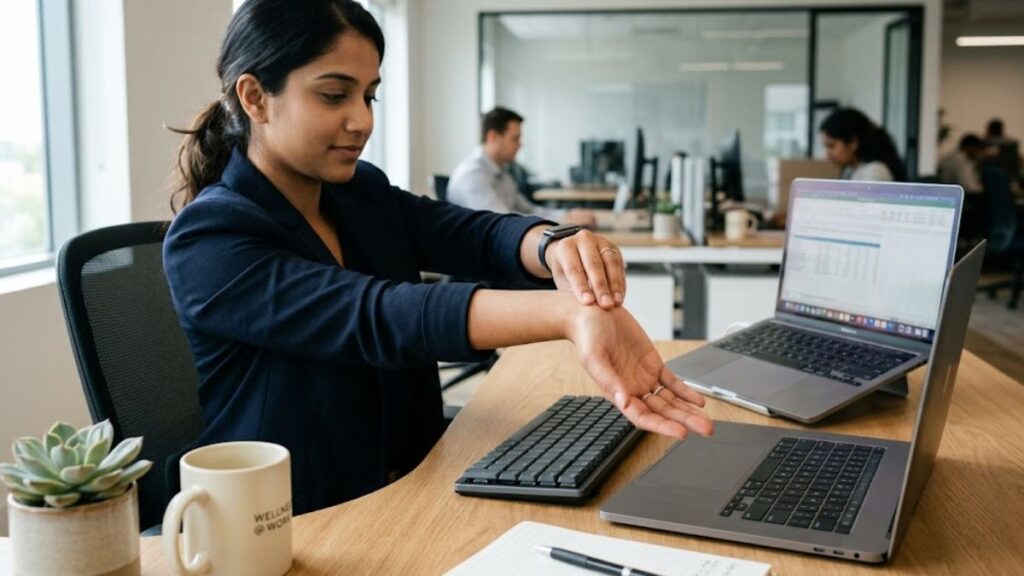
Typing and mouse use can create tension in the wrists, hands, and forearms throughout the day.
How to do it:
- Extend one arm in front of you with your palm facing upward.
- Use your opposite hand to gently pull your fingers downward.
- Hold for 20 seconds.
- Turn your palm downward and gently pull your fingers toward your body.
- Switch hands and repeat.
Tip: Apply only gentle pressure to avoid overstretching your wrists.
9. Standing Forward Fold
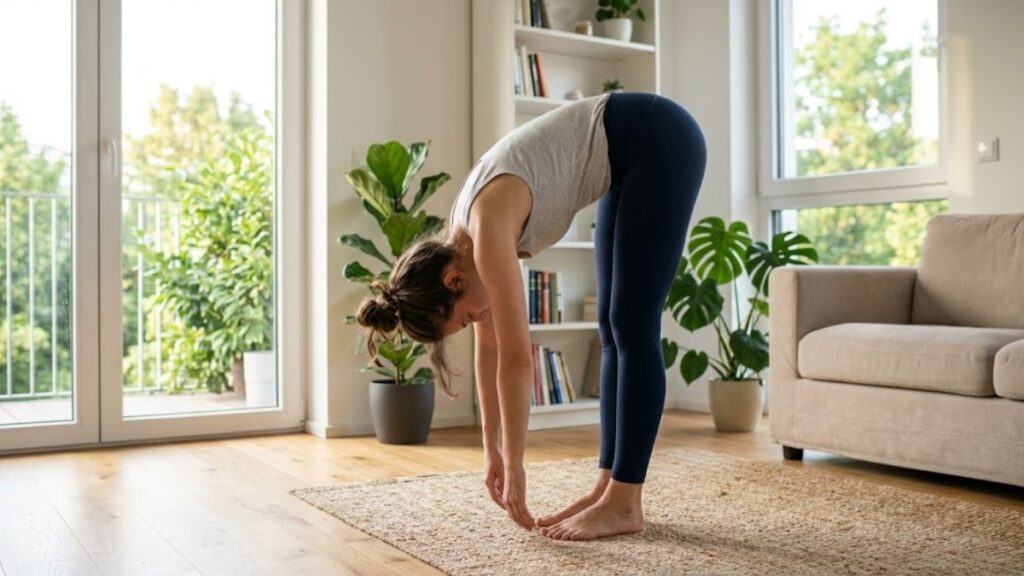
This stretch gently relaxes your back, hamstrings, and calves while helping release tension throughout your body.
How to do it:
- Stand with your feet hip-width apart.
- Slowly bend forward from your hips.
- Allow your arms and head to hang naturally.
- Keep a slight bend in your knees if needed.
- Hold for 20 to 30 seconds before slowly returning to standing.
Tip: Rise slowly to avoid feeling lightheaded.
10. Full Body Reach
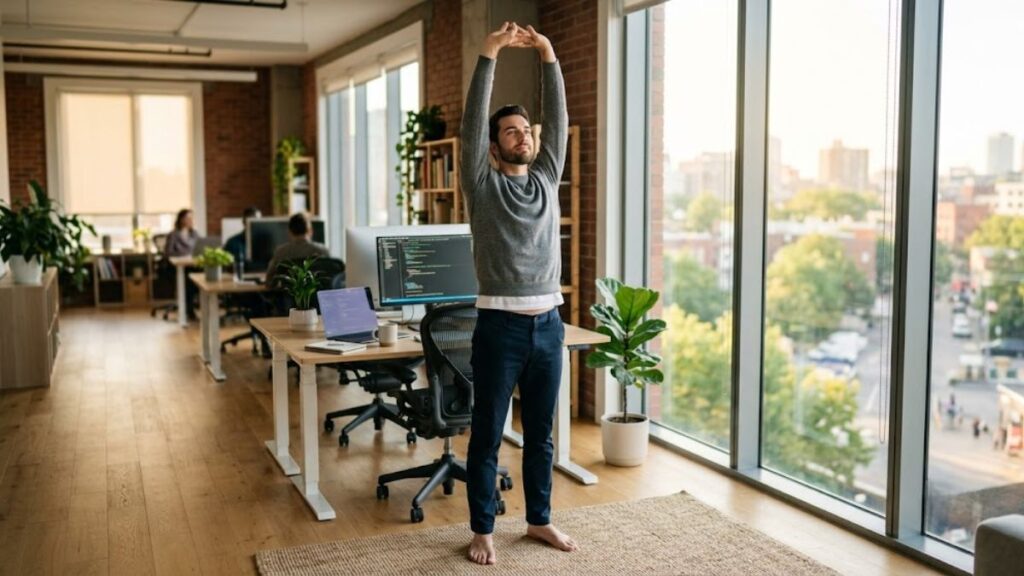
This simple stretch wakes up your entire body and encourages good posture before starting your day.
How to do it:
- Stand tall with your feet comfortably apart.
- Reach both arms overhead.
- Stretch upward as if trying to touch the ceiling while taking a deep breath.
- Hold for 10 to 15 seconds.
- Relax and repeat 2 to 3 times.
Tip: Keep your shoulders relaxed and avoid arching your lower back as you reach upward.
Tips for Stretching Safely
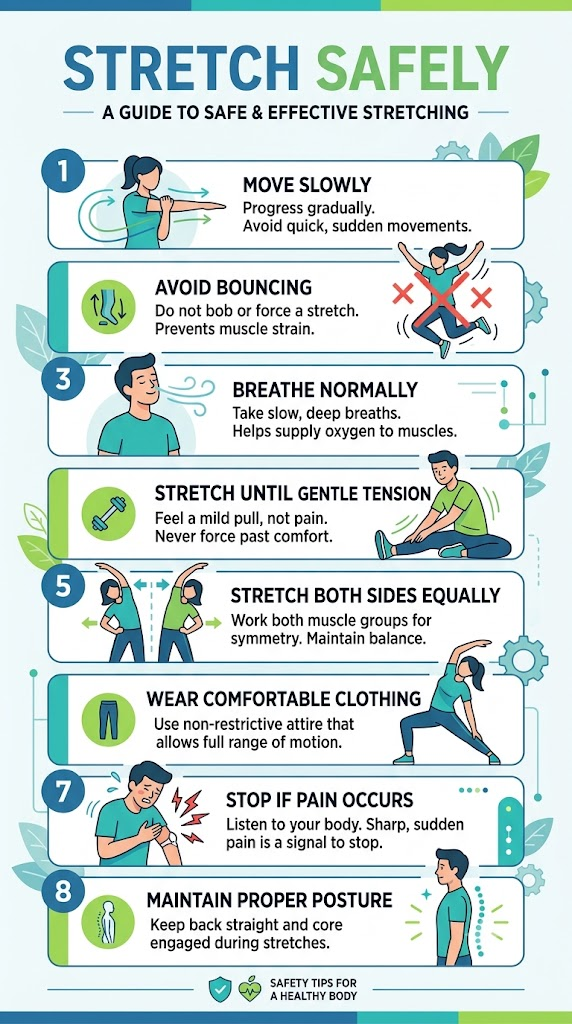
Stretching should feel comfortable and relaxing, never painful. Performing stretches with proper technique helps reduce the risk of injury and allows you to get the greatest benefit from your routine.
Keep these safety tips in mind:
- Move slowly and avoid sudden movements. Ease into each stretch instead of forcing your muscles into position.
- Stretch until you feel gentle tension, not pain. A mild pulling sensation is normal, but sharp or intense discomfort is a sign to stop.
- Breathe normally throughout each stretch. Slow, steady breathing helps your muscles relax and may allow you to stretch more comfortably.
- Avoid bouncing during stretches. Gentle, steady holds are generally safer and more effective than quick, jerking movements.
- Hold each stretch for 15 to 30 seconds. This is usually enough time to allow the muscles to relax without overstraining them.
- Stretch both sides of the body evenly. Give equal attention to each side to help maintain balance and flexibility.
- Maintain good posture during each stretch. Keeping your back aligned and movements controlled helps you target the intended muscles safely.
- Wear comfortable clothing that allows free movement. Flexible, non-restrictive clothing makes it easier to perform stretches correctly.
- Listen to your body. If a stretch feels uncomfortable or causes pain, stop and adjust your position or skip that movement.
- If you have an existing injury or medical condition, consult a healthcare professional before starting a new stretching routine. They can recommend exercises that are appropriate for your individual needs.
A few minutes of safe, consistent stretching each morning is generally more beneficial than performing long or intense stretching sessions only occasionally. Making it part of your daily routine can help you stay comfortable and move more easily throughout the workday.
How to Build a Morning Stretching Routine
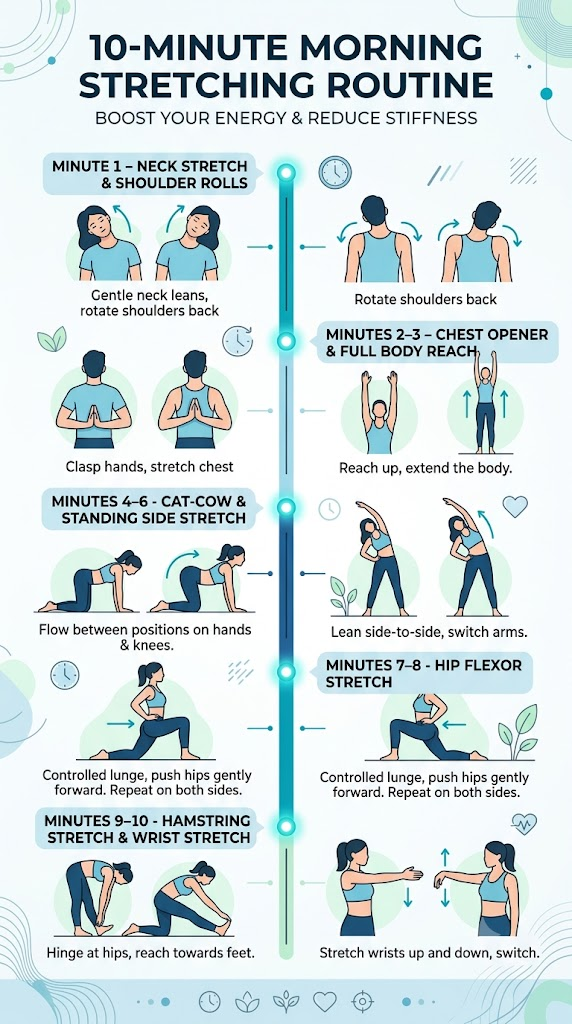
Creating a consistent habit is often more effective than trying to complete a long stretching session. A simple routine that takes just five to ten minutes is easier to maintain and can provide lasting benefits when practiced regularly. Try to perform your stretches at the same time each morning, such as after waking up or before sitting down at your desk.
You can build a simple routine like this:
Minute 1
- Neck Stretch
- Shoulder Rolls
These gentle movements help relieve stiffness in the neck and shoulders while preparing your upper body for the day.
Minutes 2–3
- Chest Opener Stretch
- Full Body Reach
These stretches encourage better posture, open the chest, and gently wake up the muscles throughout your body.
Minutes 4–6
- Cat-Cow Stretch
- Standing Side Stretch
This combination improves spinal mobility, stretches the sides of the body, and helps loosen the back after a night of sleep.
Minutes 7–8
- Hip Flexor Stretch
Stretching the hip flexors can help reduce tightness caused by prolonged sitting and improve overall lower-body mobility.
Minutes 9–10
- Hamstring Stretch
- Wrist and Forearm Stretch
Finish by stretching your hamstrings to improve flexibility and your wrists and forearms to prepare for typing, writing, or using a mouse throughout the day.
If you have extra time, repeat your favorite stretches or spend a few additional minutes focusing on areas that feel particularly tight. Consistency is more important than duration, so even a short daily routine can help prepare your body for hours of desk work and support better comfort throughout the day.
Additional Tips for Desk Workers
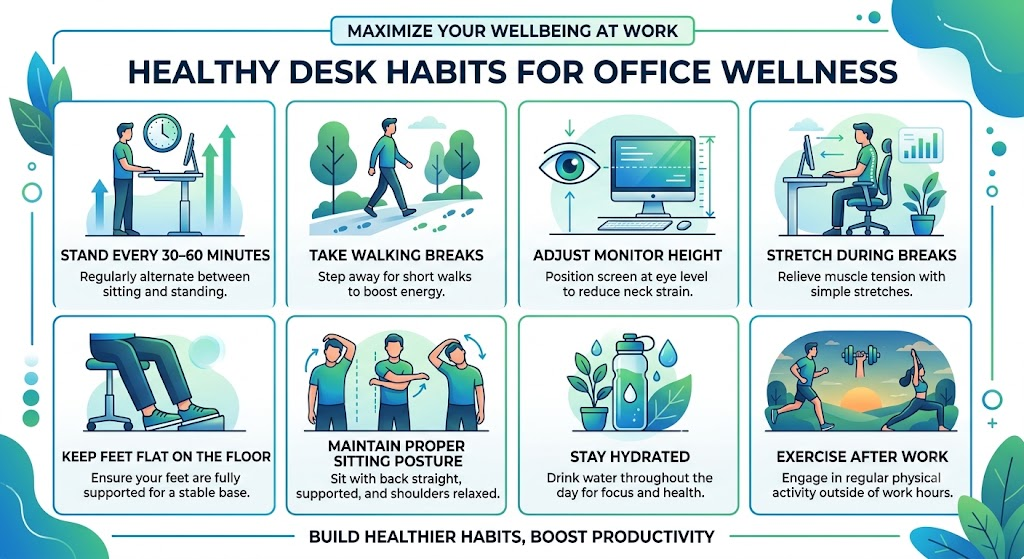
Morning stretches are most effective when combined with healthy movement habits throughout the day. Even if you start your morning with a stretching routine, sitting in one position for several hours can still lead to muscle tightness and discomfort. Making small adjustments to your daily routine can help keep your body moving and reduce the effects of prolonged sitting.
Consider these simple practices:
- Stand up every 30 to 60 minutes. Even a minute or two of standing or walking can help reduce stiffness and encourage better circulation.
- Take short walking breaks. Walking around your home or office for a few minutes helps activate your muscles and gives your joints a break from sitting.
- Adjust your chair and monitor for better posture. Position your screen at eye level and keep your chair adjusted so your back is well supported.
- Keep your feet flat on the floor while sitting. This helps promote a more stable sitting position and reduces unnecessary strain on your hips and lower back.
- Stretch your shoulders and neck during breaks. A few gentle stretches throughout the day can help relieve tension that builds up from typing and looking at a screen.
- Stay hydrated throughout the day. Drinking enough water supports your overall health and provides a good reminder to get up and move regularly.
- Include regular physical activity outside working hours. Walking, cycling, swimming, strength training, or other forms of exercise help improve overall fitness, flexibility, and muscle health.
These simple habits complement your morning stretching routine and can help reduce stiffness, improve comfort, and support better posture throughout the workday. Small, consistent changes often make the biggest difference over time.
Common Stretching Mistakes to Avoid
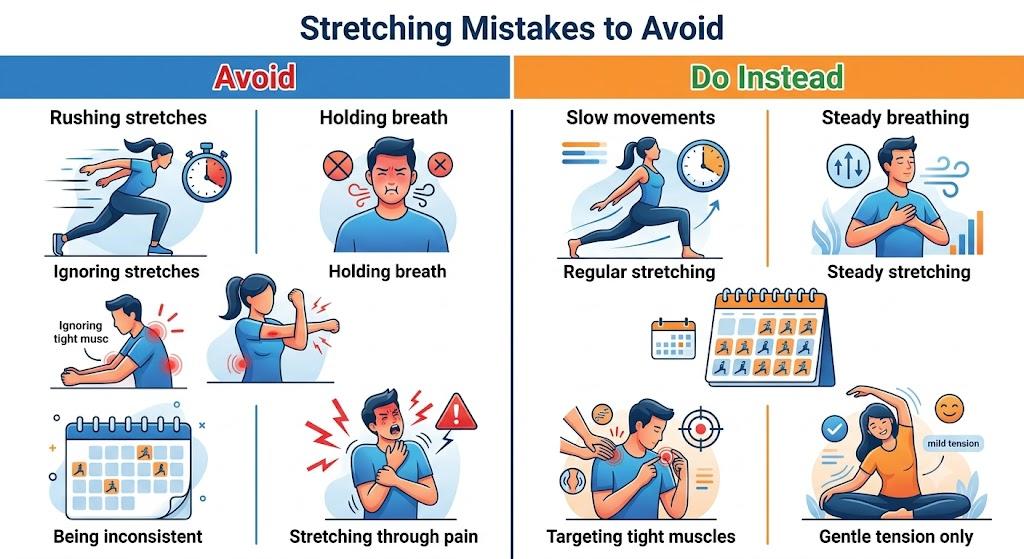
Stretching is most beneficial when performed with proper technique and consistency. Avoiding a few common mistakes can help you improve flexibility safely while reducing the risk of discomfort or injury.
Stretching Too Quickly
Slow, controlled movements are generally more effective than rushing through each stretch. Ease into the position gradually and avoid jerking or forcing your muscles beyond their comfortable range of motion.
Holding Your Breath
Steady, relaxed breathing helps your muscles release tension and makes stretching feel more comfortable. Try to breathe slowly and naturally throughout each movement instead of holding your breath.
Ignoring Tight Areas
If certain muscles consistently feel tight, such as your neck, shoulders, hips, or hamstrings, include stretches that target those areas regularly. Paying attention to problem areas can help improve mobility over time.
Being Inconsistent
Stretching once in a while provides limited benefits. A short routine performed most mornings is usually more effective than occasional longer sessions. Consistency is one of the most important factors in improving flexibility and reducing stiffness.
Stretching Through Pain
Mild muscle tension is normal, but sharp or intense pain is not. If a stretch causes pain, stop immediately and adjust your position. If discomfort continues or returns frequently, consult a healthcare professional before continuing your stretching routine.
By focusing on proper technique, gentle movements, and regular practice, you can make stretching a safe and effective part of your daily routine.
Conclusion
Simple morning stretches for people with desk jobs are an easy and effective way to prepare your body for a day of sitting and computer work. Just a few minutes of gentle stretching each morning can help reduce stiffness, improve flexibility, encourage better posture, and support overall comfort throughout the day.
The key is consistency rather than intensity. You don’t need an advanced fitness routine or special equipment to experience the benefits. By making stretching part of your morning routine and combining it with regular movement during the workday, you can help reduce the effects of prolonged sitting and support your long-term physical well-being.
Start with a few simple stretches, listen to your body, and gradually build a routine that fits naturally into your daily schedule. Small habits practiced consistently can make a meaningful difference in how you feel every day.
Medical Disclaimer: This article is for informational and educational purposes only. It is not intended to replace professional medical advice, diagnosis, or treatment. Always consult a qualified healthcare provider for medical concerns or before making healthcare decisions.