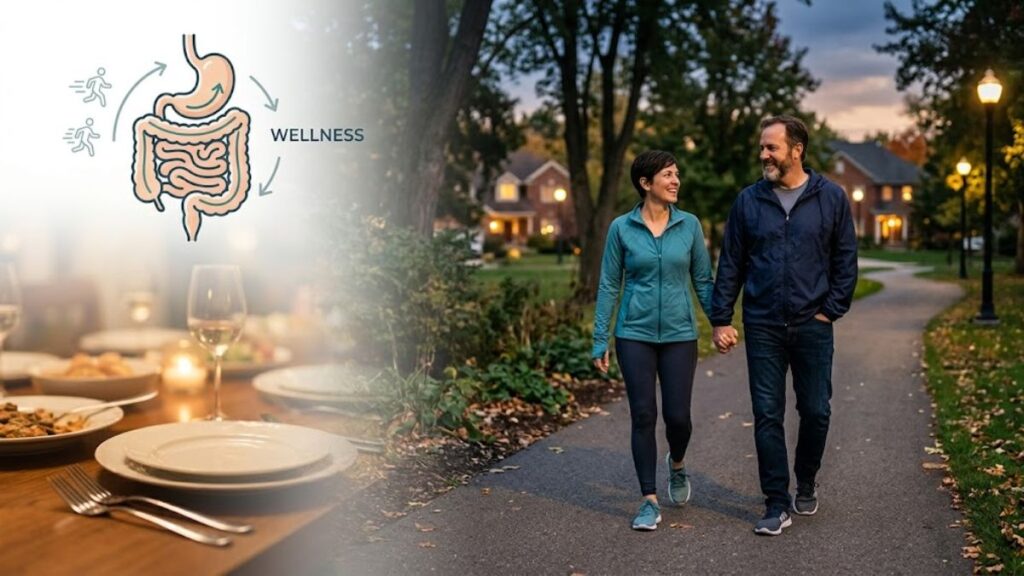
After enjoying a satisfying dinner, many people prefer to relax on the couch, watch television, or go straight to bed. However, a simple habit like taking a short walk after your evening meal can provide several benefits for digestion, metabolism, and overall wellness. Understanding why walking after dinner is great for digestion can help you build a healthier evening routine and make better lifestyle choices.
Walking after dinner is a gentle form of physical activity that helps your body transition from eating to the digestion process. After a meal, your digestive system becomes active as it breaks down food and absorbs nutrients. A light walk encourages movement, supports healthy circulation, and helps your body remain active instead of staying still for long periods.
A post-dinner walk may help reduce feelings of heaviness, improve comfort after meals, and support healthy daily movement. It can also be a relaxing way to end the day, giving you an opportunity to reduce stress, spend time outdoors, or connect with family while adding physical activity to your routine.
While a post-dinner walk is not a replacement for a balanced diet, regular exercise, or medical treatment, making it part of your daily routine can support better digestive habits and overall health. Small lifestyle changes, when practiced consistently, can contribute to long-term wellness.
This guide explores why walking after dinner is great for digestion, how long you should walk, the best time to take a walk after eating, and practical tips for making it a healthy evening habit.
Why Walking After Dinner Is Great for Digestion
Digestion is a complex process where your body breaks down food, absorbs nutrients, and converts the energy from meals into fuel for daily activities. After eating dinner, your digestive system becomes active as the stomach and intestines begin processing the food you have consumed.
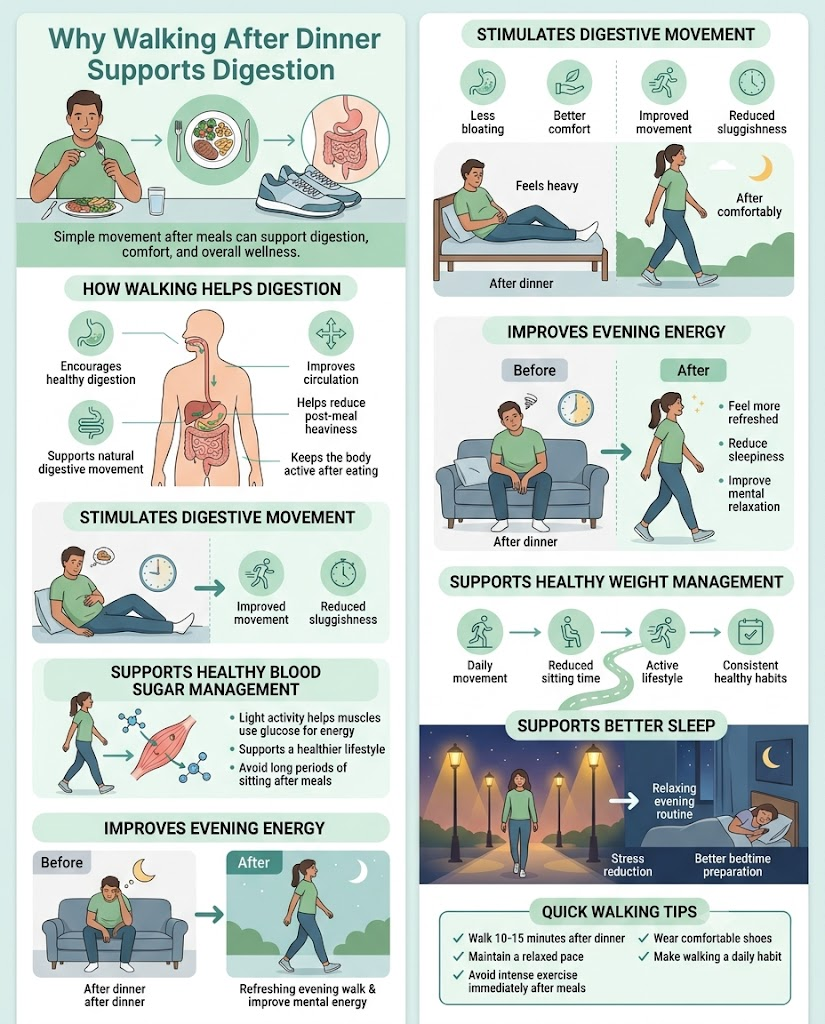
While resting after a meal may feel comfortable, remaining inactive for long periods can make some people feel sluggish or uncomfortable. Gentle movement after dinner can support normal body functions by encouraging circulation, keeping the body active, and helping your digestive system work naturally.
A short walk after dinner may help:
- Encourage healthy digestion
- Support normal blood sugar management
- Reduce feelings of heaviness after meals
- Improve circulation and daily movement
- Promote relaxation during the evening
- Create a healthier routine before bedtime
A post-dinner walk does not need to be intense. A comfortable, relaxed pace is usually enough to provide benefits while allowing your body to focus on digestion.
Helps Stimulate Digestive Movement
One of the main reasons walking after dinner may support digestion is that gentle physical activity encourages natural movement throughout the body.
Walking activates your muscles and promotes circulation, which can help support the normal movement of food through the digestive tract. Staying upright and moving after a meal may also feel more comfortable compared with lying down immediately after eating.
A relaxed walk can be especially helpful if you often experience:
- Feeling overly full after dinner
- Mild bloating
- Sluggishness after meals
- General discomfort after eating
The key is to keep the activity gentle. Heavy exercise or intense workouts immediately after a meal may cause discomfort, so a slow walk is usually a better choice.
May Reduce Bloating and Post-Meal Discomfort
Many people experience a feeling of fullness, bloating, or heaviness after dinner, especially after consuming large portions or rich meals.
A gentle walk can help your body transition from eating to digestion by reducing long periods of inactivity. Moving after a meal allows you to remain active while giving your digestive system time to process food naturally.
A short walk may help you feel:
- Less heavy after eating
- More comfortable
- Less tired or sleepy
- More relaxed after dinner
Instead of immediately lying on the bed or sitting for several hours, a light walk can be a simple way to support better evening comfort.
Supports Healthy Blood Sugar Management
After eating, blood sugar levels naturally increase as your body breaks down carbohydrates and releases glucose into the bloodstream.
Light physical activity, such as walking, encourages your muscles to use glucose for energy. This may help support a healthier blood sugar response after meals.
A short walk after dinner can be a useful habit for people who want to maintain an active lifestyle and support metabolic health.
Helpful habits include:
- Walking at a comfortable pace after meals
- Avoiding long periods of sitting after dinner
- Maintaining regular physical activity throughout the day
- Combining movement with a balanced diet
People managing diabetes or blood sugar-related conditions should follow their healthcare provider’s recommendations regarding exercise and meal routines.
Improves Evening Energy and Reduces Laziness
Many people feel sleepy or inactive after dinner, especially after eating a heavy meal. While relaxing after eating is common, too much inactivity can make you feel more tired and sluggish.
A short walk can help refresh your body and mind by adding gentle movement to your evening routine.
Walking after dinner may help you feel:
- More refreshed
- Less sleepy
- More mentally alert
- More relaxed
Even a 10 to 15 minute walk can add meaningful movement to your day without requiring a separate workout session.
Helps Maintain a Healthy Weight
Walking after dinner can contribute to a healthier lifestyle by increasing daily physical activity and reducing sedentary time.
Although walking alone does not directly cause weight loss, regular movement combined with balanced eating habits can support healthy weight management.
A post-dinner walk may help by:
- Increasing daily calorie expenditure
- Reducing time spent sitting
- Encouraging consistent physical activity
- Supporting healthier lifestyle habits
Small daily habits often create long-term benefits when practiced consistently. A simple evening walk can become an easy way to stay active without making major changes to your routine.
Supports Better Sleep Quality
A calm walk after dinner may also support a healthier bedtime routine. Gentle movement can help reduce stress and create a relaxing transition between dinner and sleep.
For many people, an evening walk provides an opportunity to clear the mind, relax after a busy day, and prepare the body for rest.
For a better nighttime routine:
- Keep your walk relaxed rather than intense
- Avoid heavy exercise close to bedtime
- Maintain a consistent sleep schedule
- Avoid going to bed immediately after a large meal
A peaceful walk can become a simple habit that supports both digestion and relaxation.
Encourages a Healthy Evening Routine
Walking after dinner is more than just a digestive habit. It can become part of a healthier daily lifestyle by encouraging regular movement and reducing sedentary time.
An evening walk provides an opportunity to:
- Spend time outdoors
- Reduce screen time
- Relax your mind
- Connect with family members
- Add more movement to your daily routine
Many healthy habits begin with small, manageable changes. A short walk after dinner is one of the simplest routines that can support overall wellness.
How Long Should You Walk After Dinner?
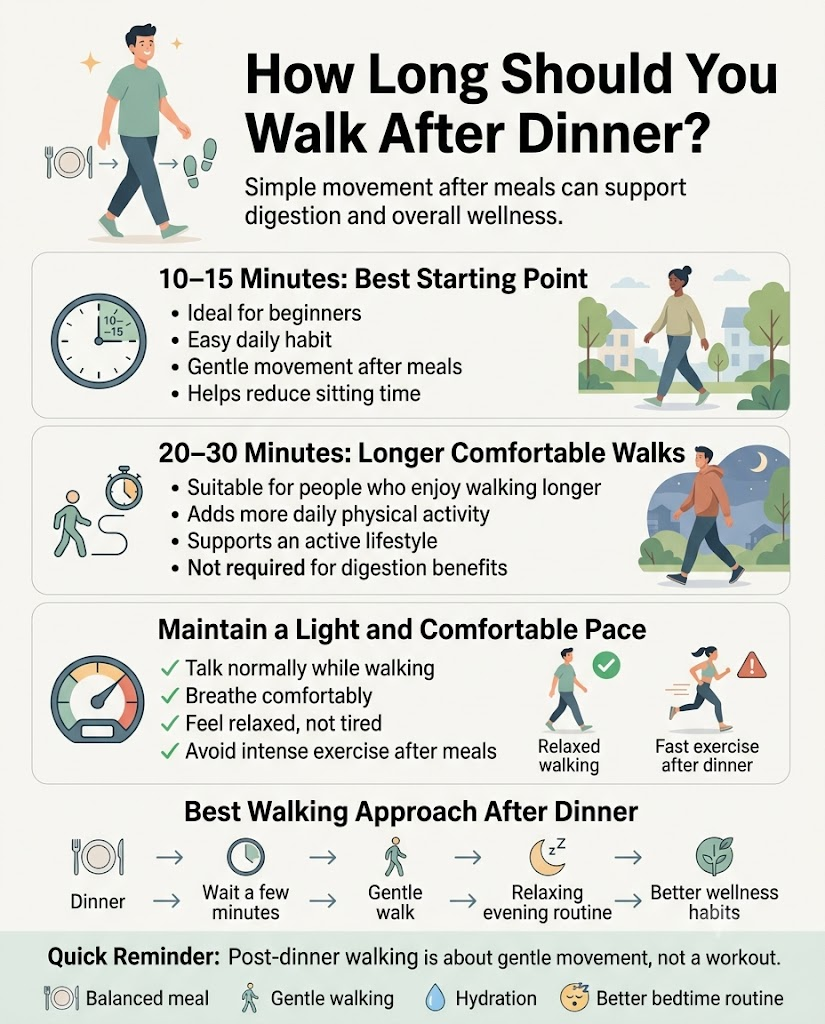
The ideal duration of a post-dinner walk depends on your fitness level, daily routine, health goals, and how comfortable you feel after eating. The purpose of walking after dinner is not to complete a workout but to encourage gentle movement that supports digestion and overall wellness.
For most people:
10 to 15 Minutes: A Good Starting Point
A short 10 to 15 minute walk after dinner is enough for many people to add healthy movement to their evening routine. It can help you stay active after a meal without putting unnecessary stress on your body.
This duration is especially suitable for beginners, older adults, or people who prefer a simple and manageable habit.
20 to 30 Minutes: Helpful for Longer Walks
If you enjoy walking and feel comfortable after dinner, extending your walk to 20 or 30 minutes can provide additional benefits. Longer walks can help increase daily physical activity, reduce sitting time, and support a healthier lifestyle.
However, the duration should always match your comfort level. A longer walk is not necessary to support digestion.
Maintain a Light and Comfortable Pace
Immediately after eating, a relaxed pace is usually the best choice. Walking too fast or engaging in intense exercise may cause discomfort, stomach cramps, or a feeling of heaviness.
A good pace is one where you can:
- Talk normally while walking
- Breathe comfortably
- Feel relaxed rather than tired
- Enjoy the movement without strain
The goal of a post-dinner walk is gentle activity, not intense exercise. Even a few minutes of comfortable walking can become a healthy habit when practiced consistently. Listening to your body and maintaining a pace that feels natural is the best approach.
Best Time to Walk After Dinner
You do not need to start walking immediately after finishing your meal. Giving your body a few minutes to begin the digestion process can make your walk more comfortable and enjoyable.
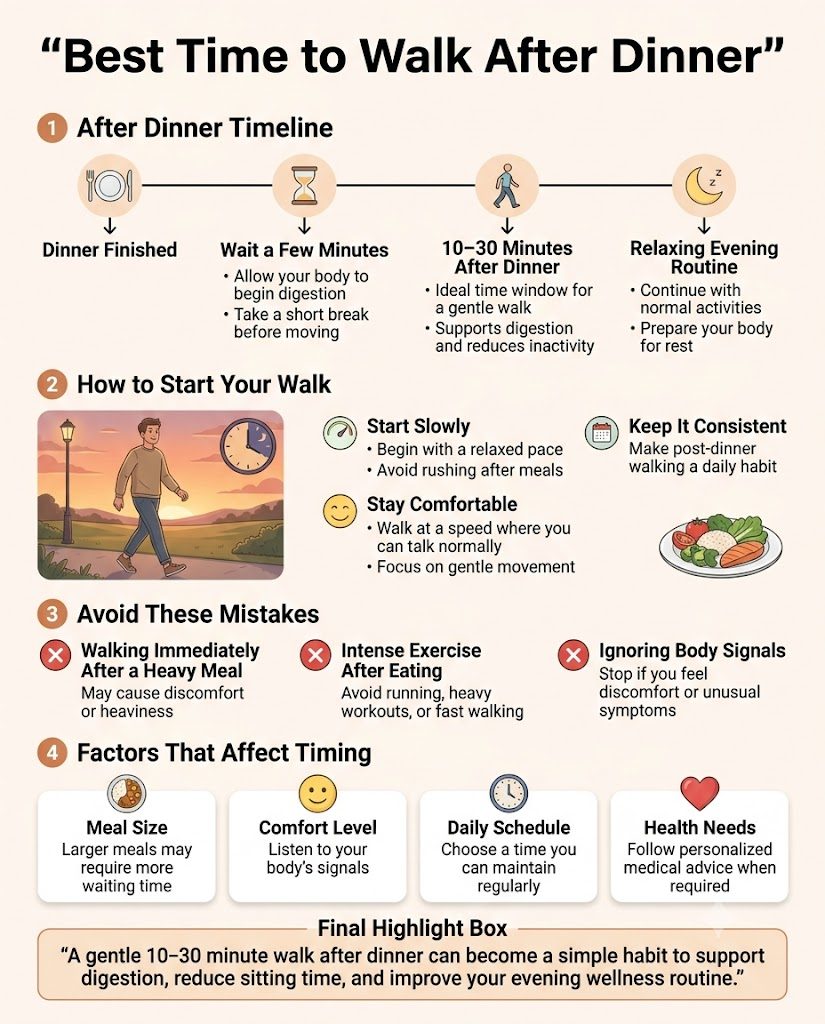
A practical approach is:
Wait a Few Minutes After Eating
Allow yourself some time to relax after dinner before starting your walk. This short break can help you avoid discomfort, especially if you have eaten a larger meal.
Start With a Gentle Walk
Begin at a comfortable pace rather than walking quickly. A slow, relaxed walk is usually enough to encourage movement and support digestion without putting stress on your body.
Avoid Vigorous Exercise Right After a Heavy Meal
Intense workouts, running, or fast-paced activities immediately after eating may cause discomfort, such as stomach cramps or feeling too full. Save high-intensity exercise for another time of the day when your body is better prepared.
A Good Time Window After Dinner
Many people find that walking within 10 to 30 minutes after dinner fits naturally into their evening routine. The exact timing can depend on:
- The size of your meal
- Your comfort level
- Your daily schedule
- Your personal health needs
The most important thing is consistency. Making a gentle post-dinner walk a regular habit can help support digestion, reduce long periods of inactivity, and contribute to a healthier evening routine.
Tips for a Comfortable Post-Dinner Walk
A post-dinner walk should feel relaxing and enjoyable rather than like a workout. Following a few simple tips can help you make the habit more comfortable and easier to maintain over time.
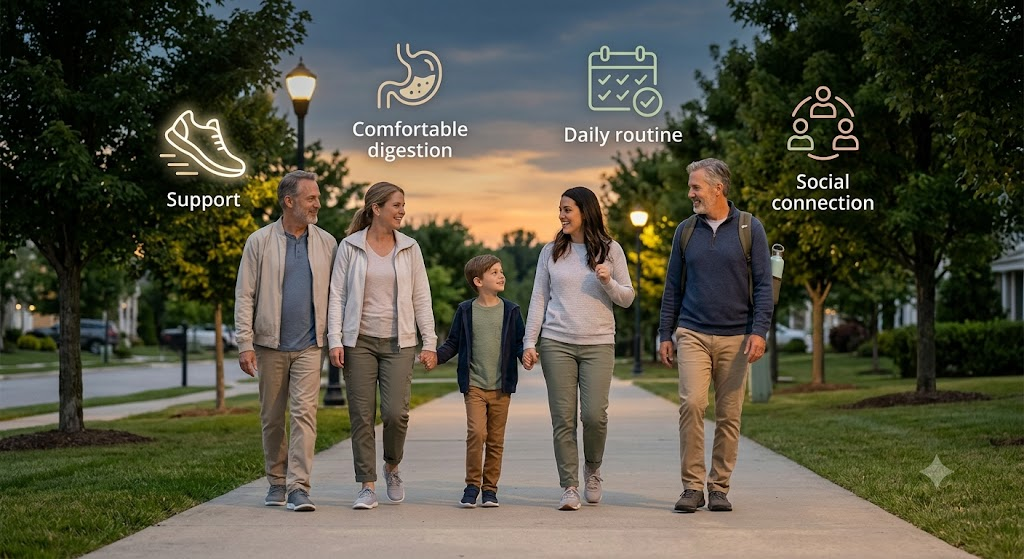
Wear Comfortable Shoes
Choosing the right footwear is important for a pleasant walking experience. Comfortable shoes with proper support can help reduce unnecessary pressure on your feet, ankles, and joints, especially if you walk regularly.
Avoid footwear that feels tight, uncomfortable, or does not provide enough support, as it may cause discomfort during your walk.
Walk at a Relaxed Pace
The goal of a post-dinner walk is gentle movement, not intense exercise. A comfortable pace allows your body to stay active while giving your digestive system time to process your meal.
You should be able to walk and hold a normal conversation without feeling out of breath. Avoid fast walking, running, or strenuous activities immediately after eating.
Stay Hydrated
Maintaining proper hydration is important for overall health and daily activity. Drink enough water throughout the day, especially if you walk outdoors or live in a warm climate.
However, avoid drinking excessive amounts of water immediately after a heavy meal, as it may cause discomfort for some people.
Make It a Routine
Consistency is more valuable than occasional long walks. A short walk after dinner every day can become a simple healthy habit that supports digestion, movement, and overall wellness.
Try connecting your walk with your regular evening schedule, such as walking after cleaning up after dinner or before your bedtime routine.
Walk With Family or Friends
Walking with family members, friends, or a partner can make the habit more enjoyable and easier to continue. Social walks also provide an opportunity to relax, communicate, and spend quality time together.
A regular evening walk can become more than just a health habit. It can be a peaceful part of your daily routine that supports both physical and mental well-being.
Who Should Be Careful While Walking After Dinner?
Walking after dinner is a safe and gentle activity for most healthy adults. However, some people may need to take extra precautions or seek medical advice before adding a post-meal walking routine to their daily schedule.
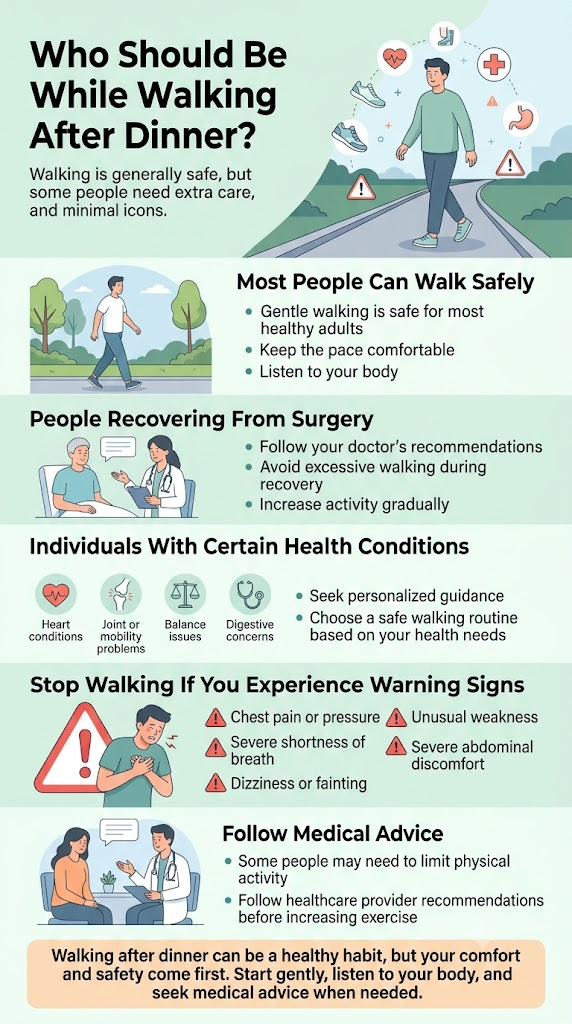
Certain individuals may require personalized guidance based on their health condition, recovery stage, or physical limitations.
People Recovering From Surgery
Individuals recovering from surgery should follow their healthcare provider’s recommendations before starting or increasing physical activity.
Depending on the type of surgery and recovery progress, some people may need to avoid walking for longer durations or follow specific movement guidelines to prevent strain and support proper healing.
Individuals With Certain Medical Conditions
People with certain health conditions may need advice about the type and intensity of physical activity that is appropriate for them.
This may include individuals with:
- Heart-related conditions
- Severe joint or mobility problems
- Balance issues
- Certain digestive disorders
- Conditions that affect exercise tolerance
A healthcare professional can suggest a safe walking routine based on individual needs.
People Experiencing Unusual Symptoms
Stop walking and seek medical advice if you experience symptoms such as:
- Chest pain or pressure
- Severe shortness of breath
- Dizziness or fainting
- Unusual weakness
- Severe abdominal discomfort
These symptoms should not be ignored, especially if they occur repeatedly during physical activity.
Those Advised to Limit Physical Activity
Some people may be advised by their doctor to restrict exercise or certain movements due to a medical condition, injury, or recovery process.
Always follow professional guidance regarding when and how to resume physical activity.
For most people, a gentle post-dinner walk can be a simple and beneficial habit. However, listening to your body and making adjustments based on your comfort level is important for maintaining a safe and healthy routine.
Common Mistakes to Avoid While Walking After Dinner
While walking after dinner can be a healthy habit that supports digestion and overall wellness, it is important to approach it correctly. Making a few common mistakes may reduce comfort or cause unnecessary strain on your body.
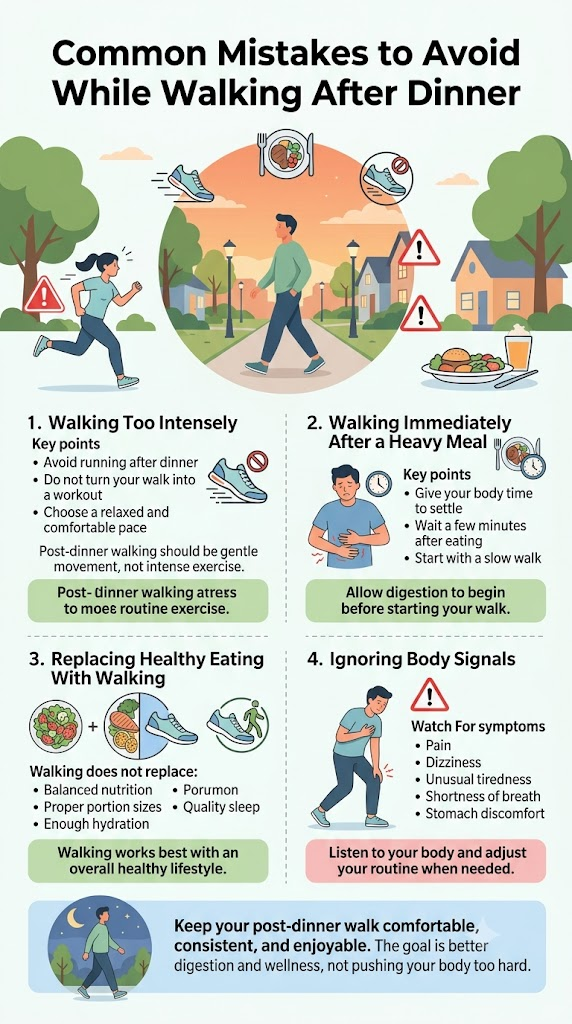
Here are some mistakes to avoid:
Walking Too Intensely
A post-dinner walk is meant to be gentle movement, not a high-intensity workout. Walking too fast, running, or doing strenuous exercise immediately after eating may cause discomfort, stomach cramps, or a feeling of heaviness.
Instead, choose a relaxed pace that allows you to walk comfortably and enjoy the activity.
Walking Immediately After a Very Large Meal
After a heavy meal, your digestive system needs time to begin processing food. Starting a walk immediately after eating a large dinner may make some people feel uncomfortable.
It is better to wait a few minutes, allow your body to settle, and then begin with a slow and comfortable walk.
Replacing Healthy Eating With Walking
Although walking after dinner offers several benefits, it does not cancel out unhealthy eating habits. A short walk cannot replace the importance of a balanced diet, proper portion sizes, and nutritious food choices.
For better overall health, combine regular walking with:
- A balanced diet
- Adequate hydration
- Quality sleep
- Regular physical activity
Ignoring Body Signals
Everyone’s body responds differently to physical activity after meals. Pay attention to how you feel during your walk and make adjustments when needed.
If you experience:
- Pain
- Dizziness
- Unusual tiredness
- Shortness of breath
- Stomach discomfort
Slow down, stop if necessary, and consider seeking medical advice if symptoms continue.
A comfortable and consistent walking routine is more beneficial than pushing yourself too hard. The goal is to support digestion and wellness while keeping the activity safe and enjoyable.
Conclusion
Walking after dinner is a simple and practical habit that can support digestion, encourage daily movement, and contribute to overall wellness. A gentle evening walk helps your body remain active after meals, reduces long periods of sitting, and may help you feel more comfortable after eating.
You do not need an intense workout or a long walking session to enjoy the benefits. Even a relaxed 10 to 15 minute walk after dinner can become an easy and sustainable part of your daily routine.
The key is consistency and comfort. Walking at a gentle pace, listening to your body, and making it a regular habit can help you build a healthier evening routine.
When combined with balanced nutrition, proper hydration, quality sleep, and other healthy lifestyle choices, a post-dinner walk can support better digestion, improved activity levels, and overall well-being throughout the day. Small habits practiced regularly can make a meaningful difference in your long-term health.
Medical Disclaimer: This article is for informational and educational purposes only. It is not intended to replace professional medical advice, diagnosis, or treatment. Always consult a qualified healthcare provider for medical concerns or before making healthcare decisions.