
Sleep is one of the most important parts of maintaining good health, yet many adults do not get enough of it. Busy work schedules, family responsibilities, stress, screen time, and irregular routines often reduce the amount of sleep people get each night.
Many people wonder, “How many hours of sleep do adults actually need?” While some believe they can function well on only a few hours of sleep, consistently getting too little rest may affect energy levels, concentration, mood, and overall well-being. Sleep also gives the body time to recover, supports brain function, and helps maintain physical and mental health.
The amount of sleep needed can vary depending on age, health, activity level, lifestyle, and individual differences. However, most healthy adults benefit from following general sleep recommendations and maintaining a consistent sleep schedule.
Understanding how many hours of sleep adults actually need can help you build healthier habits and recognize when you may not be getting enough rest. This guide explains recommended sleep duration for adults, why quality sleep matters, signs of insufficient sleep, factors that influence sleep needs, and practical tips for improving your sleep routine.
How Many Hours of Sleep Do Adults Actually Need?
For most healthy adults, the recommended amount of sleep depends mainly on age, lifestyle, and individual health needs. While sleep requirements can vary from person to person, experts generally recommend that adults get enough rest to support daily functioning, physical recovery, and mental well-being.
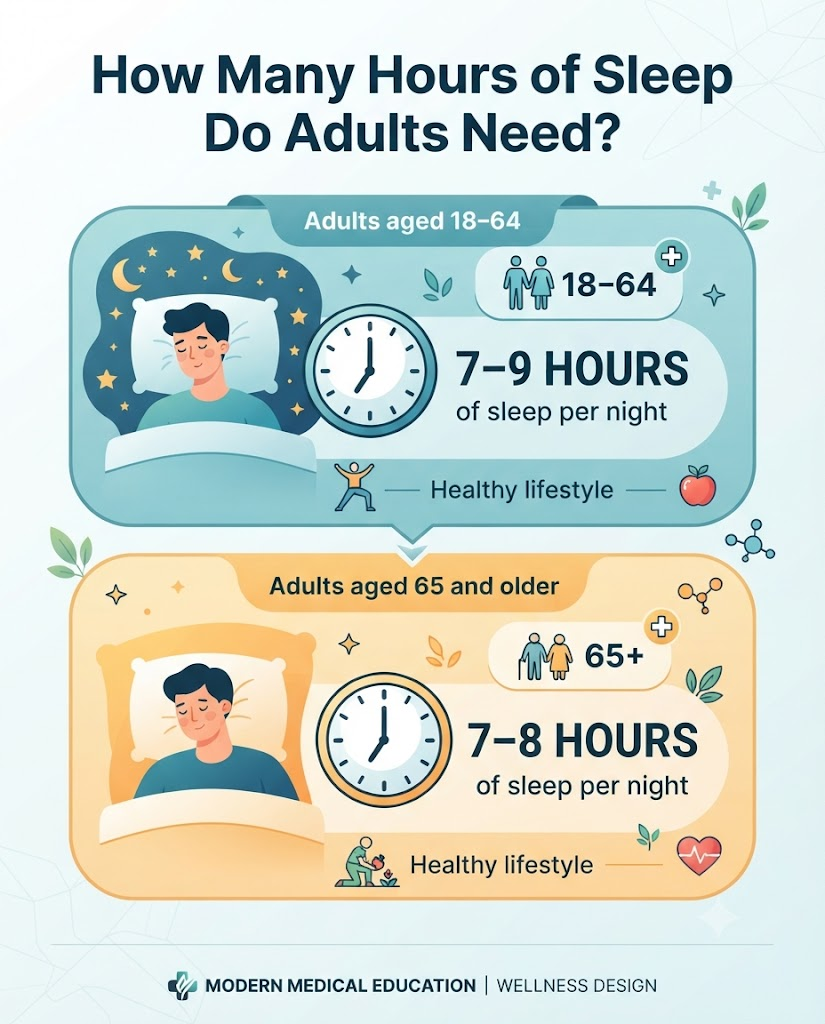
Getting the right amount of sleep is not only about the number of hours spent in bed. Quality of sleep also matters. A person who sleeps for enough hours but frequently wakes up during the night may not receive the same benefits as someone who gets uninterrupted, restorative sleep.
Adults Aged 18 to 64 Years
Most adults in this age group need:
7 to 9 hours of sleep per night
This range provides enough time for the body and brain to complete important sleep cycles, including deep sleep and rapid eye movement (REM) sleep.
Regularly getting less than the recommended amount may contribute to:
- Daytime tiredness
- Reduced concentration
- Lower productivity
- Mood changes
- Difficulty managing stress
- Increased dependence on caffeine
Adults with demanding work schedules, high physical activity levels, or increased stress may sometimes need closer to the higher end of this range.
Adults Aged 65 and Older
Older adults usually need:
7 to 8 hours of sleep per night
Although sleep patterns often change with age, older adults still need enough quality sleep to support memory, physical health, immune function, and emotional balance.
Many older adults may experience changes such as:
- Waking up more frequently during the night
- Becoming sleepy earlier in the evening
- Waking up earlier in the morning
These changes do not necessarily mean less sleep is needed. Maintaining good sleep habits remains important for healthy aging.
Individual Sleep Needs Can Vary
While general recommendations provide a helpful guide, some people may naturally function well with slightly less or more sleep. Factors such as genetics, lifestyle, health conditions, and daily activity levels can influence individual sleep needs.
The best indicator is often how you feel and perform during the day. If you wake up refreshed, stay alert, and can complete daily activities without excessive tiredness, your sleep routine may be meeting your needs.
However, consistently sleeping far below recommended levels can affect health over time. Making sleep a priority and creating a regular sleep schedule can help adults get the rest their bodies need.
Why Do Adults Need Enough Sleep?
Sleep is not simply a period when the body rests. It is an active process during which the body and brain perform important functions that support physical recovery, mental performance, and emotional well-being.
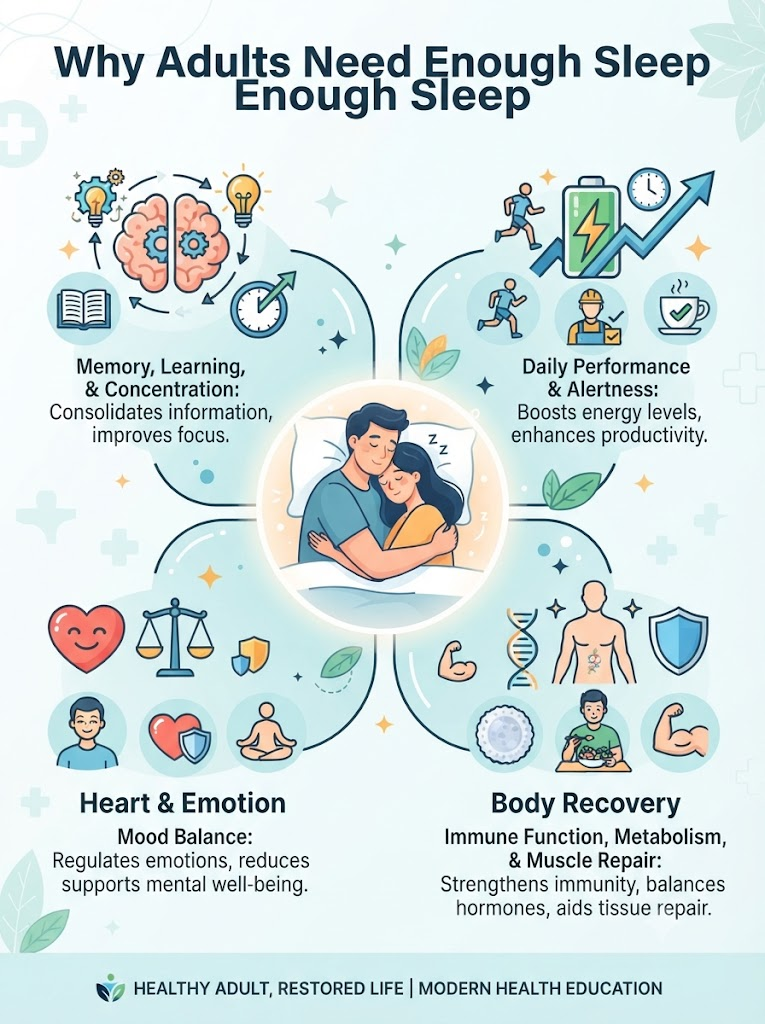
While we sleep, the body repairs tissues, restores energy, processes information, and regulates many important systems. Consistently getting enough quality sleep helps adults feel more alert, think clearly, and maintain better overall health.
Getting enough sleep helps:
Support Brain Function
Sleep plays an important role in memory, learning, concentration, and decision-making. During sleep, the brain processes information collected throughout the day, strengthens important memories, and prepares for new tasks.
A lack of sleep can affect how well the brain functions and may make it harder to:
- Focus on daily tasks
- Make decisions effectively
- Learn new information
- Remember important details
- Solve problems
Adequate sleep allows the brain to recharge and perform better during waking hours.
Improve Energy Levels
Quality sleep helps the body restore energy and prepare for physical and mental activities. Adults who maintain healthy sleep habits often feel more alert, productive, and capable of handling daily responsibilities.
Insufficient sleep may lead to:
- Daytime fatigue
- Low motivation
- Reduced physical performance
- Difficulty staying awake
- Feeling mentally exhausted
Even when people use caffeine or other stimulants to stay awake, these do not replace the recovery benefits of proper sleep.
Support Emotional Health
Sleep and emotional health are closely connected. When the body does not get enough rest, it can become harder to manage stress and regulate emotions.
Poor sleep may contribute to:
- Irritability
- Increased stress levels
- Mood changes
- Reduced patience
- Difficulty managing emotions
Following a consistent sleep routine can help improve emotional balance and make it easier to handle everyday challenges.
Support Physical Health
During sleep, the body performs important repair and maintenance processes. These activities help support physical recovery, immune defenses, and overall body function.
Adequate sleep supports:
- Immune system function
- Healthy metabolism
- Muscle recovery after activity
- Hormonal balance
- Normal body repair processes
Over time, consistently poor sleep may affect overall health and increase the risk of certain health concerns. Making quality sleep a regular priority is an important part of maintaining a healthy lifestyle.
Do All Adults Need Exactly 8 Hours of Sleep?
Not necessarily.
The commonly mentioned 8 hours of sleep is a useful average, but individual sleep needs can vary from person to person. While many adults feel their best within the recommended 7 to 9 hour range, some may naturally need slightly less or more sleep to feel refreshed and function properly.
For example, some adults may feel energetic and well-rested after around 7 hours of sleep, while others may need closer to 9 hours to maintain good concentration, energy levels, and mood throughout the day.
Several factors can influence how much sleep an adult needs, including:
- Age: Sleep requirements and patterns can change as people get older.
- Physical activity level: People with physically demanding jobs or regular intense exercise may need more recovery time.
- Health conditions: Certain health issues can affect both sleep duration and sleep quality.
- Stress levels: High stress can increase the need for rest and may also make it harder to get good-quality sleep.
- Work schedule: Irregular shifts or long working hours can influence sleep patterns.
- Lifestyle habits: Daily routines, screen use, diet, and caffeine consumption can affect sleep needs.
- Sleep quality: A person who gets deep, uninterrupted sleep may feel more rested with fewer hours than someone who frequently wakes during the night.
The most important question is not only how many hours you sleep, but also whether you wake up feeling rested, stay alert during the day, and can complete your daily activities comfortably. Good-quality sleep that leaves you refreshed is a better indicator of healthy rest than a specific number alone.
Signs You May Not Be Getting Enough Sleep
Many adults underestimate how much sleep they are actually missing. It is common to adjust to feeling tired and assume that low energy or poor concentration is a normal part of a busy lifestyle.
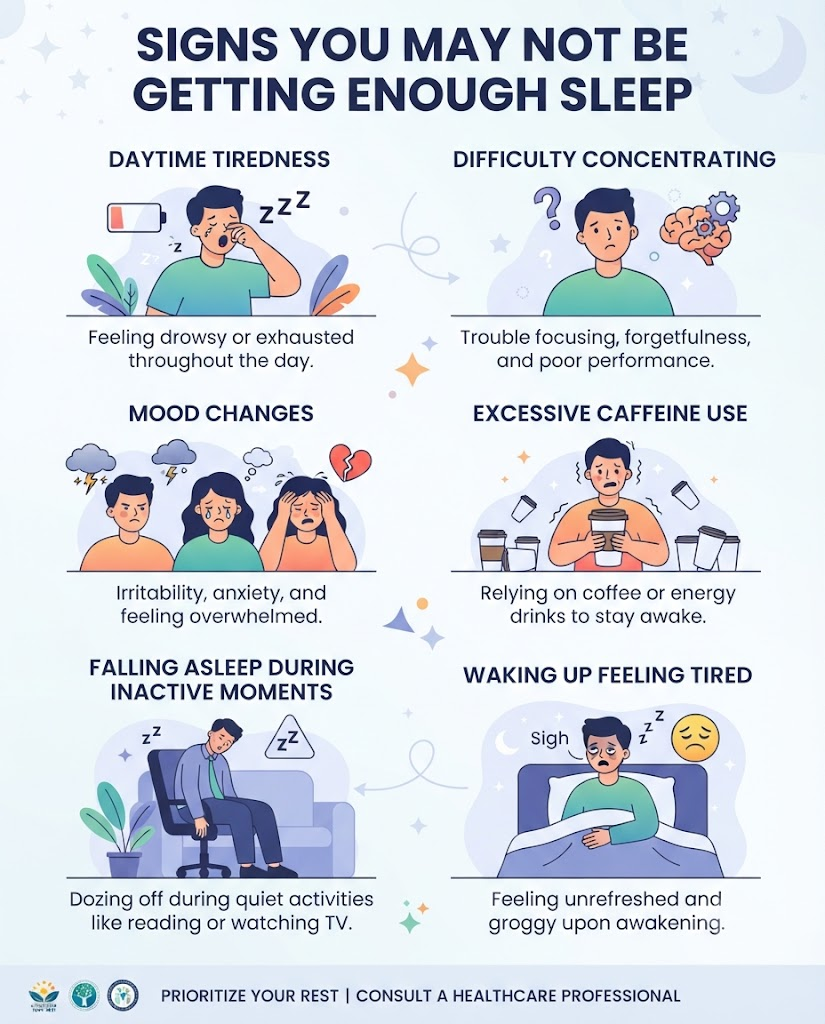
However, the body often provides warning signs when it is not getting enough rest. Recognizing these signs early can help you make changes to your sleep routine before tiredness starts affecting daily life.
Common signs of inadequate sleep include:
Feeling Tired During the Day
Frequent daytime fatigue may indicate that your body is not getting enough time to recover and recharge.
You may notice:
- Low energy throughout the day
- Feeling sleepy during routine activities
- Reduced motivation
- Difficulty staying alert
While occasional tiredness is normal, constant fatigue may be a sign that your sleep duration or sleep quality needs improvement.
Difficulty Concentrating
Sleep plays an important role in attention, memory, and problem-solving. When you do not get enough rest, your brain may struggle to perform these functions effectively.
Sleep loss can make it harder to:
- Focus on tasks
- Remember information
- Make decisions
- Complete work efficiently
Even small amounts of sleep loss can affect mental performance, especially when it happens regularly.
Mood Changes
Sleep and emotional health are closely connected. Lack of sleep can make it harder to manage everyday stress and regulate emotions.
Poor sleep may contribute to:
- Increased frustration
- Irritability
- Mood swings
- Emotional sensitivity
- Feeling overwhelmed more easily
Getting enough rest can support better emotional balance and improve the ability to handle daily challenges.
Needing Excessive Caffeine
Depending heavily on coffee, energy drinks, or other caffeinated products to stay awake may be a sign that your body needs more rest.
While caffeine can provide temporary alertness, it does not replace the recovery benefits of proper sleep. Regularly using caffeine to overcome tiredness may hide an underlying sleep problem.
Falling Asleep Quickly Anywhere
Regularly falling asleep during inactive situations, such as watching television, sitting quietly, or traveling as a passenger, may indicate that your body is not getting enough sleep.
Occasional sleepiness is common, but frequent unplanned dozing can be a sign of excessive daytime tiredness.
Waking Up Feeling Unrested
Even after spending enough time in bed, poor-quality sleep can leave you feeling tired in the morning.
You may wake up feeling unrefreshed due to:
- Frequent nighttime awakenings
- An uncomfortable sleep environment
- Stress or racing thoughts
- Disrupted sleep patterns
If you regularly wake up exhausted despite getting enough time in bed, improving sleep quality or seeking professional advice may be helpful.
Recognizing these signs can help you understand whether your current sleep habits are meeting your body’s needs and encourage healthier sleep routines.
Factors That Can Affect How Much Sleep Adults Need
Although general sleep recommendations provide a helpful guide, the amount of sleep an adult needs can change depending on different life circumstances. Factors such as stress, physical activity, health conditions, and daily routines can influence both sleep duration and sleep quality.
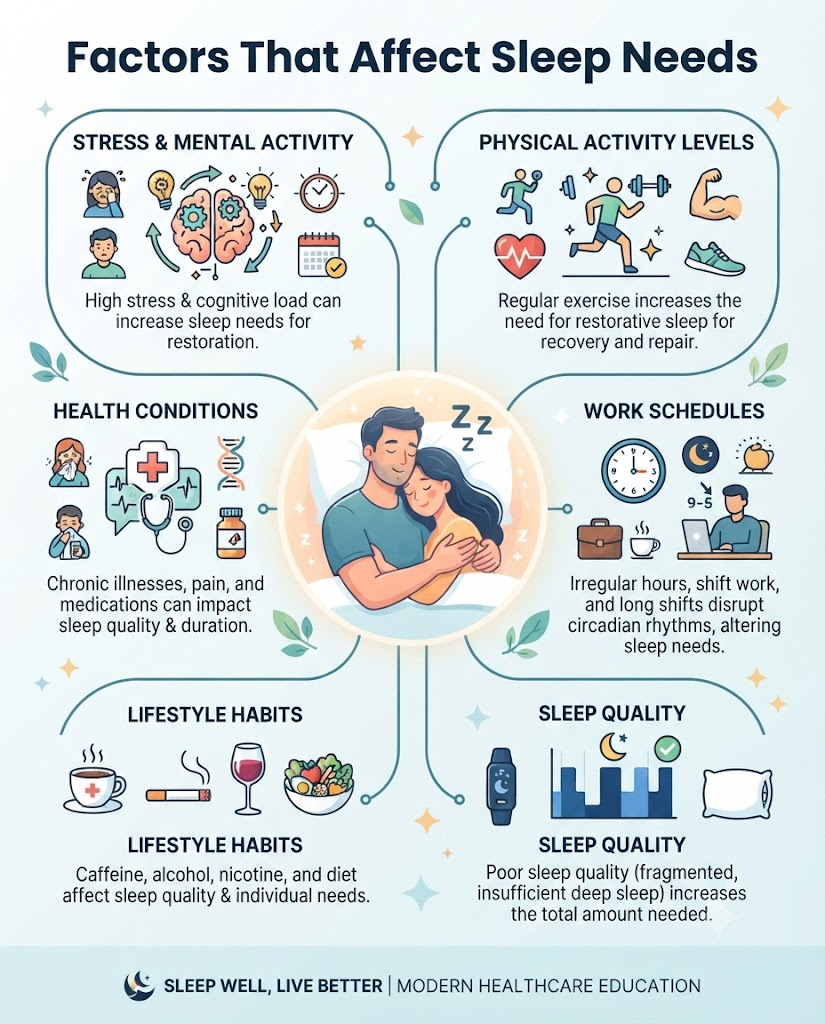
Understanding these factors can help you recognize why your sleep needs may differ at different stages of life.
Stress and Mental Activity
High levels of stress can make it harder to fall asleep and may reduce the overall quality of rest.
Work pressure, personal concerns, financial worries, and constant thinking can keep the brain active at night, making it difficult to relax before bedtime.
Stress-related sleep problems may include:
- Taking longer to fall asleep
- Waking up frequently during the night
- Feeling mentally tired despite sleeping
- Waking up earlier than expected
Managing stress through relaxation techniques, regular routines, and healthy habits can support better sleep.
Physical Activity
Physical activity can influence how much recovery time the body needs.
People who exercise regularly or perform physically demanding work may sometimes require more sleep to support:
- Muscle recovery
- Energy restoration
- Physical performance
- Body repair
However, intense exercise close to bedtime may make it harder for some people to relax and fall asleep.
Health Conditions
Certain health conditions can affect both sleep duration and sleep quality. Some people may spend enough time in bed but still experience poor-quality sleep because of underlying issues.
Examples include:
- Chronic pain
- Breathing problems during sleep
- Anxiety
- Depression
- Hormonal changes
Ongoing sleep difficulties should not be ignored. People who regularly struggle with sleep, wake up feeling exhausted, or experience symptoms affecting daily life should consider discussing their concerns with a healthcare professional.
Work Schedules
Daily schedules can have a major impact on sleep patterns. Night shifts, irregular working hours, and frequent changes in routine can disrupt the body’s natural sleep rhythm.
People with changing schedules may experience:
- Difficulty falling asleep at the desired time
- Reduced sleep duration
- Daytime tiredness
- Poor concentration
Maintaining a consistent sleep routine whenever possible can help the body adjust and support better-quality rest.
Quality of Sleep Matters as Much as Quantity
When it comes to healthy sleep, the number of hours you spend in bed is important, but it is not the only factor that matters. Sleeping for 8 hours does not always mean you are getting the restorative sleep your body needs.
Sleep quality determines how effectively your body and brain recover during the night. A person who sleeps for fewer hours but gets uninterrupted, deep sleep may feel more refreshed than someone who spends longer in bed but experiences frequent disruptions.
Good sleep quality usually includes:
Falling Asleep Without Excessive Difficulty
A healthy sleep routine often allows you to fall asleep within a reasonable amount of time after going to bed.
Taking a long time to fall asleep regularly may indicate issues such as stress, an inconsistent schedule, or poor bedtime habits.
Staying Asleep Through the Night
Quality sleep involves maintaining sleep without frequent interruptions.
Repeated waking during the night can prevent the body from completing important sleep cycles, leaving you feeling tired even after spending enough time in bed.
Getting Enough Deep Sleep
Deep sleep is an important stage of rest when the body carries out repair and recovery processes.
During deeper stages of sleep, the body supports:
- Physical recovery
- Energy restoration
- Immune function
- Memory processing
Disrupted sleep patterns may reduce the amount of deep sleep you receive.
Waking Up Feeling Refreshed
One of the best indicators of good sleep quality is how you feel after waking up.
A restful night of sleep usually helps you feel:
- More alert
- Mentally refreshed
- Ready for daily activities
- Less dependent on caffeine
Factors that can reduce sleep quality include:
- Frequent waking during the night
- Excessive noise or disturbances
- An uncomfortable sleeping environment
- Late-night screen use
- Stress and racing thoughts
Improving sleep habits, creating a comfortable sleep environment, and maintaining a consistent routine can help adults get more benefits from the hours they spend in bed. Quality sleep allows the body and mind to recover more effectively, making rest more meaningful.
Simple Ways to Improve Sleep Quality
Improving sleep quality does not always require major lifestyle changes. Small, consistent adjustments to your daily routine can help your body prepare for better rest and make it easier to get the benefits of the hours you spend sleeping.
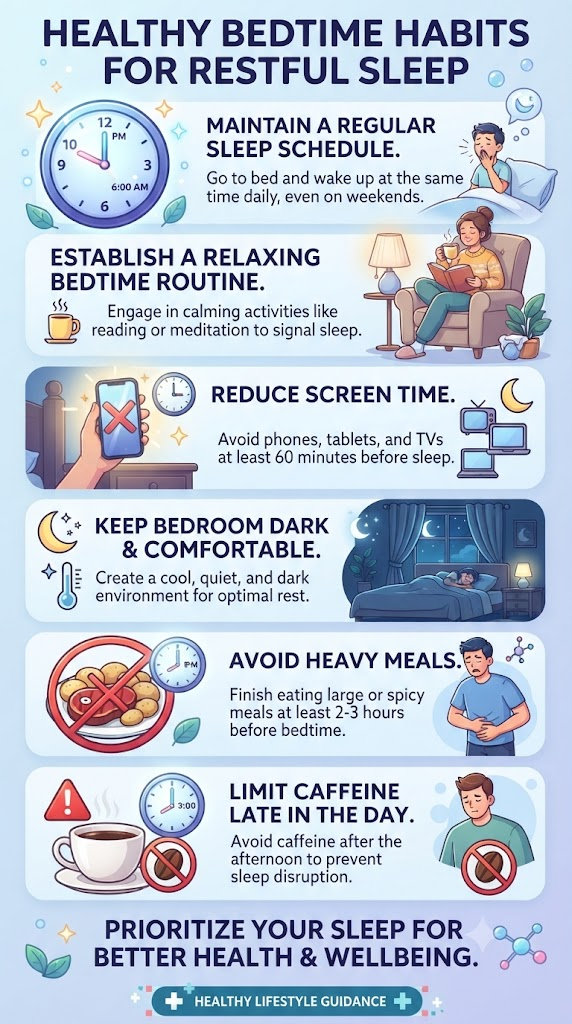
Healthy sleep habits can improve how quickly you fall asleep, reduce nighttime disturbances, and help you wake up feeling more refreshed.
Maintain a Regular Sleep Schedule
Try to go to bed and wake up at similar times every day, including weekends.
A consistent routine helps regulate the body’s internal clock, also known as the sleep-wake cycle. Over time, a regular schedule can make it easier for your body to recognize when it is time to sleep and when it is time to wake up.
Avoid frequently changing your sleep timing, as irregular patterns can make it harder to maintain good-quality rest.
Create a Relaxing Bedtime Routine
A calming routine before bed can help signal to your body that it is time to slow down and prepare for sleep.
Relaxing activities may include:
- Reading a book
- Gentle stretching
- Listening to calming music
- Practicing relaxation techniques
- Taking a warm shower
Creating a peaceful transition between daytime activities and sleep can make it easier to relax at night.
Reduce Screen Time Before Bed
Phones, tablets, computers, and televisions can make it harder for some people to relax before sleeping.
Using screens late at night may keep the brain active and interfere with a natural bedtime routine.
Try:
- Reducing screen use before bed
- Avoiding stimulating content late at night
- Keeping electronic devices away from the sleeping area
Replacing screen time with calming activities can support better sleep habits.
Make Your Bedroom Comfortable
A comfortable sleep environment can improve both sleep quality and relaxation.
A good bedroom environment should be:
- Dark to support natural sleep signals
- Quiet to reduce disturbances
- Comfortable with suitable bedding
- At a suitable temperature to prevent overheating or discomfort
Small changes, such as reducing noise or improving room comfort, can make a noticeable difference.
Avoid Heavy Meals Before Sleeping
Eating large meals close to bedtime may cause discomfort and make it harder to sleep.
Heavy or rich foods before sleeping can sometimes lead to:
- Feeling too full
- Digestive discomfort
- Difficulty relaxing
Try to finish larger meals a few hours before bedtime when possible.
Limit Caffeine Late in the Day
Caffeine can remain active in the body for several hours and may affect the ability to fall asleep or stay asleep.
To support better sleep:
- Avoid consuming large amounts of caffeine late in the day
- Be mindful of coffee, tea, energy drinks, and other caffeinated products
- Choose non-caffeinated options in the evening
Making these simple adjustments can help adults improve sleep quality and create healthier long-term sleep habits.
Can Adults Catch Up on Lost Sleep?
Sleeping longer after a few nights of poor sleep may help reduce tiredness temporarily and make you feel more rested. For example, getting extra sleep after a busy week or an occasional late night can help the body recover from short-term sleep loss.
However, regularly losing sleep and trying to recover only on weekends may not completely reverse the effects of ongoing sleep deprivation. A few extra hours of sleep may improve energy levels, but it does not always fully restore the benefits of consistent, high-quality rest.
Frequent sleep loss can affect:
- Energy levels
- Concentration and memory
- Mood and emotional balance
- Physical recovery
- Daily performance
Relying on catch-up sleep can also make it harder to maintain a consistent sleep schedule. Sleeping much later on weekends may shift the body’s internal clock and make it more difficult to fall asleep at the usual time.
A healthier approach is to build a consistent sleep routine that provides enough rest every night. Maintaining regular bedtimes, creating healthy sleep habits, and prioritizing quality sleep can help your body recover naturally and support better overall health.
Common Sleep Mistakes Adults Make
Many adults struggle with getting enough quality sleep because of everyday habits that gradually affect their sleep routine. While occasional late nights or disrupted sleep are common, repeating these habits regularly can reduce sleep quality and make it harder for the body to get the rest it needs.
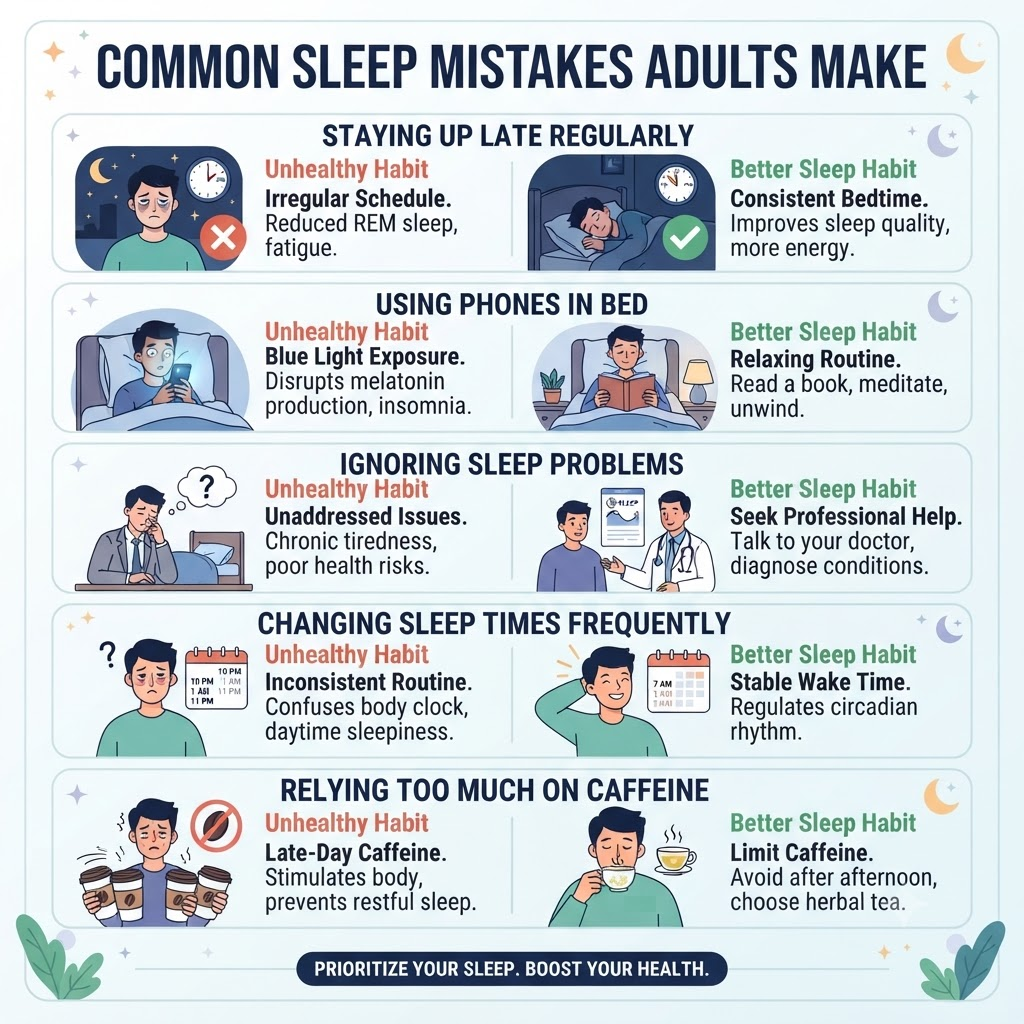
Recognizing common sleep mistakes is the first step toward building healthier habits.
Staying Up Late Regularly
Repeatedly delaying bedtime can reduce the total amount of sleep you get each night.
Late nights may happen because of work, entertainment, social activities, or screen use, but consistently sleeping too late can lead to:
- Shorter sleep duration
- Difficulty waking up in the morning
- Daytime tiredness
- Reduced concentration
Creating a regular bedtime can help ensure your body gets enough time to recover.
Using Phones in Bed
Scrolling through social media, watching videos, or using electronic devices late at night can make it harder for some people to relax and fall asleep.
Using phones in bed may:
- Keep the brain active
- Delay bedtime
- Interrupt a relaxing sleep routine
Creating a screen-free period before sleep can help the mind prepare for rest.
Ignoring Sleep Problems
Persistent difficulty sleeping should not be ignored, especially when it affects daily life.
Ongoing sleep problems may lead to:
- Constant tiredness
- Difficulty concentrating
- Mood changes
- Reduced productivity
If sleep difficulties continue despite healthy habits, discussing them with a healthcare professional may be helpful.
Sleeping at Different Times Every Day
An inconsistent sleep schedule can confuse the body’s natural sleep rhythm.
Frequently changing bedtime and wake-up times may make it harder to:
- Fall asleep easily
- Wake up refreshed
- Maintain regular sleep patterns
Keeping a consistent schedule, even on weekends, can support better sleep quality.
Relying Only on Caffeine
Caffeine can temporarily reduce feelings of tiredness, but it does not replace the recovery benefits of proper sleep.
Depending heavily on coffee, energy drinks, or other caffeinated products may hide the signs that your body needs more rest.
Instead of using caffeine as a solution for ongoing tiredness, focus on improving sleep duration and quality.
Avoiding these common mistakes and building healthier sleep habits can help adults get more restful and restorative sleep.
When Should You Talk to a Healthcare Professional?
Occasional poor sleep is common and can happen because of stress, busy schedules, travel, illness, or temporary changes in routine. However, ongoing sleep problems should not be ignored, especially when they start affecting your health, mood, or ability to complete daily activities.
Seeking medical advice can help identify possible causes of sleep difficulties and find appropriate solutions.
Consider talking to a healthcare professional if you:
Regularly Struggle to Fall Asleep
If you frequently spend a long time trying to fall asleep despite having enough time for rest, it may indicate an underlying sleep issue or unhealthy sleep pattern.
Wake Up Frequently During the Night
Repeated nighttime awakenings can prevent the body from completing important sleep cycles and may leave you feeling tired even after spending enough hours in bed.
Feel Extremely Tired Despite Enough Time in Bed
If you regularly wake up exhausted even after getting the recommended amount of sleep, the quality of your sleep may be affected.
Possible reasons may include:
- Frequent sleep interruptions
- Stress-related sleep problems
- An uncomfortable sleep environment
- Certain health conditions
Snore Loudly or Experience Breathing Interruptions During Sleep
Loud snoring, gasping, choking sensations, or pauses in breathing during sleep may be signs of a sleep-related breathing problem.
These symptoms should be discussed with a healthcare professional, especially if they occur regularly.
Have Difficulty Functioning During the Day Because of Sleep Problems
Sleep problems that affect your daily life deserve attention.
Consider seeking help if poor sleep leads to:
- Difficulty concentrating
- Excessive daytime sleepiness
- Mood changes
- Reduced work or daily performance
Addressing ongoing sleep concerns can help improve sleep quality, energy levels, and overall well-being. A healthcare professional can help determine possible causes and recommend suitable steps based on your individual situation.
Conclusion
Most adults need around 7 to 9 hours of sleep each night to support physical health, mental performance, and emotional well-being. While individual sleep needs may vary depending on age, lifestyle, health, and daily activities, consistently getting enough quality sleep is an important part of maintaining a healthy life.
Instead of focusing only on the number of hours spent in bed, it is also important to pay attention to how rested, alert, and energetic you feel during the day. Good-quality sleep allows the body and brain to recover, helping you stay focused, manage emotions, and perform daily activities more effectively.
Maintaining a regular sleep schedule, creating healthy bedtime habits, reducing factors that disturb sleep, and improving overall sleep quality can help adults get the rest their bodies need.
A good night’s sleep is not a luxury or wasted time. It is an essential part of maintaining overall health, supporting daily performance, and improving quality of life.
Medical Disclaimer: This article is for informational and educational purposes only. It is not intended to replace professional medical advice, diagnosis, or treatment. Always consult a qualified healthcare provider for medical concerns or before making healthcare decisions.