
Winter brings colder temperatures, shorter days, and changes in daily routines that can influence your overall health and well-being. During the colder months, people often spend more time indoors, which may increase exposure to seasonal illnesses. Cold weather can also affect lifestyle habits, such as reducing outdoor activity, getting less sunlight, and changing eating patterns.
Understanding the natural ways to boost your immune system in winter can help you build healthier routines and support your body’s natural defenses during the colder months. Your immune system works continuously to protect your body from harmful substances and maintain overall wellness. Supporting immune health requires a combination of proper nutrition, regular movement, quality sleep, stress management, and healthy daily habits.
While no single food, supplement, or lifestyle change can completely prevent illness, making consistent healthy choices can help support your immune function naturally. A balanced diet rich in vitamins, minerals, antioxidants, and protein provides essential nutrients your body needs. Staying active, drinking enough fluids, getting adequate rest, and practicing good hygiene can further contribute to better winter wellness.
Seasonal changes are a normal part of life, but preparing your body with healthy habits can help you feel more energetic, comfortable, and better equipped to handle the challenges of colder weather.
This guide explores simple and effective natural ways to boost your immune system in winter, including nutritious foods, lifestyle practices, and wellness habits that can help support your health throughout the colder months.
Why Immune Support Is Important During Winter
During winter, several environmental and lifestyle changes can influence how your body functions and how well your natural defenses work. Colder temperatures often change daily routines, causing people to spend more time indoors, reduce outdoor activities, and experience changes in diet and sleep habits.
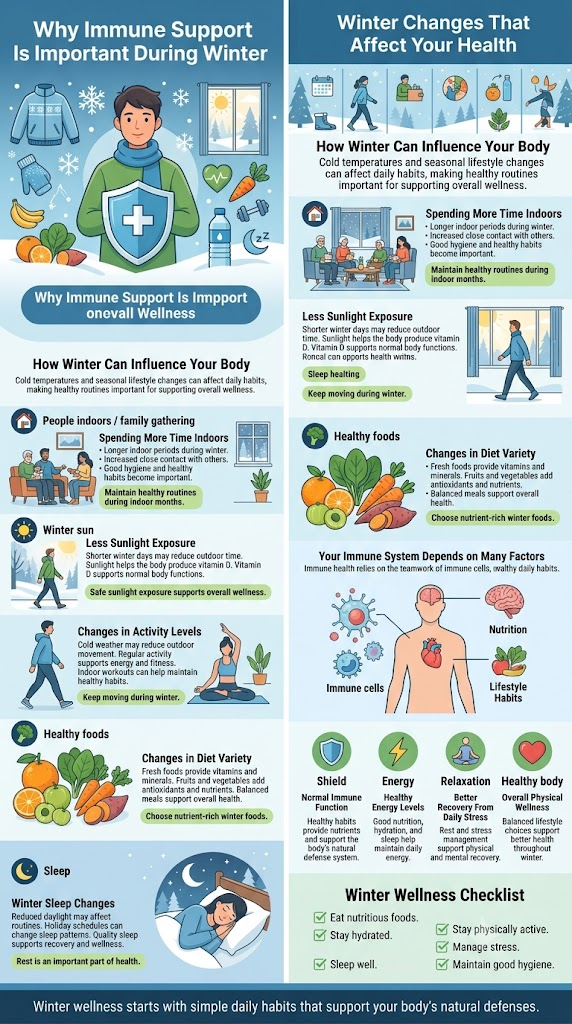
Although winter itself does not weaken your immune system, certain seasonal factors can affect your overall health and make it important to focus on healthy habits.
Cold weather may contribute to:
Spending More Time Indoors With Others
During colder months, people often stay indoors for longer periods. Increased indoor time may mean closer contact with others, making healthy habits such as proper hygiene and maintaining overall wellness especially important.
Reduced Exposure to Sunlight
Shorter days and less time outdoors during winter may reduce sunlight exposure. Sunlight helps the body produce vitamin D, which plays an important role in several body functions, including supporting normal immune health.
Changes in Physical Activity Levels
Cold weather may reduce outdoor activities and exercise routines. Lower physical activity levels can affect energy, mood, and overall wellness. Maintaining regular movement during winter can help support a healthy lifestyle.
Less Variety in Fresh Seasonal Foods
Some people may consume fewer fresh fruits and vegetables during winter. A varied diet provides important vitamins, minerals, antioxidants, and other nutrients that support normal body functions.
Changes in Sleep Patterns
Winter routines, holiday schedules, and reduced daylight can sometimes affect sleep habits. Getting enough quality sleep is important because rest allows your body to recover and maintain balance.
Your immune system relies on many parts of your body working together, including immune cells, organs, nutrients, and healthy lifestyle habits. Supporting these areas through everyday choices can help maintain your body’s natural defense system.
Supporting your immune health during winter can help your body maintain:
| Area Supported | How It Helps |
|---|---|
| Normal Immune Function | Provides the body with nutrients and habits needed to support its natural defense mechanisms. |
| Healthy Energy Levels | Proper nutrition, hydration, and sleep help maintain daily energy during colder months. |
| Better Recovery After Daily Stress | Rest, relaxation, and healthy routines support the body’s ability to recover. |
| Overall Physical Wellness | Balanced lifestyle habits contribute to better health throughout the winter season. |
By understanding how winter changes can affect your body, you can take simple preventive steps to support your health and maintain wellness during the colder months.
Natural Ways to Boost Your Immune System in Winter
Cold weather can challenge your body’s natural defenses, but simple daily habits can help you stay healthier throughout winter. Discover natural ways to support your immune system with the right foods, lifestyle choices, and wellness practices.
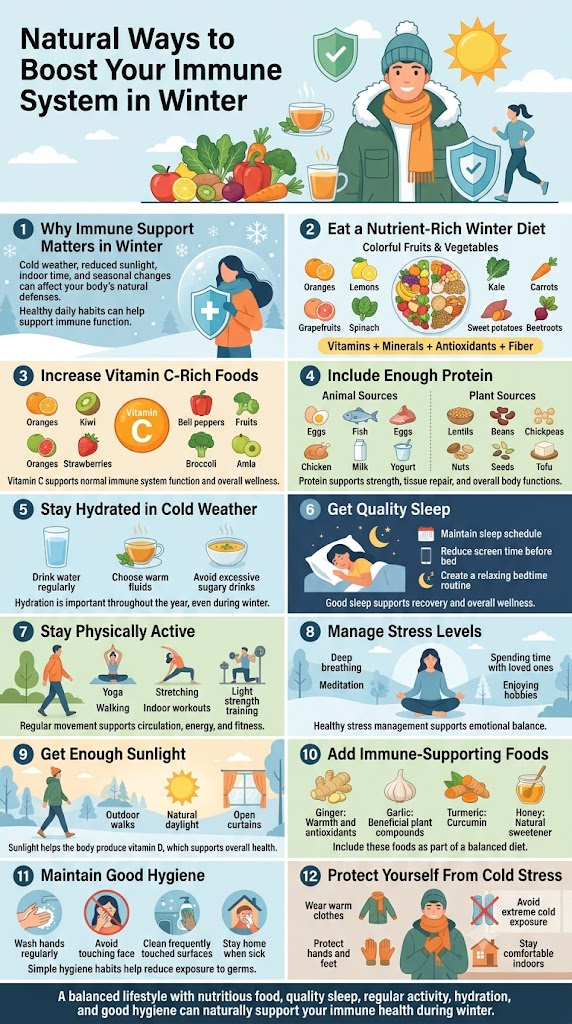
Eat a Nutrient-Rich Winter Diet
A balanced and nutrient-rich diet is one of the most important ways to support your immune system naturally. Your body needs a combination of vitamins, minerals, antioxidants, protein, healthy fats, and other nutrients to maintain normal immune function and overall health.
During winter, many people rely more on heavy or comfort foods that may fill them up but do not always provide enough essential nutrients. That is why it helps to focus on whole foods that nourish the body and support energy levels throughout the colder months.
A healthy winter diet should include seasonal fruits, vegetables, protein-rich foods, and warm, nourishing meals that help maintain strength and wellness.
Include Colorful Fruits and Vegetables
Fruits and vegetables contain important vitamins, minerals, fiber, and plant compounds that contribute to a healthy diet. Eating a variety of colorful produce helps ensure you receive a wider range of nutrients.
Citrus Fruits
Examples:
- Oranges
- Lemons
- Grapefruits
- Tangerines
Citrus fruits are popular winter choices because they provide vitamin C and antioxidants. Vitamin C plays an important role in normal immune system function and helps support overall health. These fruits are also refreshing and easy to include in daily meals or snacks.
Leafy Green Vegetables
Examples:
- Spinach
- Kale
- Fenugreek leaves
- Mustard greens
Leafy greens provide vitamins, minerals, fiber, and beneficial plant compounds. Including them in winter meals can help add nutritional variety to your diet while supporting overall wellness.
Root Vegetables
Examples:
- Carrots
- Sweet potatoes
- Beetroots
Root vegetables are nutritious winter foods that provide fiber, vitamins, minerals, and natural carbohydrates that support daily energy needs. They can be added to soups, curries, roasted meals, and other winter dishes.
Including different types of fruits and vegetables throughout the week can help create a balanced diet and provide a broad range of nutrients.
Increase Vitamin C-Rich Foods
Vitamin C is an essential nutrient that supports normal immune system function and helps the body maintain healthy tissues. Including vitamin C-rich foods in your daily meals can help ensure adequate intake of this important nutrient.
Good sources of vitamin C include:
- Oranges
- Kiwi
- Strawberries
- Bell peppers
- Broccoli
- Amla (Indian gooseberry)
Fresh fruits and vegetables are often excellent sources of vitamins and minerals. Instead of depending only on supplements, try to include a variety of natural food sources as part of your regular diet.
Vitamin C-rich foods can easily be added to winter meals through:
- Fresh fruit snacks
- Salads
- Homemade juices without added sugar
- Vegetable-based meals
Including these foods regularly can help make your winter diet more varied, colorful, and nutritious.
Include Enough Protein in Your Meals
Protein is an important nutrient that supports muscle maintenance, tissue repair, and many normal body processes. It also helps maintain overall strength and energy levels during winter.
A diet that includes enough protein can help your body function properly and support general wellness.
Animal-Based Protein Sources
Examples:
- Eggs
- Fish
- Chicken
- Milk
- Yogurt
Plant-Based Protein Sources
Examples:
- Lentils
- Beans
- Chickpeas
- Nuts
- Seeds
- Tofu
Try including a source of protein in each major meal. For example:
- Eggs with breakfast
- Lentils or beans with lunch
- Yogurt or nuts as snacks
- Fish, chicken, or tofu with dinner
A balanced intake of protein along with fruits and vegetables can support overall nutrition during colder months and help keep meals satisfying.
Stay Hydrated Even in Cold Weather
Many people drink less water during winter because they may not feel as thirsty compared with warmer months. However, proper hydration remains important throughout the year.
Water supports several essential body functions, including:
- Normal circulation
- Digestion
- Nutrient transport
- Temperature regulation
- Overall body function
Helpful winter hydration tips include:
- Drink water regularly throughout the day
- Include warm fluids such as soups and herbal teas
- Avoid excessive sugary beverages
- Pay attention to signs of dehydration
Warm drinks can provide comfort during cold weather while helping maintain regular fluid intake. Staying hydrated also supports energy levels and helps your body function normally.
Get Enough Quality Sleep
Sleep plays an important role in maintaining overall health and supporting normal immune function. During sleep, the body performs important recovery and repair processes that contribute to physical and mental well-being.
Poor sleep habits may affect:
- Energy levels
- Mood
- Concentration
- Overall wellness
Adults should aim for consistent, good-quality sleep by:
- Maintaining a regular sleep schedule
- Going to bed and waking up at similar times
- Limiting screen exposure before bedtime
- Creating a comfortable sleeping environment
- Following a relaxing nighttime routine
Getting enough rest allows your body to recover and stay prepared for daily activities. Good sleep is one of the simplest and most important ways to support wellness during winter.
Stay Physically Active
Cold temperatures can make it tempting to spend more time indoors and reduce physical activity. However, regular movement remains important for maintaining overall health during winter.
Winter-friendly activities include:
- Walking
- Yoga
- Stretching exercises
- Indoor workouts
- Light strength training
Regular physical activity supports:
- Healthy circulation
- Energy levels
- Stress management
- Muscle strength
- Overall fitness
You do not need intense workouts every day. Consistent moderate exercise can provide benefits and help maintain a healthy lifestyle during colder months. Even short daily movement can make a meaningful difference.
Manage Stress Levels
Stress is a normal part of life, but managing daily stress is important for overall health and wellness.
Long periods of stress can affect sleep, energy levels, mood, and daily habits. Practicing healthy stress-management techniques can help maintain emotional balance and support a healthier routine.
Helpful activities include:
Deep Breathing
Slow breathing exercises can encourage relaxation and help calm the mind.
Meditation
Mindfulness and meditation practices may help improve focus and promote relaxation.
Spending Time With Loved Ones
Positive social connections can support emotional well-being and help reduce feelings of stress.
Enjoying Hobbies
Activities such as reading, music, gardening, or creative work can provide relaxation and enjoyment.
Finding simple ways to relax during winter can help support a healthier lifestyle and improve your daily sense of well-being.
Get Enough Sunlight
During winter, shorter days and colder weather may reduce outdoor time and sunlight exposure.
Sunlight helps the body produce vitamin D, which plays an important role in many body functions, including immune health.
Ways to get more natural light include:
- Spending time outdoors during daylight hours
- Taking short walks outside when weather allows
- Opening curtains to allow sunlight indoors
- Maintaining outdoor activities safely
If you are concerned about vitamin D levels, speak with a healthcare professional about testing or supplementation options. Even small amounts of daily sunlight can help support your overall winter routine.
Add Immune-Supporting Spices and Foods
Many traditional winter foods include herbs and spices that provide antioxidants and beneficial plant compounds.
Common examples include:
Ginger
Ginger is commonly used in teas and meals during winter. It adds warmth and flavor while contributing beneficial plant compounds to the diet.
Garlic
Garlic contains natural compounds and is a popular ingredient in many healthy meals.
Turmeric
Turmeric contains curcumin, a plant compound known for its antioxidant properties.
Honey
Honey can be used as a natural sweetener in moderation.
These foods can be part of a balanced diet but should not replace nutritious meals or healthy lifestyle habits. They work best when included as part of an overall healthy routine.
Maintain Good Hygiene Habits
Good hygiene practices are especially important during winter when seasonal illnesses are more common.
Helpful habits include:
- Washing hands regularly with soap and water
- Avoiding touching your face with unwashed hands
- Covering your mouth when coughing or sneezing
- Cleaning frequently touched surfaces
- Staying home when feeling unwell
Simple hygiene habits can help reduce exposure to germs and support personal and community health. These everyday steps are especially useful in shared indoor spaces during colder months.
Avoid Excessive Alcohol and Smoking
Certain lifestyle habits can negatively affect overall health and wellness.
Smoking can affect lung health and the body’s natural defense mechanisms. Excessive alcohol consumption may also interfere with healthy lifestyle habits and reduce overall well-being.
Healthier choices include:
- Avoiding smoking
- Limiting alcohol intake
- Eating balanced meals
- Staying physically active
- Getting enough sleep
Making positive lifestyle choices supports better overall health during winter and throughout the year. Small changes in daily habits can make a big difference over time.
Keep Warm and Protect Yourself From Cold Stress
Cold temperatures can place additional stress on the body, especially during extreme weather conditions.
Protect yourself by:
- Wearing warm clothing
- Keeping hands, feet, and head covered in very cold weather
- Avoiding long exposure to freezing temperatures
- Maintaining comfortable indoor temperatures
Staying warm and comfortable allows your body to focus on normal functions without unnecessary stress from extreme cold. Proper clothing, warm indoor spaces, and sensible outdoor protection can all help you feel better during winter.
Winter Foods That Support Immune Health
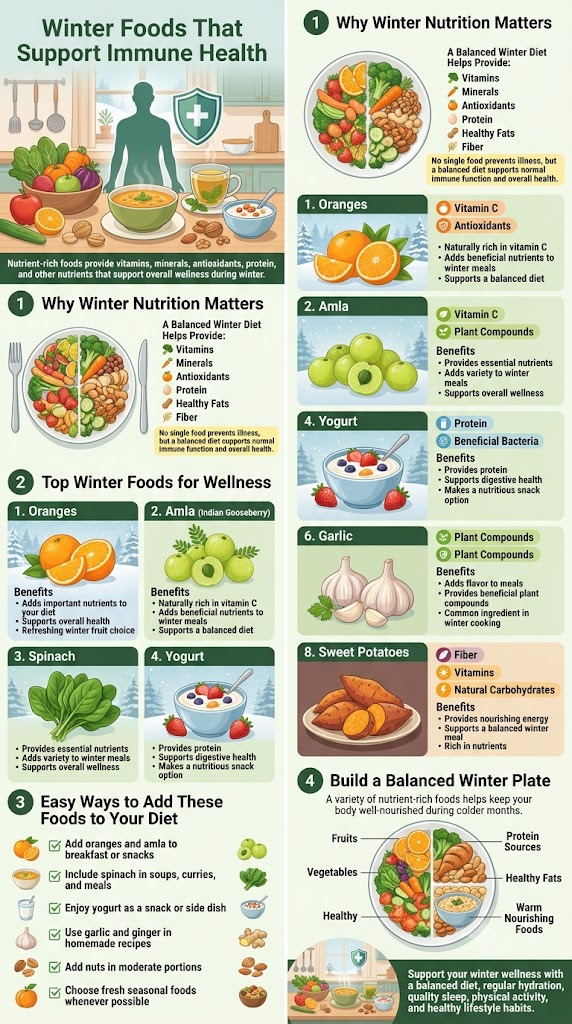
Including nutrient-rich foods in your winter diet can help provide your body with essential vitamins, minerals, antioxidants, protein, and other nutrients needed for overall wellness. While no single food can prevent illness, a balanced diet with a variety of healthy foods can support normal immune function and help your body stay strong during colder months.
| Food | Key Nutrients Provided | How It Supports Winter Wellness |
|---|---|---|
| Oranges | Vitamin C and antioxidants | Oranges are a popular winter fruit that provides vitamin C and antioxidants. They can help add important nutrients to your diet while supporting overall health. |
| Amla (Indian Gooseberry) | Vitamin C and plant compounds | Amla is naturally rich in vitamin C and beneficial plant compounds, making it a nutritious addition to winter meals. |
| Spinach | Vitamins, minerals, and fiber | Spinach provides essential nutrients such as vitamins and minerals that contribute to a balanced and healthy diet during winter. |
| Yogurt | Protein and beneficial bacteria | Yogurt provides protein and contains beneficial bacteria that support digestive health as part of a balanced diet. |
| Nuts | Healthy fats, protein, and nutrients | Nuts provide healthy fats, minerals, and plant-based nutrients that can help support energy levels during colder months. |
| Garlic | Plant compounds and antioxidants | Garlic contains natural plant compounds and adds flavor to winter meals while contributing beneficial nutrients. |
| Ginger | Antioxidants and beneficial plant compounds | Ginger is commonly used in winter foods and beverages for its flavor and antioxidant properties. |
| Sweet Potatoes | Fiber, vitamins, and natural carbohydrates | Sweet potatoes provide fiber, vitamins, and energy-supporting nutrients, making them a nourishing winter food choice. |
Tips for Including These Foods in Your Winter Diet
- Add citrus fruits like oranges and amla to breakfast or snacks.
- Include leafy greens such as spinach in soups, curries, or meals.
- Add yogurt as a side dish or snack option.
- Use garlic and ginger to enhance the flavor of homemade meals.
- Include nuts as a healthy snack in moderate portions.
- Choose seasonal foods whenever possible for freshness and variety.
A diverse winter diet that includes fruits, vegetables, protein sources, and nutrient-rich foods can help support overall health and keep your body well-nourished during colder months.
Who Should Take Extra Care During Winter?
While winter can be enjoyed by most people with simple healthy habits, some individuals may need extra care because cold weather and seasonal changes can affect their health more significantly.
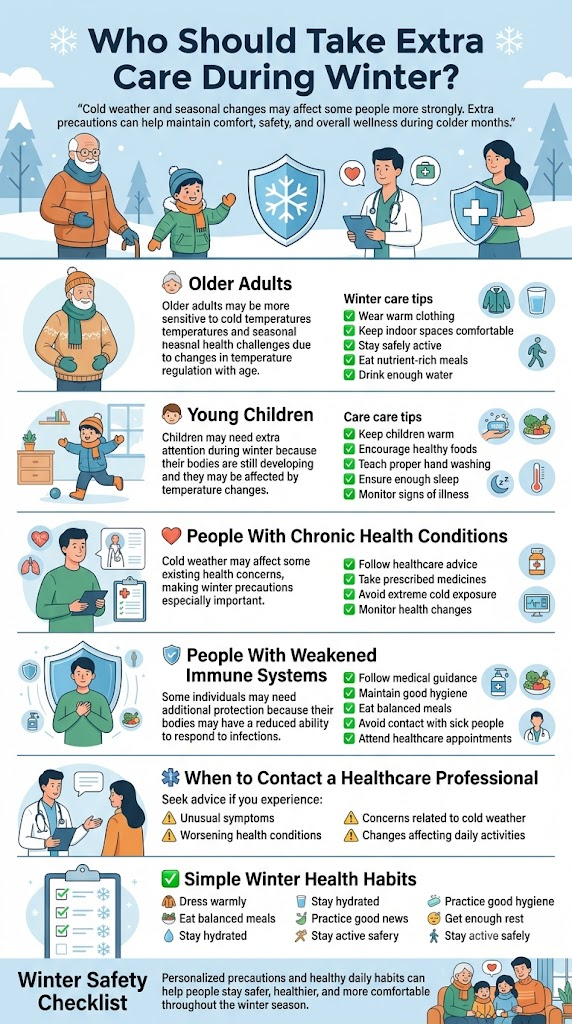
Certain groups may have a higher risk of health challenges during colder months and should take additional precautions to stay comfortable and protected.
Older Adults
Older adults may need extra attention during winter because the body’s ability to regulate temperature can change with age. They may also be more sensitive to cold conditions and seasonal illnesses.
Helpful precautions include:
- Wearing warm clothing in cold weather
- Maintaining a comfortable indoor temperature
- Staying physically active safely
- Eating a balanced nutrient-rich diet
- Staying hydrated even when thirst is reduced
Young Children
Young children may require additional care during winter because their immune systems are still developing and they may be more affected by temperature changes.
Parents and caregivers should focus on:
- Keeping children warm and comfortable
- Encouraging healthy meals
- Teaching proper hand hygiene
- Ensuring enough sleep and rest
- Monitoring for signs of illness
People With Chronic Health Conditions
Individuals with chronic health conditions may need extra precautions during winter because cold temperatures can sometimes affect existing health concerns.
People with conditions such as respiratory, heart, or other long-term health issues should:
- Follow their healthcare provider’s recommendations
- Take prescribed medications as directed
- Avoid unnecessary exposure to extreme cold
- Monitor any changes in symptoms
Individuals With Weakened Immune Systems
People with weakened immune systems may need additional protection during winter because their bodies may have a reduced ability to respond to infections.
Helpful steps may include:
- Following medical advice carefully
- Maintaining good hygiene habits
- Eating a balanced diet
- Avoiding close contact with people who are unwell
- Keeping regular healthcare appointments when needed
When to Seek Medical Advice
If you or someone in your family experiences unusual symptoms, worsening health conditions, or concerns related to cold weather, consult a healthcare professional for guidance.
Taking personalized precautions and maintaining healthy daily habits can help people stay safer, healthier, and more comfortable throughout the winter season.
Conclusion
Supporting your immune system during winter does not require complicated solutions or extreme changes. Simple, consistent daily habits can help your body maintain overall health and support its natural defenses during colder months.
Eating a balanced diet with seasonal fruits, vegetables, protein-rich foods, and nutrient-dense meals provides important vitamins and minerals. Staying hydrated, getting enough quality sleep, staying physically active, managing stress, and practicing good hygiene are also essential parts of a healthy winter routine.
While seasonal changes are a normal part of life, preparing your body with positive lifestyle choices can help you feel more energetic, comfortable, and better prepared during colder weather.
A balanced approach that combines proper nutrition, regular movement, adequate rest, and healthy self-care habits is one of the most effective natural ways to support your immune health in winter and maintain overall wellness throughout the season.
Medical Disclaimer: This article is for informational and educational purposes only. It is not intended to replace professional medical advice, diagnosis, or treatment. Always consult a qualified healthcare provider for medical concerns or before making healthcare decisions.