A routine blood test is one of the most common and effective ways healthcare providers assess your overall health, monitor existing medical conditions, and check how different systems in your body are functioning. Blood tests can provide valuable information about important health markers, including blood sugar levels, cholesterol, blood cell counts, organ function, and other indicators.
Although most blood tests are quick and straightforward, proper preparation can help ensure that the results are as accurate and reliable as possible. Small factors before testing, such as what you eat, how much water you drink, your activity level, stress, sleep quality, and certain medications, may sometimes influence blood measurements.
Many people assume that no preparation is needed before a blood test, but following a few simple steps can make the process smoother and help your healthcare provider get a clearer understanding of your health. For example, eating before a fasting test, exercising heavily, or not drinking enough water may affect some results or make blood collection more difficult.
Preparation requirements can vary depending on the type of blood test you are having. Some tests require fasting for a specific period, while others allow normal eating and drinking. Your doctor or laboratory may also provide specific instructions regarding medications, supplements, or lifestyle habits before the test.
This guide explains how to prepare your body before a routine blood test, including fasting requirements, hydration tips, food choices, exercise considerations, medication guidance, what to avoid before testing, and simple steps to make your blood test experience more comfortable.
Why Proper Preparation Before a Blood Test Matters
Preparing properly before a blood test plays an important role in getting accurate and reliable results. Blood tests measure different substances and markers in your body, and certain daily habits or temporary changes can affect these measurements.
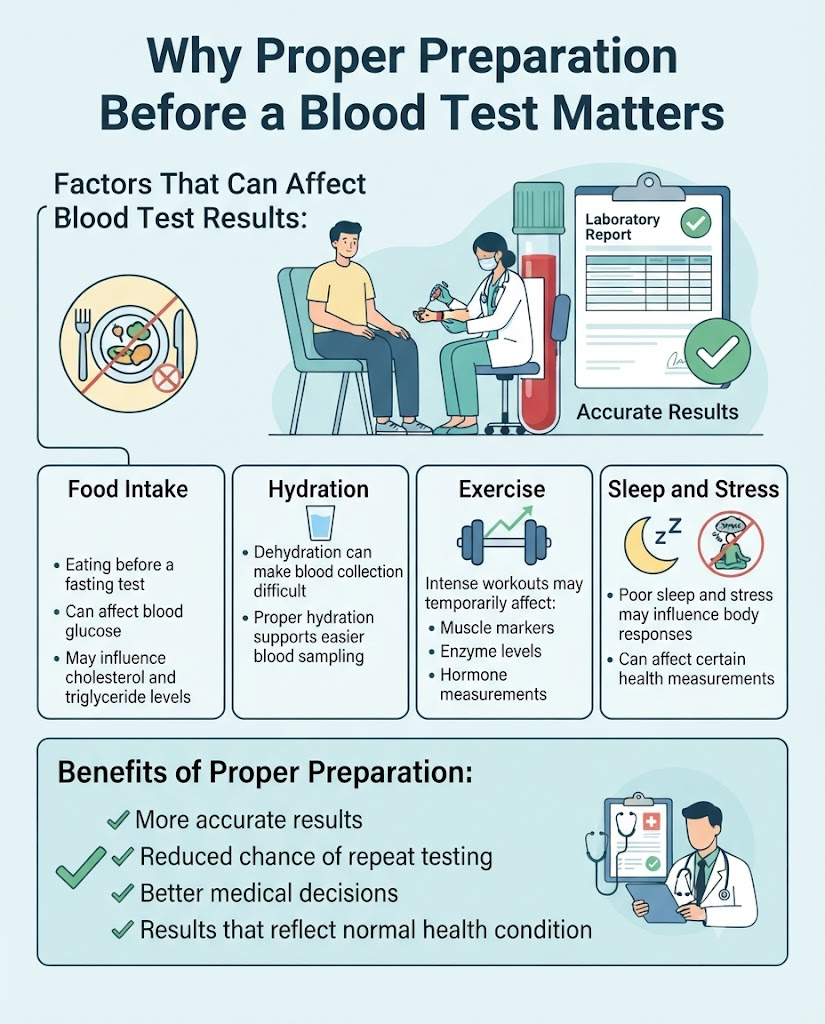
Factors such as eating before a fasting test, not drinking enough water, intense physical activity, stress, or poor sleep may cause temporary changes in some blood values. These changes may make it harder for healthcare providers to understand your results accurately.
For example, eating a meal before a fasting blood test may affect measurements such as:
- Blood glucose levels: Food intake can temporarily increase blood sugar levels and affect the accuracy of certain diabetes-related tests.
- Cholesterol levels: Recent meals may influence some cholesterol measurements, especially when checking lipid profiles.
- Triglycerides: Fat-containing meals can cause temporary increases in triglyceride levels.
- Certain metabolic markers: Some substances measured in blood may change depending on food intake, hydration, and activity levels.
Similarly, dehydration may make blood collection more difficult, while intense exercise can temporarily affect certain enzymes, hormones, and muscle-related markers. Stress and lack of sleep may also influence some health measurements by affecting the body’s normal responses.
Proper preparation helps:
- Provide more accurate results: Correct preparation allows test results to better reflect your usual health condition.
- Reduce the chance of repeat testing: Following instructions properly can help avoid unclear or affected results that may require another blood sample.
- Help doctors make better health decisions: Reliable results allow healthcare providers to recommend appropriate advice, treatment, or follow-up.
- Ensure your test reflects your normal health condition: Preparing properly helps minimize temporary factors that could influence your results.
Taking a few simple steps before a blood test can make the process smoother and provide your healthcare team with more dependable information about your health.
How to Prepare Your Body Before A Routine Blood Test
A blood test may take only a few minutes, but what you do before it can affect your results. Learn simple steps to prepare your body and make your test more accurate.
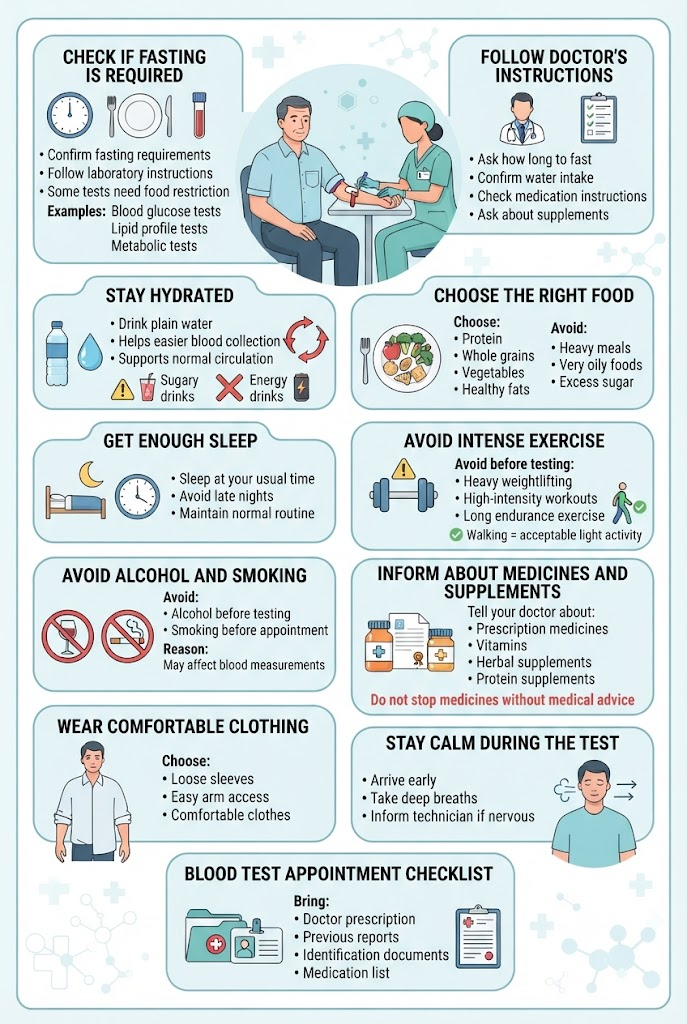
Understand Whether You Need to Fast
Not every blood test requires fasting, so it is important to understand the preparation instructions before your appointment. Fasting means avoiding food and certain drinks for a specific period before the blood sample is collected. Whether fasting is needed depends on the type of test being performed.
Your doctor or laboratory will provide guidance on whether you need to fast and how long you should avoid eating. Following these instructions carefully can help ensure that your results are accurate and useful for evaluating your health.
Blood Tests That May Require Fasting
Some blood tests require you to avoid food for a certain number of hours before testing because recent meals can affect the levels of certain substances in your blood.
Examples of tests that may require fasting include:
- Blood glucose tests: Fasting may be required to measure blood sugar levels accurately and assess how your body manages glucose.
- Lipid profile tests: Some cholesterol and triglyceride measurements may be affected by recent food intake.
- Certain metabolic tests: Some tests that evaluate body functions and chemical levels may require fasting for more reliable results.
During fasting, you are usually asked to avoid food and calorie-containing beverages. In many cases, drinking plain water is allowed and may even help make blood collection easier. However, always follow the instructions provided by your healthcare provider.
Follow Your Doctor’s Instructions
Do not assume that fasting is required for every blood test, and do not stop eating, drinking, or taking medications without proper guidance.
Before your appointment, confirm important details such as:
- Do I need to fast before the test?
- How many hours should I avoid food?
- Can I drink water during the fasting period?
- Should I take my regular medicines before the test?
- Are there any foods, drinks, or supplements I should avoid?
Following the correct preparation instructions helps prevent inaccurate results, reduces the need for repeat testing, and allows your healthcare provider to make better decisions based on your blood test findings.
Stay Hydrated Before Your Blood Test
Drinking enough water before a blood test is an important part of preparation. Proper hydration helps maintain normal blood circulation and can make the blood collection process easier for both you and the healthcare professional.
When your body is dehydrated, your veins may become less visible or harder to access, which can sometimes make it more difficult to collect the blood sample. Dehydration may also contribute to feelings of dizziness or discomfort during or after the procedure.
Staying properly hydrated before your appointment may help:
- Make blood collection easier: Well-hydrated veins are often easier to locate, which can make the process quicker and more comfortable.
- Reduce discomfort during the procedure: Good hydration may help reduce the difficulty of drawing blood and minimize repeated attempts.
- Support normal blood circulation: Adequate fluid levels help maintain healthy circulation and support normal body functions.
Best Choice: Plain Water
Before most routine blood tests, plain water is usually the safest choice unless your healthcare provider has given different instructions.
Drinking water before a blood test can help you stay hydrated without affecting many common test results. If you are fasting, water is often allowed, but always confirm with your doctor or laboratory because preparation rules can vary depending on the test.
Avoid Replacing Water With Other Drinks
During preparation for a blood test, avoid replacing water with beverages that may contain sugar, calories, or other substances that could affect certain results.
Avoid:
- Soft drinks: Sugary drinks can influence blood glucose measurements.
- Sweetened beverages: Added sugars and calories may interfere with some fasting tests.
- Energy drinks: These may contain caffeine, sugar, or other ingredients that can affect certain health measurements.
Keeping your body well-hydrated with plain water before a blood test is a simple step that can make the experience more comfortable and help healthcare professionals collect your sample more easily.
Avoid Heavy Meals Before Testing
If your blood test does not require fasting, it is still a good idea to choose a light and balanced meal before your appointment. While normal eating is often allowed for many routine tests, very heavy or unhealthy meals may temporarily affect some blood measurements or make you feel uncomfortable during the testing process.
Eating a balanced meal can help maintain steady energy levels and prevent unnecessary discomfort, especially if you need to wait before or after giving your blood sample.
Avoid
- Very oily foods: High-fat meals may affect certain blood measurements and can make some people feel sluggish or uncomfortable.
- Excessively sugary foods: Foods high in added sugar may cause temporary changes in blood glucose levels.
- Heavy meals: Large portions may cause bloating, discomfort, or digestive issues before your appointment.
Instead, choose a balanced meal that includes:
- Protein: Foods such as eggs, lean meats, dairy products, or plant-based protein sources can help maintain energy.
- Whole grains: Options like oats, whole wheat bread, or brown rice provide steady energy.
- Vegetables: Vegetables provide essential nutrients and support overall health.
- Healthy fats: Sources such as nuts, seeds, or healthy oils can help provide balanced nutrition.
If your blood test requires fasting, follow the instructions provided by your healthcare provider. Do not eat before the test unless you have been told it is allowed, as food intake may affect certain results.
Choosing the right food before a non-fasting blood test and following fasting instructions when required can help ensure your results are as accurate as possible.
Get Enough Sleep Before the Test
Getting enough sleep before a blood test can help your body remain in a more balanced and normal state. Sleep plays an important role in supporting many body functions, including hormone regulation, metabolism, immune function, and stress control.
Although one night of poor sleep may not significantly affect every blood test, lack of rest can increase stress levels and may cause temporary changes in certain health measurements. Arriving well-rested can also make the overall experience more comfortable.
A good night’s sleep before your appointment may help:
- Support normal body functions: Adequate rest helps your body maintain its usual rhythm before testing.
- Reduce stress levels: Poor sleep can increase stress and may affect how your body responds before the blood draw.
- Improve comfort during the test: Being well-rested may help you feel more relaxed and prepared.
Try to:
- Sleep at your usual time: Avoid changing your sleep schedule significantly before the test.
- Avoid staying awake late at night: Late nights can reduce sleep quality and leave you feeling tired during your appointment.
- Maintain a regular routine: Follow your normal bedtime and waking schedule whenever possible.
Preparing for a blood test is not only about fasting or hydration. Simple habits like getting enough sleep, staying relaxed, and maintaining your usual routine can help ensure your body is in the best possible condition for accurate testing.
Avoid Intense Exercise Before a Blood Test
Regular physical activity is an important part of a healthy lifestyle, but intense exercise shortly before a blood test may temporarily affect certain measurements. If possible, it is better to avoid strenuous workouts before your appointment, especially when specific health markers are being evaluated.
Heavy physical activity can cause temporary changes in the body as muscles recover and adapt after exercise. These changes may influence some blood test results and make it harder to interpret your usual health condition.
Avoid intense workouts before testing, especially:
- Weightlifting sessions: Heavy resistance training can temporarily affect muscle-related markers in the blood.
- High-intensity training: Activities that push your body to maximum effort may influence certain enzymes and hormone levels.
- Long endurance activities: Extended running, cycling, or other endurance exercises may cause temporary changes in hydration levels and body chemistry.
Intense exercise may temporarily influence:
- Muscle-related markers: Physical stress on muscles can affect certain blood measurements.
- Certain enzymes: Some enzyme levels may increase after strenuous activity.
- Hormone levels: Exercise can cause temporary hormonal changes as part of the body’s response to physical stress.
Light activities, such as normal walking or gentle movement, are usually less likely to affect most routine blood tests. However, if your healthcare provider has given specific instructions, follow those recommendations.
Planning your exercise schedule around your blood test can help ensure your results better reflect your normal health condition and reduce the chance of temporary changes affecting the interpretation of your results.
Avoid Alcohol Before a Blood Test
Avoiding alcohol before a blood test can help improve the accuracy of certain results. Alcohol can affect how your body processes nutrients, hormones, and other substances, which may temporarily change some blood measurements.
Even moderate alcohol intake before testing may influence specific health markers, depending on the type of blood test being performed. For this reason, it is often recommended to avoid alcohol before certain tests unless your healthcare provider advises otherwise.
Alcohol may affect tests related to:
- Liver function: Alcohol can influence liver enzymes and other markers used to assess liver health.
- Blood sugar: Alcohol may affect how the body regulates glucose levels and can cause temporary changes in blood sugar measurements.
- Triglycerides: Alcohol consumption can increase triglyceride levels in some people, which may affect lipid profile results.
If you regularly consume alcohol, it is important to discuss preparation instructions with your healthcare provider. They can advise whether you need to avoid alcohol for a specific period before your test or whether any other preparation steps are necessary.
Following your healthcare provider’s guidance and avoiding alcohol before testing when recommended can help ensure that your blood test results provide a clearer picture of your health.
Inform Your Doctor About Medications and Supplements
Before a blood test, it is important to inform your healthcare provider about all medications and supplements you are taking. Some medicines, vitamins, and supplements can influence certain blood measurements, so your doctor needs accurate information to properly interpret your results.
However, do not stop taking prescribed medications on your own unless your doctor specifically instructs you to do so. Suddenly stopping some medicines can affect your health and may create unnecessary risks.
Inform your healthcare provider about:
- Prescription medicines: Include all regular medications you take for ongoing health conditions.
- Over-the-counter medications: Mention commonly used medicines such as pain relievers, allergy medicines, or other non-prescription products.
- Vitamins: Some vitamin supplements may affect certain blood measurements.
- Herbal supplements: Natural products can also influence body functions and may interact with test results.
- Protein supplements: Some fitness or nutritional supplements may affect specific health markers.
Before your appointment, prepare a list that includes:
- Medicine or supplement name
- Dosage
- How often you take it
- Time of your last dose (if required)
Your doctor can advise whether any medication timing needs adjustment or whether certain supplements should be paused before testing.
Providing complete information about your medications and supplements helps your healthcare team understand your results more accurately and make appropriate health recommendations.
Avoid Smoking Before the Blood Test
Smoking before a blood test may temporarily affect certain body measurements and influence some test results. Nicotine and other substances in cigarettes can cause short-term changes in the body’s normal functions, which may affect how some blood markers are measured.
If you smoke, try to avoid smoking before your appointment, especially if your healthcare provider has provided specific preparation instructions.
Smoking may temporarily influence:
- Heart rate: Nicotine can increase heart rate and affect the body’s stress response.
- Blood pressure: Smoking may cause short-term changes in blood pressure levels.
- Oxygen levels: Cigarette smoke can affect oxygen availability in the body.
- Some chemical markers in the blood: Certain substances measured during testing may be influenced by smoking.
For the most accurate results, follow your healthcare provider’s advice about smoking before your blood test. If you smoke regularly, discuss your routine with your doctor so they can provide appropriate guidance based on the type of test you are having.
Avoiding smoking before testing can help ensure that your blood sample better reflects your usual health condition.
Wear Comfortable Clothing
Choosing the right clothing before a blood test can make the blood collection process easier and more comfortable. Since most blood samples are collected from a vein in the arm, wearing clothes that allow easy access can help healthcare professionals perform the procedure smoothly.
Choose clothing with:
- Loose sleeves: Loose-fitting sleeves can be easily rolled up without restricting your arm.
- Easy access to the arm area: Shirts, T-shirts, or tops that allow quick access to the upper arm are practical choices.
- Comfortable fit: Comfortable clothing can help you stay relaxed during the appointment.
Avoid wearing tight sleeves or clothing that may make it difficult to reach the vein. Tight garments can create inconvenience during the blood draw and may require extra effort to expose the collection area.
Wearing simple, comfortable clothing is a small but useful preparation step that can make your blood test experience quicker and more convenient.
Manage Stress Before the Test
Feeling nervous before a blood test is common, especially for people who feel uncomfortable around needles or have had unpleasant experiences in the past. While a small amount of anxiety is normal, high stress levels can affect certain body responses and make the experience feel more difficult.
Taking a few simple steps to stay calm before and during the test can help you feel more comfortable and relaxed.
Helpful tips include:
- Arrive early to avoid rushing: Reaching the laboratory a little ahead of time gives you a chance to settle down, complete any paperwork, and prepare calmly.
- Take slow, deep breaths: Controlled breathing can help reduce nervousness and promote relaxation before the blood draw.
- Inform the technician if you feel anxious: Healthcare professionals are familiar with blood test anxiety and can provide reassurance or adjust the process to make you more comfortable.
- Look away during the blood draw if needed: Avoiding direct view of the needle or blood collection process may help reduce discomfort for some people.
- Stay relaxed during the procedure: Keeping your arm relaxed and following the technician’s instructions can make the blood collection smoother.
Remember that blood tests are usually quick procedures, and feeling nervous beforehand is normal. Staying calm and prepared can make the experience easier and more comfortable.
What to Bring to Your Blood Test Appointment
Preparing the necessary documents and information before leaving home can make your blood test appointment smoother and more organized. Having important details available helps healthcare professionals understand your testing requirements and access relevant medical information when needed.
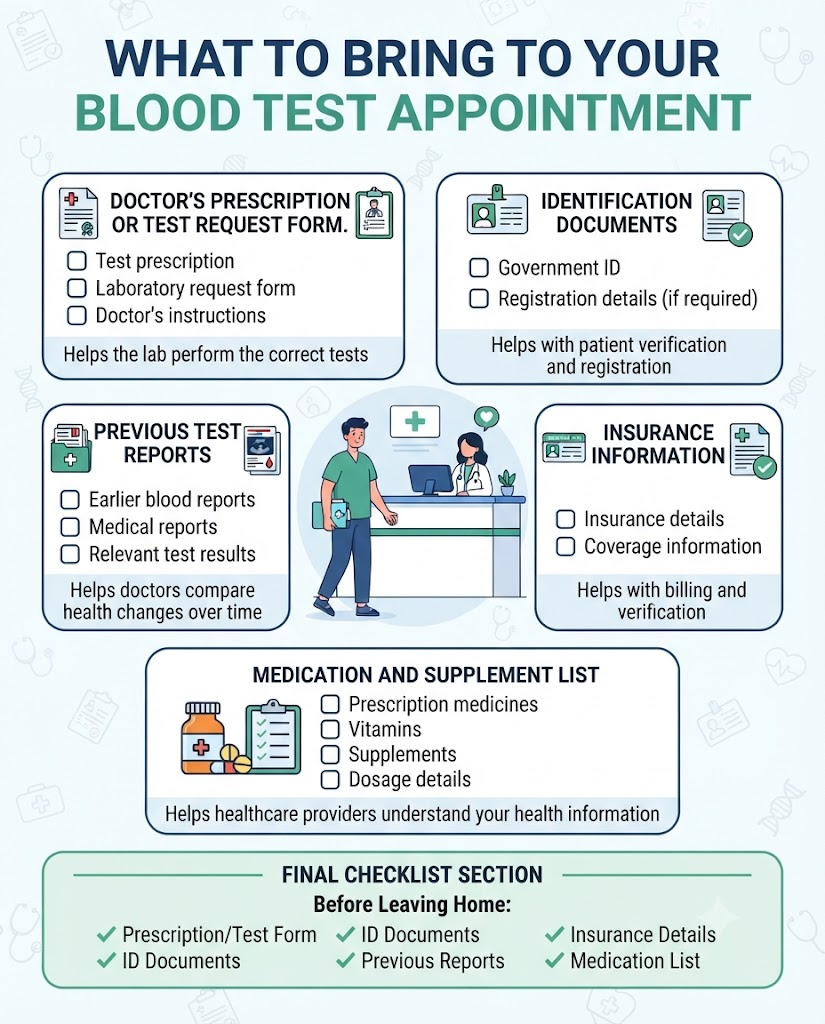
Before your appointment, make sure you have:
- Doctor’s prescription or test request form: Carry the instructions or referral provided by your healthcare provider so the laboratory can perform the correct tests.
- Identification documents: Bring a valid ID if required for registration or verification purposes.
- Previous test reports: Carry earlier reports if your doctor or laboratory needs them for comparison or monitoring changes over time.
- Insurance information (if applicable): Keep your insurance details available if your test requires billing or coverage verification.
- List of medications and supplements: A complete list of medicines, vitamins, and supplements can help healthcare providers better understand your health information.
Keeping these items ready before your visit can reduce delays, prevent confusion, and help ensure your blood test appointment goes smoothly. A little preparation can make the entire process easier and more convenient.
Common Mistakes to Avoid Before a Blood Test
Proper preparation before a blood test can help ensure more accurate results and make the process easier. However, many people unknowingly make small mistakes that may affect test results or create unnecessary delays.
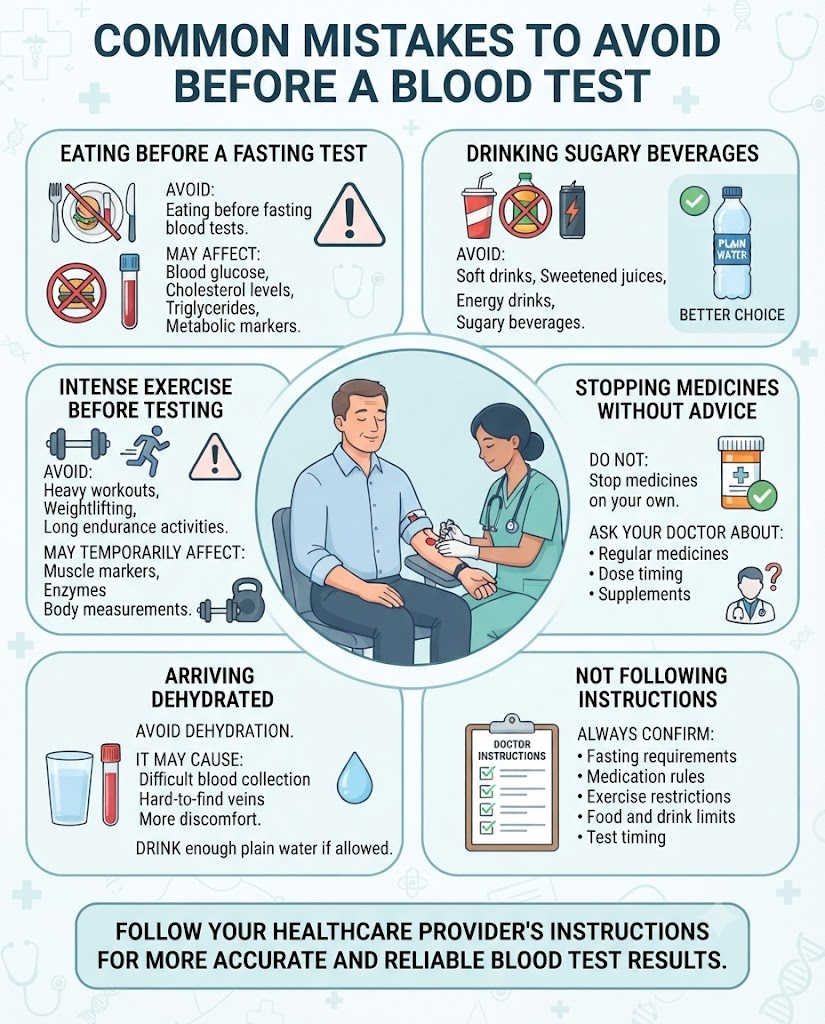
Avoid these common preparation mistakes:
Eating Before a Fasting Test
If your blood test requires fasting, eating before the appointment can affect certain measurements and may make the results less accurate.
Eating before a fasting test may influence:
- Blood glucose levels
- Cholesterol measurements
- Triglyceride levels
- Certain metabolic markers
Always follow the fasting instructions provided by your doctor or laboratory to avoid the need for repeat testing.
Drinking Sugary Beverages
During fasting periods, avoid drinks that contain sugar or calories unless your healthcare provider says they are allowed.
Avoid:
- Soft drinks
- Sweetened juices
- Energy drinks
- Sugary beverages
Plain water is usually the safest choice for staying hydrated before most routine blood tests.
Exercising Intensely
Heavy physical activity shortly before a blood test may temporarily change some health measurements.
Avoid:
- Intense gym workouts
- Heavy weightlifting
- Long endurance exercises
If possible, choose light activities such as normal walking before your appointment.
Stopping Medicines Without Advice
One common mistake is stopping prescribed medications without consulting a doctor.
Some medicines may need special instructions before testing, but you should never stop them on your own.
Always ask your healthcare provider whether:
- You should take your regular medicines
- The timing of doses needs adjustment
- Any supplements should be paused
Arriving Dehydrated
Not drinking enough water before a blood test can make blood collection more difficult.
Dehydration may:
- Make veins harder to locate
- Increase discomfort during blood collection
- Make the procedure take longer
Drinking enough plain water, unless restricted by your doctor, can help make the process smoother.
Not Following Instructions
Different blood tests have different preparation requirements. Assuming that all tests need the same preparation can lead to inaccurate results.
Always follow instructions related to:
- Fasting
- Medications
- Exercise
- Food and drinks
- Timing of the test
Following your healthcare team’s guidance is one of the simplest ways to ensure your blood test results are reliable and useful for making health decisions.
After the Blood Test
After your blood sample has been collected, you can usually return to your normal daily activities unless your healthcare provider gives you specific instructions. Most people recover quickly after a routine blood test, but taking a few simple steps can help you feel more comfortable.
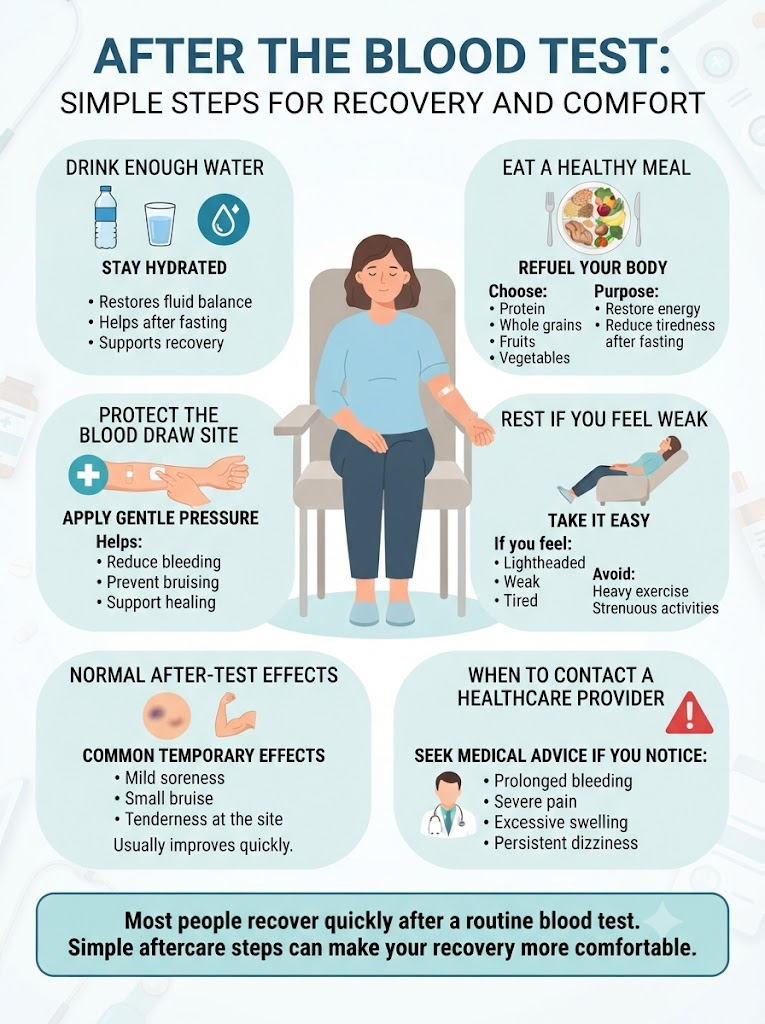
Helpful steps after the test include:
- Drink water: Staying hydrated after the blood draw can help your body maintain normal fluid balance, especially if you had to fast before the test.
- Eat a healthy meal if you were fasting: If you avoided food before the appointment, having a nutritious meal afterward can help restore your energy levels. Choose a balanced meal with protein, whole grains, fruits, and vegetables.
- Keep pressure on the injection site as advised: Apply gentle pressure to the area where blood was drawn for the recommended time to reduce the chance of bleeding or bruising.
- Avoid strenuous activity if you feel weak: Some people may feel lightheaded after fasting or having blood drawn. Rest for a while and avoid intense exercise until you feel normal again.
Some people may experience mild soreness, tenderness, or a small bruise at the blood collection site. These effects are usually temporary and often improve within a short time.
If you experience unusual symptoms such as prolonged bleeding, severe pain, swelling, or dizziness that does not improve, contact your healthcare provider for advice. Following simple aftercare steps can help ensure a comfortable recovery after your blood test.
Conclusion
Knowing how to prepare your body before a routine blood test can help ensure more accurate results and make the overall testing experience easier and more comfortable. Simple preparation steps, such as following fasting instructions, staying properly hydrated, getting enough sleep, avoiding intense exercise, and informing your doctor about medications and supplements, can help your test results better reflect your usual health condition.
It is important to remember that every blood test may have different preparation requirements. Some tests may require fasting, while others may not. Always follow the instructions provided by your healthcare professional or laboratory to avoid confusion and ensure reliable results.
A little preparation before your appointment can make a big difference. By taking simple steps to care for your body before testing, you can feel more confident, reduce unnecessary stress, and help your healthcare team receive the most accurate information about your health.
Medical Disclaimer: This article is for informational and educational purposes only. It is not intended to replace professional medical advice, diagnosis, or treatment. Always consult a qualified healthcare provider for medical concerns or before making healthcare decisions.