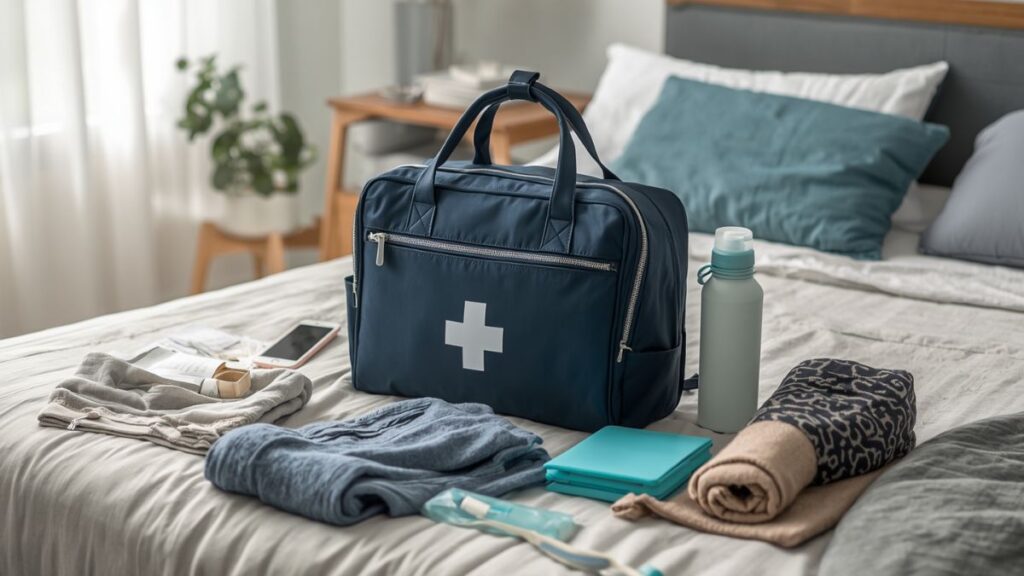
A hospital stay can feel stressful, especially when you are preparing at the last moment. Whether you are going for a planned procedure, surgery, medical treatment, childbirth, or an unexpected hospital admission, having the right items packed can make your stay more comfortable, organized, and less overwhelming.
During a hospital visit, your main focus should be on recovery and following medical advice. However, having essential personal items available can help you feel more prepared and reduce unnecessary stress. A well-packed hospital bag allows you to focus on your health instead of worrying about small necessities after admission.
Many people remember important medical documents but forget everyday essentials that can make a significant difference during their stay. Items such as comfortable clothing, personal hygiene products, phone chargers, medication information, and personal comfort items can improve convenience, especially during longer hospital stays.
At the same time, packing too much can make it difficult to manage belongings in a hospital room, while packing too little may leave you without important items when you need them. The best approach is to prepare a practical hospital bag with only the essentials that support your comfort, safety, and recovery.
This guide provides a simple checklist of what to pack for a hospital stay, including important documents, personal care items, comfortable clothing, electronics, medications information, items for caregivers, things to avoid packing, and helpful tips for preparing your hospital bag in advance.
A Simple Checklist of What to Pack for A Hospital Stay
A hospital stay can feel overwhelming, but packing the right essentials can make your experience more comfortable, organized, and stress-free.
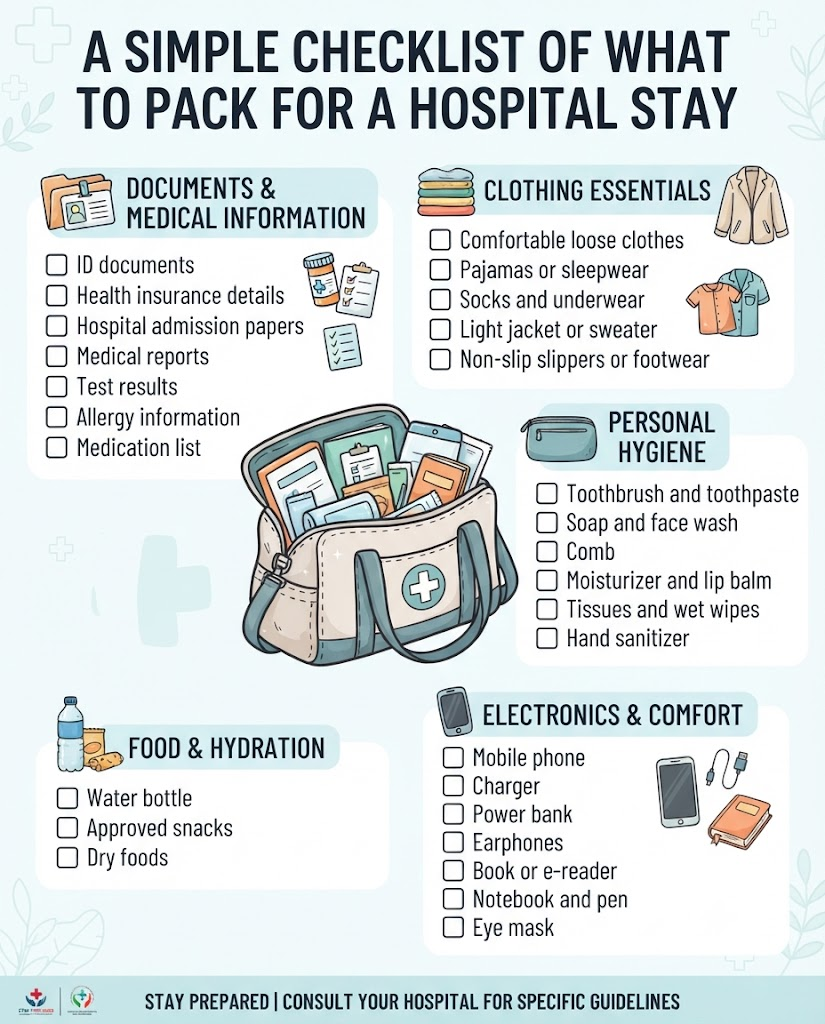
Important Documents and Medical Information
One of the most important parts of preparing for a hospital stay is gathering all necessary documents and medical information before leaving home. Having these items organized can save time during admission, reduce confusion, and help healthcare providers quickly understand your medical history.
A simple folder or file containing all important paperwork can make it easier for you or your family members to access information when needed.
Identification Documents
Carry important identification and hospital-related documents, including:
- Government-issued ID
- Health insurance card or insurance details
- Hospital registration documents
- Appointment details or admission papers
- Emergency contact information
Having identification documents easily available can make the admission process smoother and prevent delays.
Medical Records
Bring relevant medical information that may help doctors and nurses understand your health background.
Important records may include:
- Previous medical reports
- Recent test results
- Blood test reports
- Scans or imaging reports
- Allergy information
- List of existing health conditions
- Previous treatment records
These details can help healthcare providers make informed decisions and provide appropriate care, especially if you are visiting a new hospital or specialist.
Medication List
Prepare a written list of all medicines, supplements, and health products you currently use.
Include:
- Medication names
- Dosage information
- Time and frequency of use
- Supplements or vitamins you take
- Known medication allergies or reactions
Even if you bring your medicines with you, a clear medication list is valuable for the healthcare team. It helps prevent confusion and ensures doctors have accurate information when planning your treatment.
Keeping medical information updated before a planned hospital visit can make the entire process more organized and stress-free.
Comfortable Clothing to Pack
Hospital stays often involve spending extended periods resting, waiting, or recovering, so comfortable clothing can make a significant difference in your overall experience. The right clothing should allow easy movement, provide comfort, and make daily activities such as walking, changing, or resting easier.
When choosing clothes for a hospital stay, focus on items that are soft, practical, and easy to manage.
Loose and Comfortable Clothes
Choose clothing that is:
- Soft and comfortable
- Easy to put on and remove
- Loose enough for movement
- Suitable for the expected length of stay
- Easy to wash and maintain
Loose pajamas, tracksuits, cotton pants, and comfortable T-shirts are often practical choices. Avoid tight clothing or items with complicated buttons and zippers, as they may be uncomfortable during recovery or when mobility is limited.
Comfortable clothing can also help you feel more relaxed and maintain a sense of normal routine during your hospital stay.
A Light Jacket or Sweater
Hospitals can sometimes feel cool because of air conditioning, medical equipment, or long periods spent resting indoors.
Packing a light jacket, sweater, or shawl can help you stay comfortable when temperatures feel low.
Choose something that is:
- Lightweight
- Easy to wear
- Simple to remove when not needed
A small extra layer takes little space but can provide added comfort.
Extra Underwear and Socks
Pack enough basic clothing essentials based on the expected duration of your hospital stay.
Consider carrying:
- Comfortable underwear
- Soft socks
- Sleepwear
- Extra sets of basic clothing
Choose breathable fabrics and items that are easy to change, especially if you may have limited movement after a procedure or treatment.
Non-Slip Footwear
Safe footwear is important during a hospital stay because floors may be smooth, and patients may feel weak or unsteady while walking.
Bring:
- Non-slip slippers
- Comfortable sandals
- Easy-to-wear shoes
Avoid footwear that is difficult to put on, has slippery soles, or requires complicated fastening.
Non-slip footwear can help reduce the risk of falls while walking to the bathroom, moving around the room, or participating in recovery activities.
Personal Hygiene Items
Hospitals usually provide basic hygiene supplies, but bringing your own personal care items can make your stay more comfortable and help you maintain your normal routine. Having familiar products available can also improve comfort, especially during longer hospital stays.
Personal hygiene items can help you feel refreshed and more confident while recovering.
Toothbrush and Toothpaste
Basic oral care is important during a hospital stay, especially if you are staying for several days.
Pack:
- Toothbrush
- Toothpaste
- Dental floss if needed
Maintaining regular oral hygiene can help you feel more comfortable and continue your usual self-care habits.
Soap and Personal Cleanliness Products
While hospitals may provide some cleaning supplies, you may prefer to bring your own familiar products.
Consider carrying:
- Mild soap
- Face wash
- Comb or hairbrush
- Moisturizer
- Lip balm
Hospital environments can sometimes feel dry because of air conditioning, which may cause dry skin or lips. Simple personal care items can help improve comfort during your stay.
Choose products that are gentle, easy to use, and travel-sized to save space in your hospital bag.
Towels and Personal Items
Depending on hospital facilities and your personal preference, you may want to bring a few additional items for convenience.
Useful items include:
- Small towel
- Hand sanitizer
- Tissues
- Wet wipes
These items can be helpful for quick cleaning, freshening up, or managing everyday needs when access to facilities is limited.
Keeping personal hygiene items organized in a small pouch can make them easier to find and use during your hospital stay.
Electronic Items and Chargers
Electronic devices can be useful during a hospital stay by helping you stay connected with family members, access important information, and pass time during periods of rest or recovery.
While electronics can improve comfort and convenience, it is best to bring only the items you actually need and avoid carrying expensive devices that may not be necessary.
Consider packing:
Mobile Phone and Charger
A mobile phone can help you:
- Contact family members and caregivers
- Receive important updates
- Communicate with healthcare providers when needed
- Access medical information or appointment details
- Stay connected during your hospital stay
Always pack your phone charger and consider carrying a longer charging cable, as hospital room layouts may make electrical outlets difficult to reach from the bed.
Power Bank
A power bank can be helpful if access to electrical outlets is limited or if you need to keep your phone charged while moving around the hospital.
Choose a reliable power bank and ensure it is fully charged before leaving home.
Earphones
Earphones can provide comfort and privacy during rest periods.
They can help you:
- Listen to music
- Watch videos
- Make phone calls privately
- Listen to podcasts or audiobooks
- Relax while recovering
Wireless or comfortable lightweight earphones may be easier to use while resting.
Avoid Carrying Unnecessary Electronics
Although devices can be helpful, avoid bringing expensive electronics unless they are necessary.
Try to avoid packing:
- Expensive laptops
- Valuable gadgets
- Multiple electronic devices
Hospitals can be busy environments, and keeping your belongings simple reduces the risk of loss or damage. Bring only the items that support your comfort, communication, and recovery.
Comfort Items for Your Hospital Stay
A hospital room can sometimes feel unfamiliar, so bringing a few personal comfort items can help make your stay more relaxing and convenient. Small items that provide entertainment, relaxation, or a sense of familiarity can improve your overall experience, especially during longer recovery periods.
However, it is best to choose items carefully and avoid bringing too many belongings that may create clutter or become difficult to manage.
Reading Material
Periods of rest in a hospital can sometimes involve waiting or spending extended time in bed. Bringing something to read can help pass the time and provide a relaxing activity.
Consider packing:
- Books
- Magazines
- E-reader
Reading can help you stay occupied, reduce boredom, and provide a calming activity when you are not receiving treatment or resting.
Choose lightweight reading materials that are easy to keep near your bed.
Small Personal Items
A few familiar items can make your hospital stay feel more comfortable.
Useful items may include:
- Eye mask to help block light during rest
- Small pillow (if allowed by the hospital)
- Favorite blanket for added comfort
- Notebook and pen for writing notes, tracking questions, or recording instructions
These small additions can help create a more comfortable environment while supporting relaxation and organization.
Choose Comfort Without Creating Clutter
When packing personal items, focus on things that are useful and easy to manage.
Avoid bringing too many belongings, as hospital rooms may have limited storage space. Keep your comfort items simple, practical, and suitable for your recovery needs.
Food and Snacks
Hospitals usually provide meals based on your medical condition, treatment plan, and nutritional needs. However, in some situations, having a few approved snacks available can be convenient, especially during longer stays or between meals.
Small snacks may help provide comfort and prevent hunger when hospital schedules or meal timings do not match your usual routine.
Consider packing:
Approved Snacks
If allowed by the hospital, you may carry simple snacks such as:
- Packaged healthy snacks
- Crackers
- Nuts or dry fruits
- Other doctor-approved options
Choose foods that are easy to store, simple to eat, and suitable for your health needs.
Dry Foods
Dry foods can be practical because they are easy to carry and usually do not require refrigeration.
Examples may include:
- Plain biscuits
- Dry snacks
- Packaged foods recommended by your healthcare provider
Avoid bringing foods that spoil quickly or require special storage unless the hospital allows it.
Water Bottle
A reusable water bottle can be useful for convenience and staying hydrated.
However, always confirm whether you are allowed to drink normally, especially if you are preparing for surgery, a procedure, or have specific fluid restrictions.
Check Hospital Guidelines Before Bringing Food
Always check hospital rules before packing outside food. Some patients may have dietary restrictions due to:
- Medical conditions
- Surgery preparation
- Medication requirements
- Allergies
- Special recovery plans
Following hospital food guidelines helps ensure your safety and supports your treatment plan.
Things You Should Avoid Packing
While it is important to be prepared for a hospital stay, bringing too many unnecessary or valuable items can create extra stress. Hospital rooms may have limited storage space, and keeping your belongings simple can make it easier to stay organized and reduce the risk of losing important items.
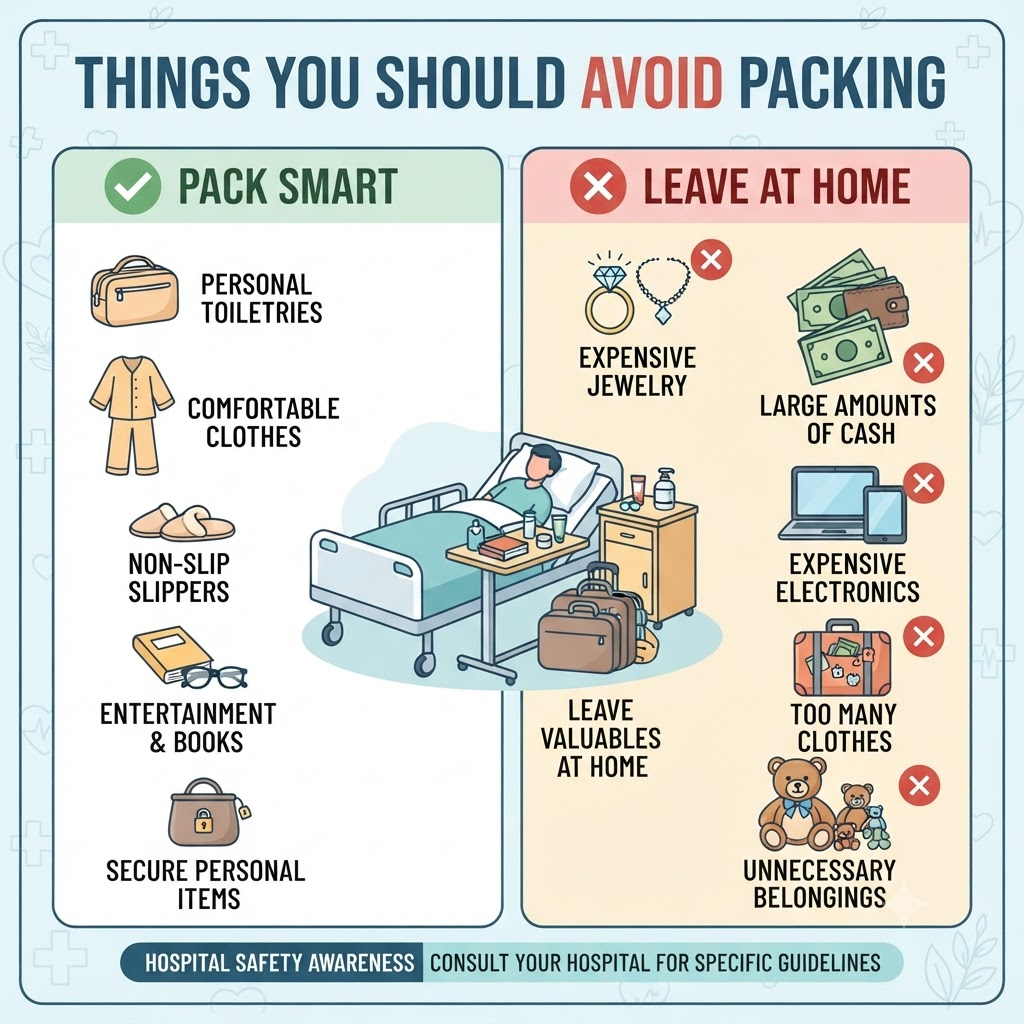
Pack only what you need for comfort, communication, and daily care.
Avoid packing:
Expensive Jewelry
Avoid bringing valuable jewelry such as:
- Gold ornaments
- Expensive watches
- Other valuable accessories
Jewelry can be misplaced during procedures, transfers between rooms, or busy hospital routines. It is safer to leave valuable items at home.
Large Amounts of Cash
Carry only the amount of money you actually need.
Avoid keeping large amounts of cash with you, as it may increase the risk of loss or theft. Use safer payment options whenever possible.
Valuable Electronics
Although phones and chargers can be useful, avoid bringing unnecessary expensive devices.
Avoid packing:
- Expensive laptops
- Multiple electronic gadgets
- Valuable personal devices
Bring only the electronics that support your communication and comfort needs.
Too Many Clothes
Packing excessive clothing can take up space and make your belongings harder to manage.
Bring enough comfortable clothing based on:
- Expected length of stay
- Medical requirements
- Personal comfort needs
A few practical outfits are usually better than carrying too many options.
Important Items You Do Not Need
Avoid bringing items that are not necessary for your hospital stay.
Before packing each item, ask yourself whether it supports:
- Medical needs
- Personal hygiene
- Comfort
- Communication
Keeping your hospital bag simple helps reduce clutter and allows you to focus on recovery.
Hospitals can be busy environments, and limiting unnecessary belongings reduces the risk of losing items while making your stay more organized and comfortable.
Hospital Stay Packing Checklist
Use this quick checklist before leaving home:
Documents
☐ ID documents
☐ Insurance information
☐ Medical records
☐ Test reports
☐ Medication list
☐ Emergency contacts
Clothing
☐ Comfortable clothes
☐ Underwear
☐ Socks
☐ Sleepwear
☐ Non-slip footwear
☐ Light jacket
Personal Care
☐ Toothbrush and toothpaste
☐ Soap and hygiene items
☐ Comb
☐ Moisturizer
☐ Lip balm
☐ Tissues or wipes
Electronics
☐ Phone
☐ Charger
☐ Power bank
☐ Earphones
Comfort Items
☐ Reading material
☐ Notebook and pen
☐ Eye mask
☐ Personal comfort items
Tips for Preparing Your Hospital Bag
Preparing your hospital bag in advance can reduce stress and help you feel more organized, especially if you have a planned procedure, surgery, or medical appointment that may require admission.
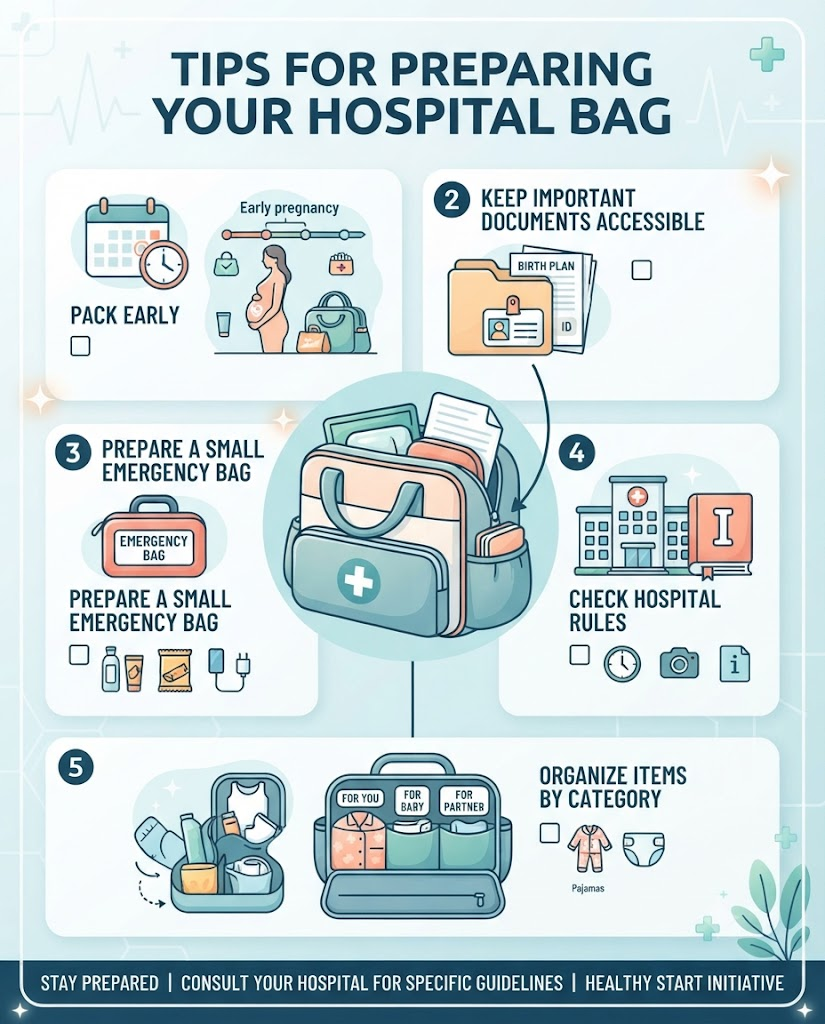
A well-prepared bag ensures that essential items are available when you need them and allows you to focus more on your health and recovery instead of searching for missing items.
Helpful tips include:
Pack Early
Do not wait until the last day to prepare your hospital bag.
Packing early gives you enough time to:
- Check whether important items are missing
- Organize documents and personal belongings
- Add items you may need later
- Avoid last-minute stress
For planned hospital visits, preparing a few days in advance can make the process smoother.
Keep Important Items Easy to Find
Store essential documents and frequently needed items in an easily accessible place.
Keep items such as:
- Identification documents
- Insurance details
- Medical reports
- Medication lists
- Admission papers
in a separate folder or pocket where you or your caregiver can quickly locate them.
Make a Small Essential Bag
Having a ready-to-go hospital bag can be helpful if an unexpected hospital visit occurs.
A small essential bag may include:
- Important documents
- Basic hygiene items
- Phone charger
- Comfortable clothing
- Medication information
A prepared bag can save valuable time during urgent situations.
Check Hospital Guidelines
Different hospitals may have different rules and requirements, so it is helpful to confirm guidelines before your stay.
Check information about:
- Visitor policies
- Food restrictions
- Personal belongings
- Electronic devices
- Required documents
Following hospital guidelines can prevent inconvenience and ensure a smoother admission process.
Taking a little time to prepare your hospital bag properly can make your stay more comfortable and help you feel confident during your recovery journey.
Conclusion
Knowing what to pack for a hospital stay can make the experience more comfortable, organized, and less stressful. A well-prepared hospital bag does not need to be large, but it should include the essentials that support your health, comfort, and daily needs during recovery.
Important documents, medical information, comfortable clothing, personal hygiene items, phone chargers, and a few personal comfort items can help make your hospital stay easier. Preparing these items in advance also reduces last-minute stress and allows you and your family to focus on what matters most: your recovery.
The goal is not to pack everything you own, but to bring practical items that are useful, easy to manage, and suitable for your hospital needs. A simple checklist can help ensure that important items are not forgotten while avoiding unnecessary belongings.
A little preparation before a hospital stay can make a big difference when you need it most. Taking time to organize your hospital bag ahead of time can help you feel more confident, comfortable, and prepared throughout your healthcare journey.
Medical Disclaimer: This article is for informational and educational purposes only. It is not intended to replace professional medical advice, diagnosis, or treatment. Always consult a qualified healthcare provider for medical concerns or before making healthcare decisions.