
A hospital visit can be stressful, especially when you also need to manage insurance paperwork. Having the right documents ready before admission can make the insurance verification process faster and help avoid unnecessary delays.
In the United States, a cashless insurance claim generally refers to a process where the hospital and health insurance company handle billing directly instead of requiring the patient to pay the entire medical bill upfront. This is commonly available when you receive treatment at an in-network hospital that works with your insurance provider.
While the term “cashless claim” is widely used in many countries, U.S. healthcare providers often refer to this process as direct billing, insurance billing, or using in-network health insurance benefits.
The exact documents required can vary depending on your insurance company, healthcare provider, and type of treatment. However, most hospitals require a standard set of documents to confirm your coverage, process your claim, and ensure accurate billing.
This guide explains the important documents you may need for a cashless insurance claim at a hospital in the United States and how to prepare for the process.
What Is a Cashless Insurance Claim in the U.S.?
A cashless insurance claim allows patients to receive medical treatment at a hospital without paying the entire medical bill upfront. Instead, the hospital works directly with your health insurance company to process covered expenses.
In the U.S., this usually happens when you receive care from an in-network hospital or healthcare provider that accepts your insurance plan. The hospital verifies your insurance coverage, confirms the services covered under your plan, and submits eligible charges directly to the insurance company.
A cashless claim process usually requires:
- Active health insurance coverage – Your insurance plan must be valid at the time of treatment.
- In-network hospital or provider – Using providers within your insurance network often makes billing easier.
- Covered medical services – Your insurance must include the treatment or procedure.
- Required approvals – Some treatments may need prior authorization before insurance coverage is approved.
For planned procedures, hospitals often verify your insurance details before admission. For emergency care, treatment is usually provided first, and insurance information is collected afterward.
However, cashless does not always mean completely free treatment. Depending on your health insurance plan, you may still need to pay some expenses, including:
- Deductible: The amount you pay before insurance starts covering certain costs.
- Copay: A fixed amount you pay for specific healthcare services.
- Coinsurance: Your percentage share of covered medical expenses.
- Non-covered expenses: Services that are not included in your insurance plan.
Before a hospital visit, it is helpful to check:
- Whether the hospital accepts your insurance
- Whether your treatment requires prior authorization
- What your out-of-pocket costs may be
- What documents you need for the claim process
Understanding how cashless insurance claims work can help you prepare better, avoid unexpected bills, and make the hospital admission process easier.
How Does the Cashless Insurance Claim Process Work?
The cashless insurance claim process in the United States involves coordination between the patient, hospital, and health insurance company. Instead of paying the complete hospital bill upfront, the healthcare provider communicates with the insurer to confirm coverage and submit charges for eligible medical services.
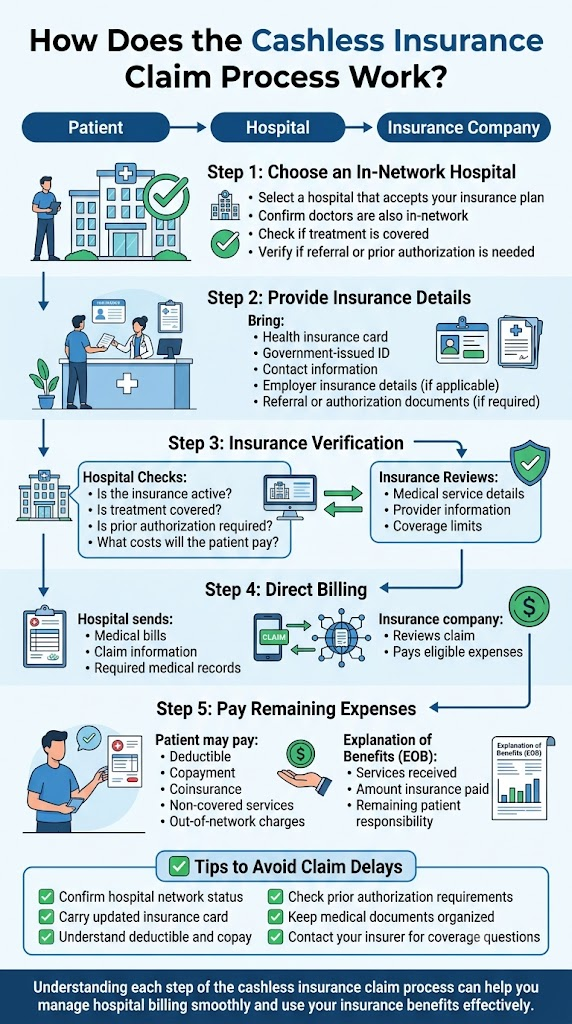
The process may vary depending on your insurance provider, health plan, and type of treatment. However, most cashless claims follow a similar series of steps.
Step 1: Choose an In-Network Hospital
Whenever possible, choose a hospital, clinic, or healthcare provider that is part of your insurance company’s in-network network.
In-network hospitals have negotiated agreements with insurance companies, which usually makes the billing process simpler and helps patients receive better coverage benefits.
Before scheduling a planned procedure or hospital admission, confirm:
- Whether the hospital accepts your insurance plan
- Whether the doctors involved are also in-network
- Whether your specific treatment is covered
- Whether a referral or prior authorization is required
Choosing an out-of-network provider may result in higher costs or reduced insurance benefits, depending on your health plan.
Step 2: Provide Insurance Information During Registration
When you arrive at the hospital, you will need to provide your insurance details so the hospital can begin the verification process.
You may be asked to provide:
- Health insurance card
- Government-issued photo ID
- Personal contact information
- Employer insurance details (if applicable)
- Doctor’s referral or medical authorization documents, if required
The hospital registration team uses this information to create or update your patient record and submit the necessary information to your insurance company.
Providing accurate insurance details helps prevent billing mistakes and reduces delays during the admission process.
Step 3: Insurance Verification and Coverage Review
After receiving your insurance information, the hospital contacts your insurance provider to confirm your coverage.
During verification, the hospital checks important details such as:
| Verification Check | Why It Matters |
|---|---|
| Whether your insurance policy is active | Confirms that your health plan is currently valid and available for use. |
| Whether the treatment is covered | Determines whether the planned medical service is included in your insurance benefits. |
| Whether prior authorization is required | Some procedures, surgeries, or treatments need approval before insurance agrees to pay. |
| What portion of the bill your insurance will pay | Helps estimate what costs may remain your responsibility. |
The insurance company may review medical information, treatment details, and provider information before approving coverage.
For planned procedures, this step is often completed before hospital admission. For emergency care, verification may happen after immediate treatment has been provided.
Step 4: Direct Billing Between Hospital and Insurance Company
Once coverage is confirmed and approval is received, the hospital submits eligible medical charges directly to your insurance company.
The hospital typically handles:
- Preparing medical bills
- Sending claim information
- Providing required medical documentation
- Communicating with the insurance company regarding covered services
The insurance company then reviews the claim according to your policy terms and determines the amount it will pay.
This direct communication reduces the need for patients to manage large upfront payments or submit reimbursement claims themselves.
Step 5: Patient Pays Remaining Medical Costs
After the insurance company processes the claim, you may receive a bill for any remaining amount that your insurance does not cover.
Your responsibility may include:
- Deductible payments
- Copayments
- Coinsurance amounts
- Non-covered services
- Out-of-network charges
For example, your insurance plan may cover a large portion of a hospital bill, but you may still need to pay a percentage of the remaining cost based on your policy terms.
Your insurance company will usually send an Explanation of Benefits (EOB) that explains:
- The services you received
- The total amount charged
- The amount paid by insurance
- The amount you need to pay
Tips to Make the Cashless Claim Process Smoother
To avoid delays and unexpected expenses:
- Confirm hospital network status before treatment
- Carry your updated insurance card
- Understand your deductible and copay requirements
- Ask whether prior authorization is needed
- Keep copies of medical documents and bills
- Contact your insurance company if you have questions about coverage
Understanding each step of the cashless insurance claim process can help you navigate hospital billing more confidently and ensure that your insurance benefits are used properly.
What Documents Do You Need for a Cashless Insurance Claim at a Hospital?
The documents required for a cashless insurance claim at a hospital may vary depending on your health insurance provider, hospital policies, and type of medical treatment. However, most hospitals in the United States require certain basic documents to verify your identity, confirm insurance coverage, and process medical billing correctly.
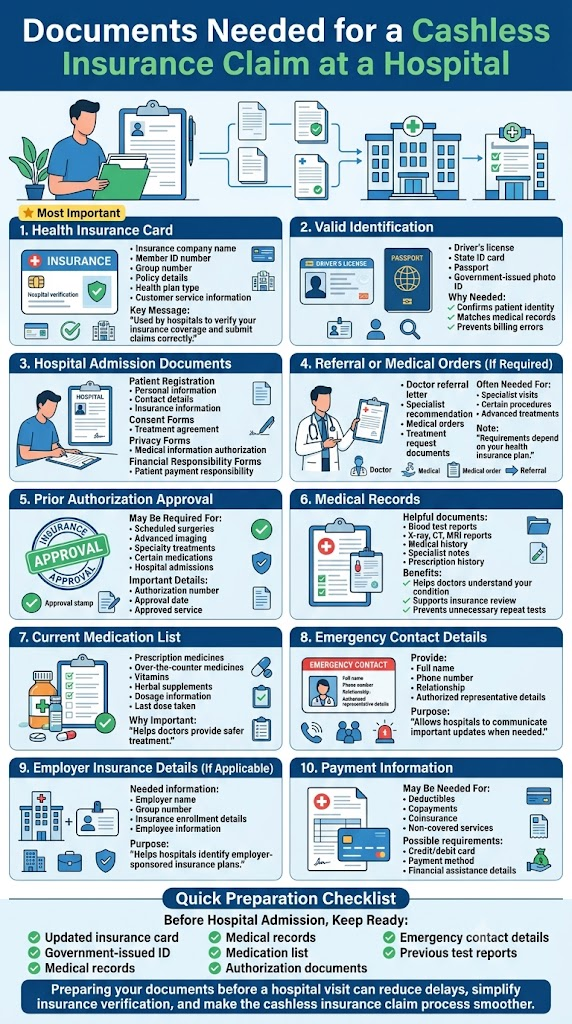
Having these documents prepared before admission can help reduce delays, speed up insurance verification, and make the hospital registration process smoother.
Below are the most common documents you may need for a cashless insurance claim.
Health Insurance Card
Your health insurance card is one of the most important documents required during hospital admission. It contains essential information that allows the hospital to verify your coverage and communicate with your insurance company.
Your insurance card usually includes:
- Insurance company name
- Member ID number
- Group number
- Policy information
- Customer service contact details
- Health plan type
Hospitals use this information to confirm whether your insurance policy is active and whether the medical service you need is covered under your plan.
Tips
- Carry your updated physical insurance card whenever possible.
- Keep a digital copy through your insurance company’s mobile app.
- Check that your information is accurate before a planned hospital visit.
A missing or outdated insurance card can delay the verification process, so keeping it easily accessible is helpful.
Government-Issued Photo Identification
Hospitals usually require a valid photo ID to confirm your identity before providing medical services.
Identification helps ensure that:
- Your medical records are connected to the correct patient
- Insurance information matches your identity
- Billing records are accurate
Commonly accepted forms of identification include:
| Type of ID | Examples |
|---|---|
| Driver’s license | State-issued driver’s license |
| State identification card | Government-issued state ID |
| Passport | Valid U.S. or international passport |
| Other official identification | Other approved government-issued photo IDs |
Bringing a valid ID can help prevent registration problems and billing errors.
Hospital Registration and Admission Forms
Before receiving treatment, you may need to complete several hospital forms. These documents collect your personal information, medical details, and insurance-related information.
Common hospital forms may include:
Patient Registration Forms
These usually include:
- Name and contact information
- Date of birth
- Address details
- Emergency contact information
- Insurance details
Consent Forms
These confirm that you understand and agree to receive medical treatment.
Privacy Authorization Forms
These allow healthcare providers to handle and share medical information according to privacy regulations.
Financial Responsibility Forms
These explain your responsibility for medical costs that are not covered by insurance.
Completing these forms accurately helps hospitals process your insurance claim correctly.
Doctor’s Referral or Medical Orders (If Required)
Some health insurance plans require a referral or medical order before certain healthcare services are covered.
This is more common with some managed care plans, including certain HMO (Health Maintenance Organization) plans.
You may need documents such as:
- Doctor’s referral letter
- Medical orders
- Specialist recommendation
- Treatment request documents
- Prescription information
Examples of services that may require additional approval include:
- Specialist consultations
- Certain procedures
- Advanced medical treatments
Not every insurance plan requires referrals, so it is important to check your policy requirements before planned treatment.
Prior Authorization Approval Documents
Prior authorization is a process where your insurance company reviews and approves certain medical services before treatment begins.
Insurance companies use prior authorization to confirm that a treatment is medically necessary and covered under your health plan.
Services that may require prior authorization include:
- Scheduled surgeries
- Advanced imaging tests
- Specialty treatments
- Certain prescription medications
- Some hospital admissions
The hospital usually communicates directly with your insurance provider to obtain approval. However, keeping a copy of authorization documents can help you track the approval status and avoid confusion.
Important details may include:
- Authorization number
- Approval date
- Approved service details
- Insurance company confirmation
Medical Records and Previous Test Reports
Hospitals and doctors may request previous medical records to understand your health history and provide appropriate care.
Useful medical documents may include:
- Previous blood test reports
- Imaging reports such as X-rays, CT scans, or MRI results
- Medical history documents
- Specialist notes
- Previous treatment records
- Prescription history
These records can help:
- Doctors understand your condition
- Avoid unnecessary repeat tests
- Support insurance approval by showing medical necessity
Keeping your important medical records organized can make future healthcare visits easier.
List of Current Medications and Supplements
Providing an updated list of medications is important for both healthcare providers and insurance processing.
Your medication list should include:
- Prescription medications
- Over-the-counter medicines
- Vitamins
- Herbal supplements
- Protein or nutritional supplements
- Dosage information
- Frequency of use
For example, include details such as:
| Information | Example |
|---|---|
| Medication name | Name of medicine |
| Dosage | Amount taken |
| Schedule | Once daily, twice daily, etc. |
| Last dose | When you last took it |
Accurate medication information helps doctors provide safer treatment and maintain complete medical records.
Emergency Contact Information
Hospitals usually request emergency contact information during registration.
You may need to provide details for:
- Family members
- Close friends
- Authorized healthcare representatives
Emergency contacts allow the hospital to communicate important updates if needed.
Keep information available such as:
- Full name
- Phone number
- Relationship with patient
Having updated emergency contact details can be especially important during unexpected hospital admissions.
Employer or Group Insurance Information (If Applicable)
Many Americans receive health insurance through their employer. If your insurance is employer-sponsored, additional information may be required.
You may need:
- Employer name
- Group number
- Insurance enrollment information
- Employee identification details
This information helps the hospital correctly identify your insurance plan and submit claims to the appropriate insurance provider.
If you recently changed jobs or insurance plans, make sure your hospital has your updated information.
Financial Information for Additional Medical Costs
Although cashless insurance billing reduces the need for upfront payments, you may still have certain healthcare expenses based on your insurance plan.
Hospitals may request:
- Payment method information
- Credit or debit card details
- Information about financial assistance programs
This may be needed for:
- Deductibles
- Copayments
- Coinsurance
- Non-covered medical services
Understanding your financial responsibility before treatment can help you prepare for possible out-of-pocket expenses.
Additional Documents That May Be Helpful
Depending on your situation, you may also want to carry:
- Insurance claim forms (if required)
- Power of attorney or healthcare authorization documents
- Disability documentation (if applicable)
- Workers’ compensation information (for workplace injuries)
- Travel insurance documents (for visitors or international patients)
Tips to Prepare Your Documents Before Hospital Admission
To make the cashless insurance claim process easier:
Keep Digital Copies
Store copies of important documents on your phone or a secure cloud service.
Check Insurance Information
Confirm that:
- Your policy is active
- Your insurance card is updated
- The hospital accepts your plan
Organize Medical Records
Keep previous reports, prescriptions, and treatment details in one place.
Ask Questions Before Planned Treatment
- Before admission, confirm:
- What costs will I need to pay?
- What documents does the hospital require?
- Is prior authorization needed?
Having the correct documents ready can make the cashless insurance claim process at a hospital faster and more convenient. In the United States, your health insurance card, identification, medical records, authorization documents, and medication information are among the most commonly required items.
While every insurance company has different requirements, preparing your documents in advance can reduce delays, prevent billing issues, and help ensure smoother communication between you, the hospital, and your insurance provider.
Documents Needed After Hospital Discharge
After your hospital treatment is complete, the insurance claim process does not always end immediately. You may receive additional documents related to billing, insurance processing, and future healthcare needs.
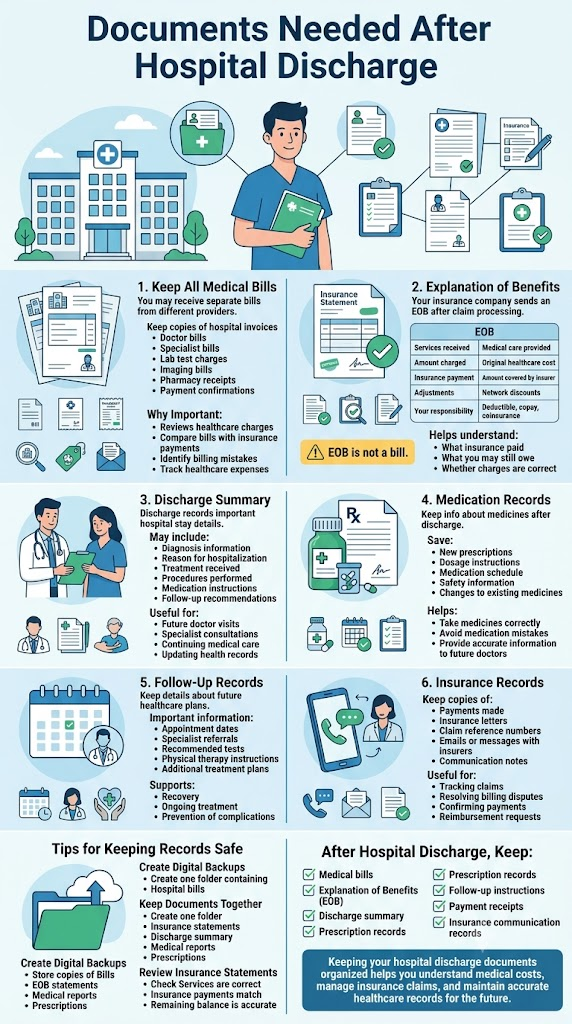
Keeping these records organized can help you understand your medical expenses, review insurance payments, and provide important information during future medical visits.
The following documents are commonly important after hospital discharge:
Medical Bills and Statements
After receiving treatment, the hospital, doctors, and other healthcare providers may send separate bills for the services provided.
Keep copies of all medical billing documents, including:
- Hospital invoices
- Doctor bills
- Specialist consultation bills
- Laboratory test charges
- Imaging service bills
- Pharmacy receipts
- Payment confirmations
These documents help you:
- Review healthcare charges
- Compare bills with insurance payments
- Identify possible billing errors
- Maintain records for tax or reimbursement purposes
Healthcare costs can sometimes involve multiple providers, especially during hospital stays. For example, you may receive separate bills from the hospital, emergency physicians, surgeons, anesthesiologists, or diagnostic service providers.
Keeping all statements together makes it easier to track your total healthcare expenses.
Explanation of Benefits (EOB)
After your insurance company processes your claim, it usually sends an Explanation of Benefits (EOB) document.
An EOB provides a summary of how your insurance plan handled the medical claim.
It explains:
| Information Included | What It Shows |
|---|---|
| Services received | Details of medical treatments, procedures, or services billed by healthcare providers |
| Amount charged by the provider | The original cost submitted by the hospital or healthcare provider |
| Amount covered by insurance | The portion your insurance company approved and paid |
| Discounts or adjustments | Any negotiated reductions based on your insurance network agreement |
| Your remaining responsibility | The amount you may need to pay, such as deductible, copay, or coinsurance |
It is important to remember that an Explanation of Benefits is not a bill. Instead, it helps you understand how your insurance company processed your claim.
You should compare your EOB with medical bills to make sure:
- Charges match the services you received
- Insurance payments were correctly applied
- Your remaining balance is accurate
If you notice unexpected charges or differences, contact your healthcare provider or insurance company for clarification.
Hospital Discharge Summary
A discharge summary is an important medical document provided when you leave the hospital.
It provides information about your hospitalization and helps future healthcare providers understand your recent treatment.
A discharge summary may include:
- Diagnosis information
- Reason for hospitalization
- Treatment and procedures performed
- Medication instructions
- Recovery guidelines
- Follow-up recommendations
- Future appointment details
This document is useful for:
- Future doctor visits
- Specialist consultations
- Continuing medical care
- Updating your personal health records
Keeping your discharge summary safely stored can help healthcare providers make better decisions if you need additional treatment later.
Medication Instructions and Prescriptions
After discharge, you may receive instructions about new medications or changes to existing medicines.
Keep copies of:
- New prescriptions
- Medication schedules
- Dosage instructions
- Drug safety information
These details help ensure that you take medications correctly and provide accurate information to future healthcare providers.
Follow-Up Appointment Information
Your hospital may provide follow-up instructions after discharge.
Keep records of:
- Follow-up appointment dates
- Specialist referrals
- Recommended tests
- Physical therapy instructions
- Additional treatment plans
Following these recommendations can support recovery and help prevent complications.
Payment Receipts and Insurance Communication Records
Keep records of:
- Payments made to healthcare providers
- Insurance correspondence
- Claim reference numbers
- Communication with insurance representatives
These records can be useful if you need to:
- Dispute a charge
- Track claim status
- Confirm payment history
- Provide documentation for reimbursement requests
Tips for Organizing Post-Discharge Documents
To make future healthcare and insurance management easier:
Create a Digital Backup
Scan important documents and store them securely online or on your personal device.
Keep Documents Together
Maintain a folder containing:
- Hospital bills
- EOB statements
- Discharge summary
- Prescriptions
- Medical reports
Review Insurance Statements Carefully
Check that:
- The services listed are correct
- Insurance payments match expectations
- Remaining balances are accurate
Keep Long-Term Medical Records
Important documents such as discharge summaries, major test reports, and treatment records can be useful for years.
After a hospital stay, keeping important documents organized can help you manage insurance claims, understand medical expenses, and maintain accurate health records. Medical bills, Explanation of Benefits statements, discharge summaries, prescriptions, and follow-up instructions all play an important role in your ongoing healthcare management.
Proper record keeping after discharge can make future medical visits easier and help you stay informed about your healthcare costs and treatment history.
Common Reasons Cashless Insurance Claims Are Delayed
Even when a hospital supports cashless insurance billing, the claim process may sometimes take longer than expected. Delays usually occur because the hospital, patient, and insurance company need to exchange accurate information before coverage can be confirmed and payments can be processed.
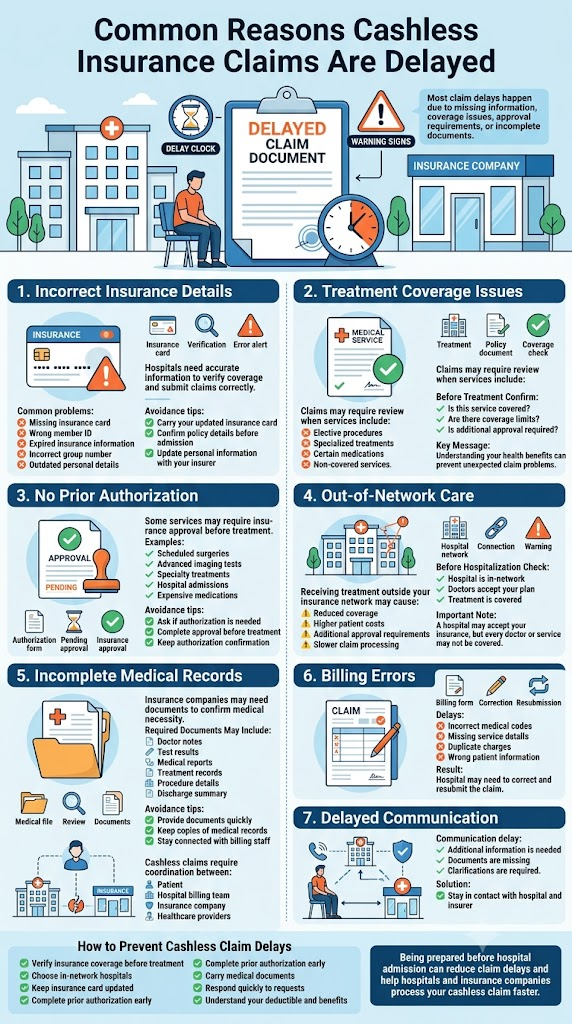
Most delays are caused by incomplete documents, coverage issues, or missing approvals. Understanding these common problems can help you prepare better and avoid unnecessary waiting.
Missing or Incorrect Insurance Information
One of the most common reasons for delays is incomplete or incorrect insurance details.
Hospitals need accurate information to verify your coverage and submit claims correctly.
Problems may occur due to:
- Missing insurance card
- Incorrect member ID number
- Expired insurance information
- Wrong group number
- Outdated personal details
Incorrect information can slow down the verification process because the hospital may need to contact the insurance company again to confirm your eligibility.
How to Avoid Delays:
- Carry your latest insurance card
- Confirm your policy information before admission
- Update your personal details with your insurance provider if needed
Treatment Not Covered Under the Insurance Plan
Not every medical service is automatically covered by your health insurance policy.
A claim may be delayed or denied if the insurance company needs to determine whether the treatment is included in your benefits.
Examples of services that may require review include:
- Certain elective procedures
- Specialized treatments
- Specific medications
- Non-covered healthcare services
Before planned treatment, check:
- Whether the service is covered
- Whether limits apply
- Whether additional approval is required
Understanding your insurance benefits can help prevent unexpected issues during the claim process.
Lack of Prior Authorization
Some medical procedures require prior authorization before the insurance company agrees to cover the cost.
Prior authorization means the insurer reviews the requested treatment and confirms that it meets coverage requirements.
Services that may require prior authorization include:
- Scheduled surgeries
- Advanced imaging tests
- Specialty treatments
- Certain hospital admissions
- Expensive medications
If prior authorization is missing, the hospital may need to wait for insurance approval before completing the cashless billing process.
How to Avoid Delays
- Ask your doctor or hospital whether authorization is required
- Complete approval steps before planned procedures
- Keep copies of authorization confirmation details
Hospital or Provider Is Out of Network
Insurance plans often have different coverage levels for in-network and out-of-network providers.
If you receive treatment at a hospital outside your insurance network, the cashless claim process may become more complicated.
Possible issues include:
- Reduced insurance coverage
- Higher patient costs
- Additional approval requirements
- Delayed claim processing
Before planned hospitalization, confirm:
- The hospital is in-network
- The doctors involved accept your insurance plan
- Your specific treatment is covered
Remember that a hospital being accepted by your insurance company does not always mean every doctor or service within that hospital is covered.
Missing Medical Documentation
Insurance companies often require medical records to review claims and confirm that treatment was medically necessary.
Missing documents can delay claim approval.
Required documents may include:
- Doctor’s notes
- Medical reports
- Test results
- Treatment records
- Procedure details
- Discharge summaries
The insurance company may request additional information before completing the claim review.
How to Avoid Delays:
- Provide requested documents as quickly as possible
- Keep copies of medical records
- Maintain communication with the hospital billing department
Incorrect Billing Information
Sometimes delays happen because the information submitted by the healthcare provider does not match insurance requirements.
Common billing issues include:
- Incorrect medical codes
- Missing service details
- Duplicate charges
- Incorrect patient information
The hospital may need to correct and resubmit the claim before the insurance company can process it.
Delayed Communication Between Hospital and Insurance Company
A cashless claim requires coordination between multiple parties, including:
- Patient
- Hospital billing department
- Insurance company
- Healthcare providers
Delays may occur if additional clarification is needed or if documents are not exchanged quickly.
Staying in contact with both the hospital and insurance provider can help identify and resolve problems faster.
Tips to Prevent Cashless Claim Delays
To make the process smoother:
✅ Verify your insurance coverage before treatment
✅ Choose an in-network hospital whenever possible
✅ Keep your insurance card updated
✅ Complete prior authorization requirements early
✅ Carry necessary medical documents
✅ Respond quickly to requests from the hospital or insurer
✅ Review your insurance benefits before planned procedures
Cashless insurance claim delays are often caused by missing information, coverage limitations, authorization requirements, or incomplete medical documentation. Preparing your insurance details in advance and understanding your health plan requirements can reduce delays and make the hospital billing process smoother.
Being organized before admission helps ensure that the hospital and insurance company can process your claim efficiently, allowing you to focus more on your recovery and healthcare needs.
Tips to Make Your Cashless Insurance Claim Process Easier
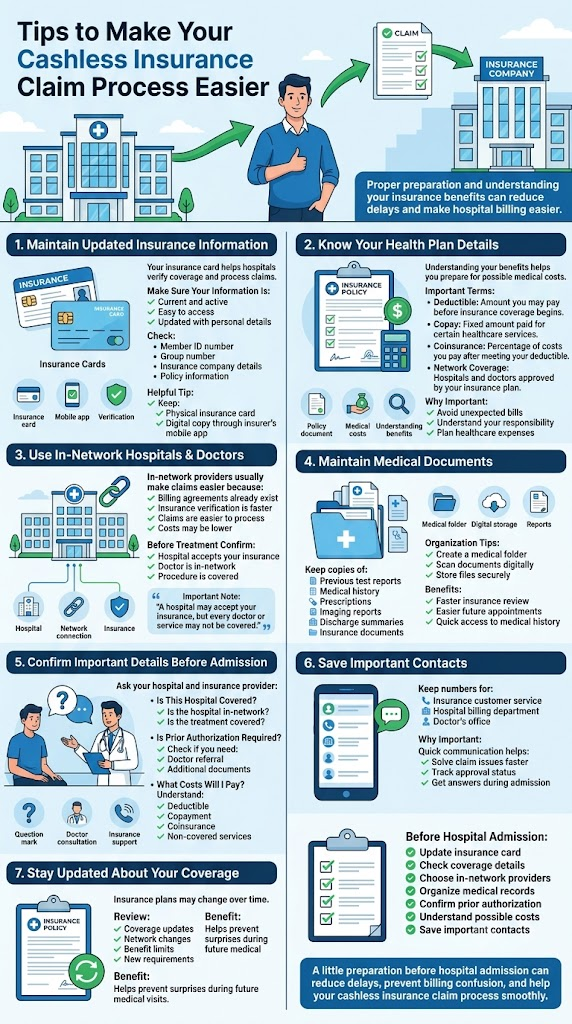
A smooth cashless insurance claim process depends on proper preparation, accurate information, and understanding your health insurance benefits. Taking a few simple steps before hospital admission can help reduce delays, avoid billing confusion, and make communication between the hospital and insurance company easier.
Follow these practical tips to make your cashless claim experience smoother:
Keep Your Insurance Card Updated
Your health insurance card contains important information needed for coverage verification and claim processing.
Before visiting a hospital, make sure your insurance information is:
- Current and active
- Easily accessible
- Updated with your latest personal details
Keep a physical copy of your insurance card and consider storing a digital version through your insurance company’s mobile app.
Check that details such as:
- Member ID number
- Group number
- Insurance company information
- Policy details
are accurate.
An outdated or incorrect insurance card can slow down the verification process and create unnecessary delays during admission.
Understand Your Insurance Benefits
Before receiving medical treatment, take time to understand how your health insurance plan works.
Knowing your benefits can help you prepare for possible medical expenses and avoid unexpected bills.
Important details to understand include:
| Insurance Term | What It Means |
|---|---|
| Deductible | The amount you may need to pay before your insurance begins covering certain healthcare costs. |
| Copay | A fixed amount you pay for specific healthcare services. |
| Coinsurance | The percentage of medical costs you may pay after meeting your deductible. |
| Network Coverage | The hospitals and doctors that have agreements with your insurance company. |
Understanding these terms helps you estimate your financial responsibility before treatment.
Choose In-Network Providers
Whenever possible, choose hospitals, doctors, and healthcare facilities that are part of your insurance company’s network.
Using in-network providers usually makes the cashless claim process easier because:
- The hospital already has a billing agreement with your insurer
- Insurance verification is often faster
- Claims are easier to process
- Your out-of-pocket costs may be lower
Before planned treatment, confirm:
- The hospital accepts your insurance plan
- Your doctor is in-network
- The specific procedure is covered
Remember that a hospital being in-network does not always guarantee that every healthcare professional or service within that facility is covered.
Keep Medical Records Organized
Organized medical records can make insurance processing and future healthcare visits easier.
Keep copies of important documents such as:
- Previous test reports
- Medical history records
- Prescriptions
- Doctor’s notes
- Imaging reports
- Hospital discharge summaries
- Insurance-related documents
Helpful organization methods include:
- Keeping a physical medical file
- Scanning documents digitally
- Storing files securely on your phone or computer
Having records available can help healthcare providers and insurance companies quickly access necessary information.
Ask Questions Before Treatment
For planned procedures or hospital admissions, asking questions in advance can prevent unexpected problems.
Before treatment, confirm important details with your hospital and insurance provider.
Ask:
Is This Hospital Covered by My Insurance?
Confirm whether the hospital is part of your insurance network and whether your planned treatment is included under your benefits.
Is Prior Authorization Required?
Some treatments require insurance approval before they can be covered.
Ask whether you need:
- Insurance approval
- Doctor referral
- Additional medical documentation
What Expenses Will I Need to Pay?
Even with cashless billing, you may still have costs such as:
- Deductibles
- Copayments
- Coinsurance
- Non-covered services
Understanding these costs beforehand can help you plan financially.
Keep Contact Information Ready
Save important contact details before hospitalization, including:
- Insurance company customer service number
- Hospital billing department contact
- Doctor’s office information
Quick communication can help resolve questions or delays during the claim process.
Review Your Insurance Documents Regularly
Health insurance plans can change over time. Reviewing your policy documents regularly helps you stay aware of:
- Coverage updates
- Network changes
- Benefit limits
- New requirements
This preparation can make future medical visits easier and reduce surprises.
Making a cashless insurance claim easier starts with preparation. Keeping your insurance card updated, understanding your benefits, choosing in-network providers, organizing medical records, and asking questions before treatment can help reduce delays and confusion.
A little planning before hospital admission can make the insurance process smoother and help you focus more on your healthcare and recovery.
Conclusion
Preparing the right documents before a hospital visit can make the cashless insurance claim process smoother and reduce unnecessary delays. In the United States, having your health insurance card, identification documents, medical records, medication list, and required authorization information ready can help hospitals verify coverage quickly.
While every insurance plan has different requirements, staying organized and understanding your benefits can make healthcare billing easier to manage. Before planned treatment, always confirm the required documents and approval process with your hospital and insurance provider.
A little preparation can help you focus more on your health and less on paperwork during a hospital visit.
Medical Disclaimer: This article is for informational and educational purposes only. It is not intended to replace professional medical advice, diagnosis, or treatment. Always consult a qualified healthcare provider for medical concerns or before making healthcare decisions.