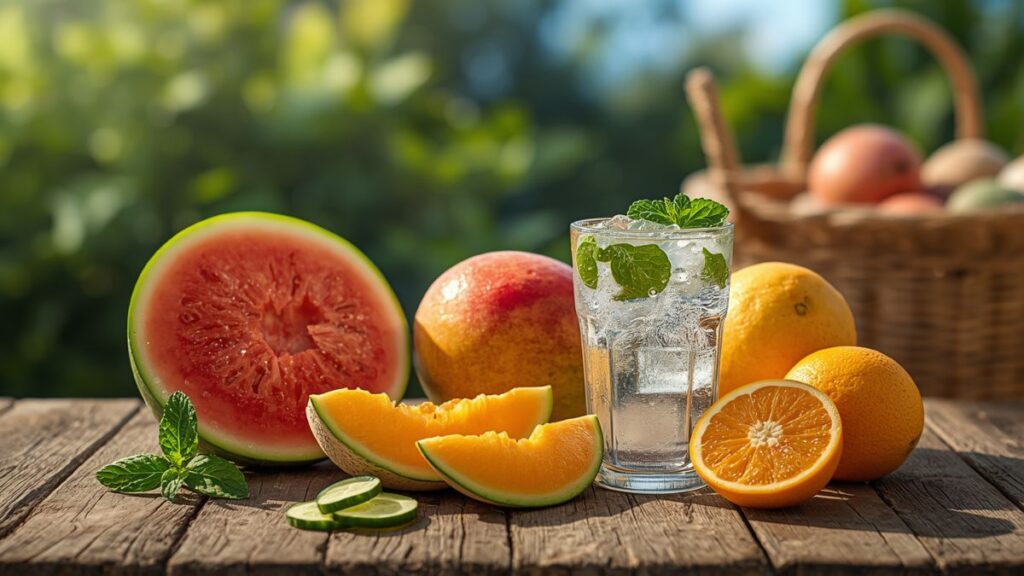
Summer heat can significantly increase sweating and fluid loss, making it important to maintain proper hydration throughout the day. When temperatures rise, your body loses water through sweat as it tries to regulate its internal temperature. If these fluids are not replaced, dehydration can lead to tiredness, reduced energy levels, headaches, dizziness, and difficulty concentrating.
While drinking enough water is the most important way to stay hydrated, adding water-rich seasonal fruits to your daily diet can provide additional support. Many summer fruits contain a high percentage of water along with essential vitamins, minerals, antioxidants, and natural carbohydrates that help refresh the body and provide energy during hot weather.
Seasonal fruits are especially beneficial because they are naturally available during warmer months, often fresher, more flavorful, and better suited to the body’s needs during summer. Fruits such as watermelon, mangoes, muskmelon, cucumber, and oranges can help increase fluid intake while also providing important nutrients that support overall health.
Including hydrating fruits in your summer routine can help you feel more refreshed, support digestion, maintain energy levels, and provide a healthier alternative to sugary beverages and processed drinks. They are also easy to include in meals, snacks, smoothies, or refreshing homemade preparations.
This guide explores 5 seasonal fruits to stay hydrated during summer, their hydration benefits, nutritional value, and simple ways to enjoy them as part of a healthy summer diet.
Why Hydration Is Important During Summer
During hot weather, your body loses more fluids through sweating as it works to maintain a normal internal temperature. Sweating is a natural cooling process, but excessive fluid loss without proper replacement can reduce the amount of water available for important body functions and may lead to dehydration.
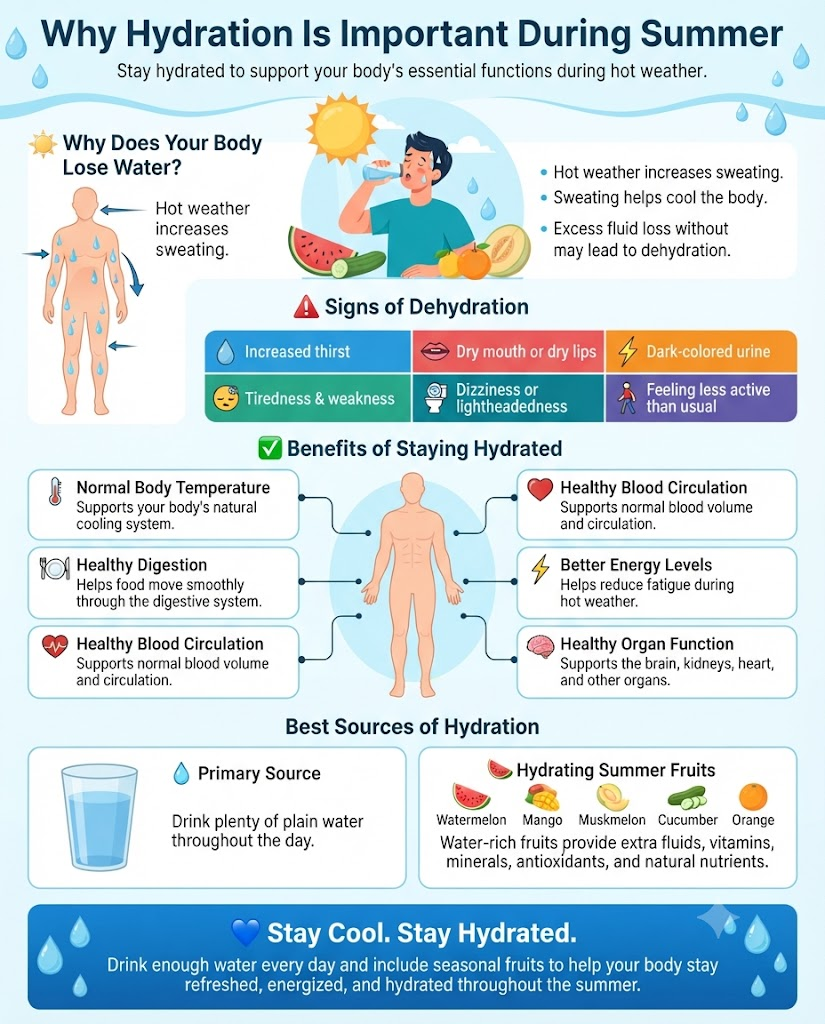
Dehydration can affect how you feel and how your body performs. Even mild dehydration may cause tiredness, reduced concentration, low energy, and discomfort, especially when spending time outdoors or engaging in physical activities during hot days.
Common signs of dehydration may include:
- Increased thirst
- Dry mouth or dry lips
- Tiredness and weakness
- Headache
- Dizziness or lightheadedness
- Dark-colored urine
- Reduced energy levels
- Feeling less active than usual
Maintaining proper hydration helps support several important body functions, including:
Normal Body Temperature Regulation
Water helps your body control temperature through sweating and other natural cooling processes. Staying hydrated allows your body to respond better to heat.
Healthy Digestion
Adequate fluid intake supports normal digestion and helps maintain the smooth movement of food through the digestive system.
Blood Circulation
Water plays an important role in maintaining normal blood volume, which supports healthy circulation throughout the body.
Energy Levels
Proper hydration helps prevent fatigue and allows your body to function efficiently during daily activities.
Proper Functioning of Organs
The brain, kidneys, heart, and other organs depend on adequate water levels to perform their normal functions.
While plain water should remain your primary source of hydration, water-rich fruits can provide additional fluids along with essential vitamins, minerals, antioxidants, and natural nutrients. Including hydrating fruits in your summer diet can be a simple and refreshing way to support your body’s hydration needs.
5 Seasonal Fruits to Stay Hydrated During Summer
Summer heat can quickly drain your body’s fluids, leaving you tired and low on energy. Discover 5 refreshing seasonal fruits that can help you stay hydrated, refreshed, and energized naturally during hot days.
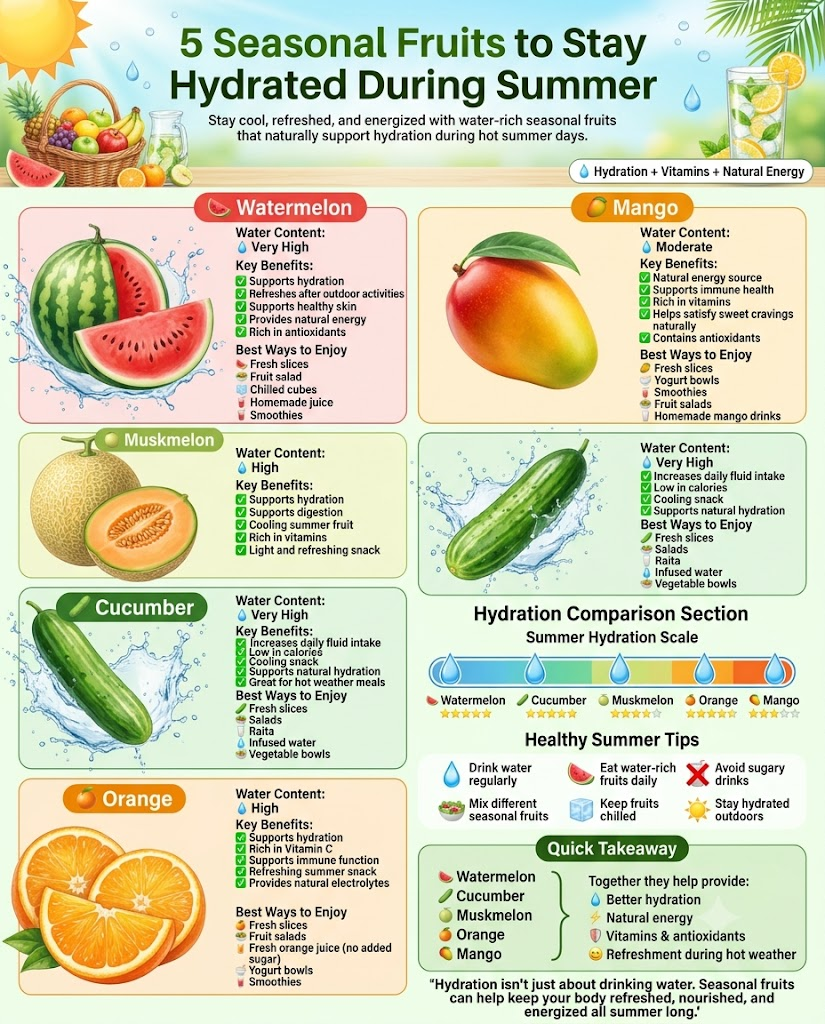
Watermelon: A Summer Hydration Favorite
Watermelon is one of the most popular and refreshing summer fruits, especially during hot weather. Known for its juicy texture and naturally sweet taste, watermelon contains a high amount of water, making it an excellent choice for supporting hydration during warm days.
Because of its high water content, watermelon can help replenish fluids lost through sweating and provide a refreshing option when temperatures rise. It is especially enjoyable after outdoor activities, exercise, or spending time in the sun.
In addition to hydration, watermelon provides important nutrients, including vitamins, minerals, and antioxidants that support overall health. It contains natural carbohydrates that can provide a quick source of energy while helping satisfy sweet cravings in a healthier way.
Benefits of Watermelon
Watermelon may help:
| Benefit | How Watermelon Helps |
|---|---|
| Provide Hydration During Hot Weather | The high water content in watermelon helps increase fluid intake and supports the body’s hydration needs during summer. |
| Refresh the Body After Outdoor Activities | Eating chilled watermelon after walking, exercising, or spending time outdoors can help replace lost fluids and provide a refreshing cooling effect. |
| Support Healthy Skin | Watermelon contains water and nutrients that help maintain skin hydration and support overall skin health. |
| Provide Natural Energy | The natural carbohydrates in watermelon provide a quick source of energy, making it a useful snack during active summer days. |
| Protect Cells With Antioxidants | Watermelon contains antioxidants that help protect body cells from oxidative stress caused by environmental factors. |
Best Ways to Enjoy Watermelon
Watermelon can be enjoyed in several simple and refreshing ways:
- Fresh slices
- Fruit salads
- Chilled watermelon cubes
- Homemade watermelon juice
- Smoothies without added sugar
For the healthiest option, enjoy watermelon fresh and avoid adding extra sugar, as the fruit already contains natural sweetness. Keeping it chilled can make it an especially refreshing choice during hot summer afternoons.
2. Mango: The Seasonal Summer Energy Fruit
Mango is often known as the king of summer fruits and is one of the most loved seasonal fruits during warmer months. With its sweet taste, rich flavor, and smooth texture, mango is a popular choice for summer meals and snacks.
Although mango does not contain as much water as some other hydrating fruits, it still contributes to fluid intake while providing essential nutrients and natural energy. It contains important vitamins, minerals, and antioxidants that support overall health and wellness.
The natural carbohydrates in mango can provide a quick energy boost, making it a useful fruit choice during physically active summer days.
Benefits of Mango
| Benefit | How Mango Helps |
|---|---|
| Provide Natural Energy During Hot Days | Mango contains natural carbohydrates that provide quick energy and help support daily activities, especially during physically active days. |
| Support Immune Health | Mango contains vitamins and antioxidants that help support the body’s natural defense system. |
| Add Important Vitamins to the Diet | Mango provides essential nutrients, including vitamins that contribute to overall health and well-being. |
| Satisfy Sweet Cravings Naturally | The naturally sweet flavor of mango can be a healthier alternative to processed sugary snacks and desserts. |
| Provide Antioxidant Support | Mango contains antioxidants that help protect cells from oxidative stress and support overall wellness. |
Best Ways to Enjoy Mango
Healthy ways to enjoy mango during summer include:
- Fresh mango slices
- Mango smoothies without excess added sugar
- Mango yogurt bowls
- Homemade mango drinks
- Fresh fruit salads
Since mango contains natural sugars, it is best enjoyed in moderate portions, especially for people who need to monitor their sugar intake. Pairing mango with yogurt, nuts, or other balanced foods can make it a more nutritious summer snack.
3. Muskmelon: A Cooling and Hydrating Fruit
Muskmelon is a refreshing summer fruit known for its juicy texture, naturally sweet taste, and high water content. It is considered a cooling fruit and can be a great addition to your diet during hot weather when your body needs extra fluids.
The high water content in muskmelon helps support hydration, while its vitamins, minerals, and nutrients contribute to overall health. It is also a light and easy-to-digest fruit, making it a suitable choice for a refreshing summer snack.
Benefits of Muskmelon
| Benefit | How Muskmelon Helps |
|---|---|
| Support Hydration | The high water content in muskmelon helps increase fluid intake and supports the body’s hydration needs during hot summer days. |
| Provide Essential Vitamins | Muskmelon contains important vitamins and nutrients that support overall health and help maintain a balanced diet. |
| Promote Healthy Digestion | The water and fiber content in muskmelon can support healthy digestion and help maintain regular bowel function. |
| Offer a Refreshing Snack Option | Its juicy texture and cooling effect make muskmelon a light and refreshing choice during warm weather. |
| Support Overall Wellness | The nutrients and antioxidants in muskmelon contribute to maintaining good health as part of a balanced diet. |
Best Ways to Enjoy Muskmelon
Healthy ways to include muskmelon in your summer diet include:
- Fresh muskmelon slices
- Fruit bowls
- Chilled muskmelon cubes
- Homemade smoothies
- Mixed fruit salads
For the best flavor and nutritional value, choose ripe muskmelons and consume them fresh. Keeping the fruit chilled before eating can make it even more refreshing during hot summer afternoons.
4. Cucumber: A Refreshing Hydrating Fruit
Although cucumber is commonly used as a vegetable in salads and meals, it is botanically classified as a fruit. Known for its high water content, crisp texture, and refreshing taste, cucumber is an excellent choice for supporting hydration during hot summer days.
Cucumber contains water, essential minerals, and beneficial plant compounds that make it a light and healthy addition to summer meals. Its low-calorie nature also makes it a suitable option for people looking for refreshing foods without adding excess calories to their diet.
Benefits of Cucumber
| Benefit | How Cucumber Helps |
|---|---|
| Increase Daily Fluid Intake | The high water content in cucumber helps add fluids to your diet and supports your body’s hydration needs during summer. |
| Support Natural Hydration | Cucumber provides water along with minerals that help maintain normal fluid balance in the body. |
| Provide a Refreshing Snack | Its crisp texture and cooling effect make cucumber a light and refreshing snack during hot weather. |
| Add Nutrients Without Many Calories | Cucumber provides essential nutrients while being low in calories, making it a healthy choice for summer diets. |
| Support Hot-Weather Meals | Adding cucumber to meals can make food more refreshing and easier to enjoy during warmer months. |
Best Ways to Enjoy Cucumber
Simple ways to include cucumber in your summer diet include:
- Fresh cucumber slices
- Cucumber salads
- Cucumber raita
- Cucumber-infused water
- Fresh vegetable bowls
Adding cucumber to your daily meals can help make your summer diet more refreshing while supporting hydration and providing essential nutrients.
5. Oranges: Hydration With Vitamin C
Oranges are a refreshing citrus fruit that can help support hydration while providing essential nutrients, especially vitamin C. Their juicy texture and naturally sweet-tangy flavor make them a popular choice during warm summer months.
Oranges contain a high amount of water along with important vitamins, minerals, and natural compounds that support overall health. The natural fluids present in oranges can contribute to daily hydration, while their nutrients help maintain a balanced diet.
Benefits of Oranges
| Benefit | How Oranges Help |
|---|---|
| Support Hydration | The high water content in oranges helps increase fluid intake and supports hydration during hot summer days. |
| Provide Vitamin C | Oranges are rich in vitamin C, an important nutrient that supports overall health and normal body functions. |
| Support Immune Function | The vitamin C and antioxidants in oranges help support the body’s natural defense system. |
| Add Freshness to Summer Meals | The juicy and refreshing nature of oranges makes them a flavorful addition to summer snacks and meals. |
| Provide Natural Electrolytes and Nutrients | Oranges contain minerals and nutrients that help support the body’s normal fluid balance and overall wellness. |
Best Ways to Enjoy Oranges
Healthy ways to include oranges in your summer diet include:
- Fresh orange slices
- Fruit salads
- Freshly prepared orange juice without added sugar
- Orange pieces added to yogurt or smoothies
For maximum benefits, eating the whole orange is often a better option than only drinking juice because the whole fruit provides fiber along with hydration and nutrients.
Tips to Stay Hydrated With Summer Fruits
Adding hydrating fruits to your daily diet can be a refreshing way to support hydration during hot weather. However, fruits should complement regular water intake and should not completely replace drinking enough water throughout the day.
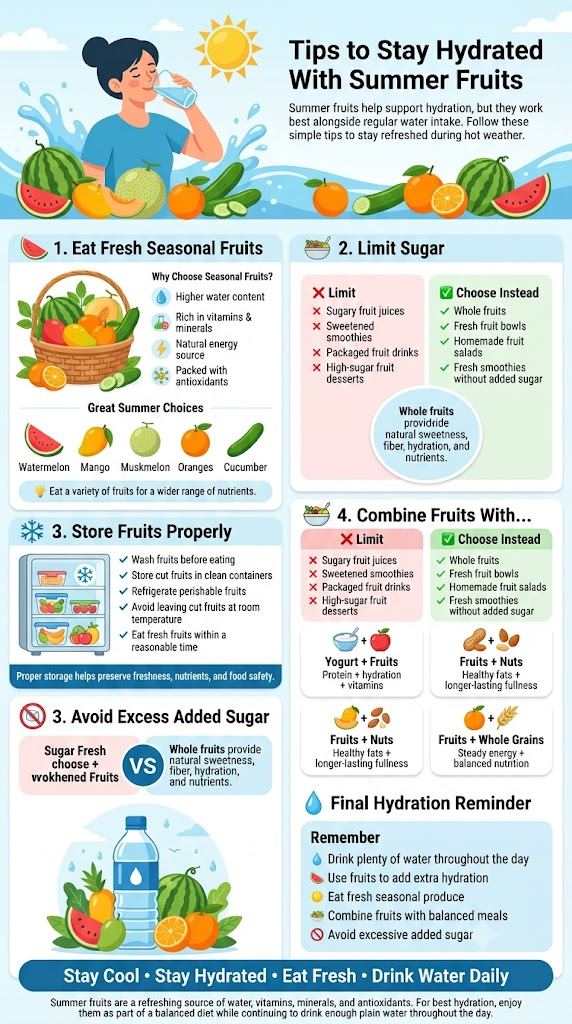
To get the most benefits from summer fruits, follow these simple tips:
Eat Fresh Seasonal Fruits
Choose fresh fruits that are naturally available during the summer season. Seasonal fruits are often more flavorful, easily available, and naturally suited to warmer weather conditions.
Fresh summer fruits can provide:
- Additional fluids
- Essential vitamins and minerals
- Natural energy
- Antioxidants that support overall health
Try including a variety of fruits instead of depending on only one type. Different fruits provide different nutrients and hydration benefits.
Examples of seasonal hydrating fruits include:
- Watermelon
- Mango
- Muskmelon
- Oranges
- Cucumber
Keep Fruits Properly Stored
Proper storage helps maintain the freshness, taste, and nutritional value of summer fruits. Hot temperatures can cause fruits to spoil faster, so handling and storage are important.
Helpful storage tips include:
- Wash fruits properly before eating
- Store cut fruits in clean containers
- Keep perishable fruits refrigerated
- Avoid keeping cut fruits at room temperature for long periods
- Consume fresh fruits within a suitable time
Proper storage also helps reduce the risk of contamination, especially during warmer months.
Avoid Excess Added Sugar
While fruits naturally contain healthy sugars, adding extra sugar to fruit preparations can reduce their health benefits.
Be careful with:
- Sweetened fruit juices
- Sugary smoothies
- Packaged fruit drinks
- Desserts made with large amounts of sugar
Instead, choose healthier options such as:
- Whole fruits
- Fresh fruit bowls
- Homemade fruit salads
- Freshly prepared smoothies without added sugar
Eating whole fruits is often a better choice because they provide fiber along with natural sweetness and hydration.
Combine Fruits With Balanced Meals
Pairing fruits with other nutritious foods can help create more balanced snacks and meals. Combining fruits with sources of protein, healthy fats, or whole grains can help provide longer-lasting energy.
Healthy combinations include:
Yogurt + Fruits
Adding fruits to yogurt can provide a refreshing snack with protein and nutrients.
Fruits + Nuts
Pairing fruits with nuts can provide healthy fats and help make the snack more filling.
Fruits + Whole Grains
Combining fruits with oats, whole grain cereals, or other whole grains can create a balanced meal option.
A balanced approach to summer eating can help you stay refreshed, maintain energy levels, and enjoy the benefits of seasonal fruits while supporting overall health.
Who Should Be Careful With Fruit Intake?
Most people can enjoy seasonal summer fruits as part of a balanced and healthy diet. Fruits provide important nutrients, hydration, fiber, and antioxidants that support overall health. However, some individuals with specific health conditions may need to be more careful about the type and amount of fruit they consume.
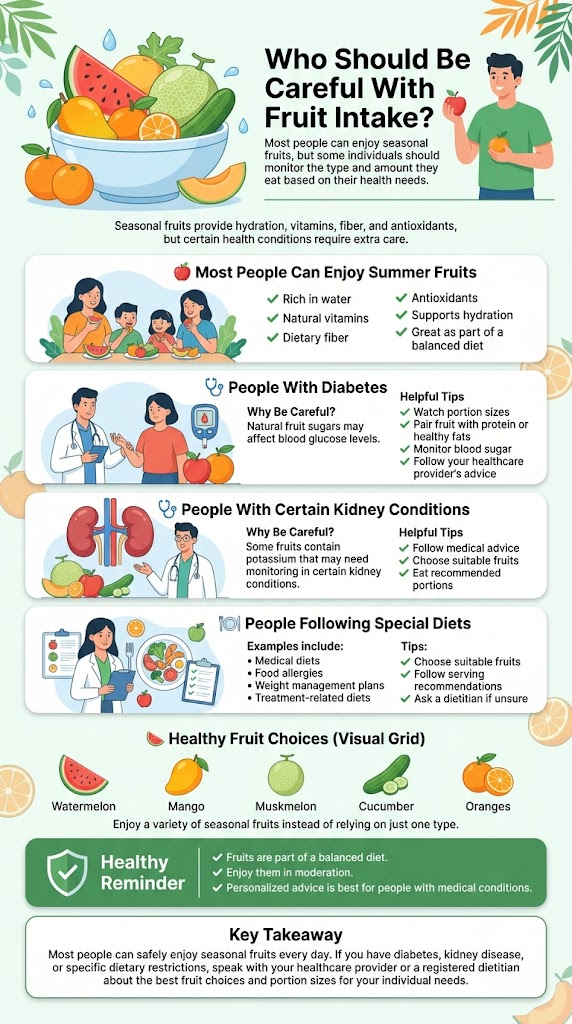
Certain fruits contain natural sugars, potassium, or other nutrients that may need to be monitored depending on a person’s health condition and dietary requirements.
People with the following conditions should consult their healthcare provider or nutritionist before making major changes to their fruit intake:
People With Diabetes
People with diabetes may need to monitor portion sizes because fruits contain natural sugars that can affect blood glucose levels.
Helpful tips may include:
- Choosing appropriate fruit portions
- Combining fruits with protein or healthy fats
- Monitoring blood sugar responses
- Following guidance from a healthcare professional
People With Certain Kidney Conditions
Individuals with some kidney conditions may need to monitor their intake of certain minerals, such as potassium, which is naturally present in many fruits.
A healthcare provider can recommend suitable fruit choices based on kidney function and individual nutritional needs.
People Following Specific Dietary Restrictions
Some people may have dietary restrictions due to medical conditions, allergies, treatment plans, or personal health goals.
They may need guidance on:
- Which fruits are suitable
- Appropriate serving sizes
- How fruits fit into their overall diet
For most healthy individuals, including a variety of fresh seasonal fruits in moderation can be a beneficial part of a summer diet. However, personalized advice from a healthcare professional is important for people with specific medical conditions or nutritional needs.
Conclusion
Staying properly hydrated during summer is essential for maintaining energy levels, comfort, and overall well-being. Hot weather can increase fluid loss through sweating, making it important to drink enough water and support your body’s hydration needs throughout the day.
While plain water should remain the primary source of hydration, seasonal fruits can provide additional fluids along with important vitamins, minerals, antioxidants, and natural nutrients. They are a refreshing and healthy way to add variety to your summer diet while supporting your body’s normal functions.
Fruits such as watermelon, mango, muskmelon, cucumber, and oranges are excellent summer choices that can help you stay refreshed and enjoy the benefits of seasonal produce. Each fruit offers unique nutritional advantages while contributing to your daily fluid intake.
By including fresh seasonal fruits in your meals, choosing balanced food options, storing fruits properly, and maintaining regular water intake, you can stay hydrated, energized, and better prepared to handle the challenges of hot summer days.
Medical Disclaimer: This article is for informational and educational purposes only. It is not intended to replace professional medical advice, diagnosis, or treatment. Always consult a qualified healthcare provider for medical concerns or before making healthcare decisions.