
Sugar is a common part of many people’s daily diets and is found in a wide variety of foods and beverages. Some sugar occurs naturally in foods like fruits and milk, where it comes with nutrients that support overall health. However, many processed foods and drinks contain added sugars that can quickly increase daily sugar intake.
Added sugars are often found in products such as soft drinks, packaged snacks, desserts, flavored dairy products, and ready-to-eat foods. Because these sources are spread across many everyday items, people may consume more sugar than they realize.
Eating too much added sugar regularly may contribute to health concerns such as weight gain, tooth problems, energy fluctuations, and an increased risk of certain lifestyle-related health issues. The aim is not always to completely eliminate sugar, but to build healthier habits and make smarter food choices.
Small changes, such as choosing healthier drinks, reading food labels, reducing sugar in daily beverages, and replacing sugary snacks with nutritious alternatives, can make a big difference over time.
This guide explains easy ways to cut down sugar in your daily diet, including practical swaps, mindful eating habits, and simple steps to reduce your dependence on sweet foods.
Why Reducing Sugar Intake Is Important
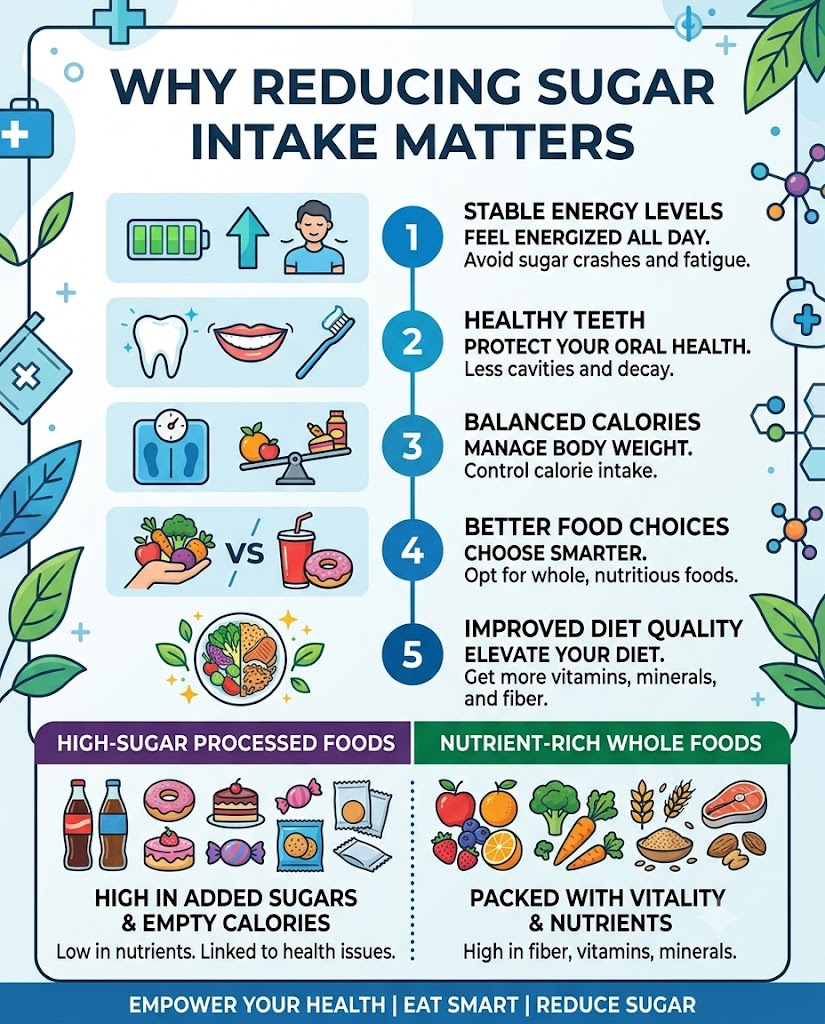
Sugar provides quick energy, but foods that are high in added sugar often provide limited nutritional value. Many sugary foods and beverages contain extra calories while offering little fiber, protein, vitamins, or minerals that the body needs for good health.
Consuming too many high-sugar foods can also affect eating patterns by increasing cravings for sweet foods and making it harder to maintain a balanced diet. Replacing some added sugar sources with nutrient-rich foods can help create healthier daily habits.
Reducing excess sugar intake may help:
Maintain healthier energy levels
Foods high in added sugar can cause quick increases in energy followed by sudden drops, which may leave you feeling tired or hungry. Choosing balanced meals with protein and fiber can provide more steady energy throughout the day.
Support better dental health
Frequent consumption of sugary foods and drinks can increase the risk of tooth problems. Reducing added sugar and maintaining good oral hygiene can support healthier teeth.
Reduce unnecessary calorie intake
Many sugary foods and beverages add extra calories without making you feel full for long. Cutting back on these items can help create a more balanced calorie intake.
Encourage healthier eating habits
Reducing sugar often encourages people to choose more whole foods, such as fruits, vegetables, nuts, whole grains, and protein-rich foods.
Improve overall diet quality
Replacing highly processed sugary foods with nutritious alternatives can improve the overall balance of your daily diet.
Making gradual changes is often easier to maintain than completely removing all sweet foods at once. Small adjustments, such as reducing added sugar in drinks or choosing healthier snacks, can create long-lasting habits over time.
Understand Where Added Sugar Comes From
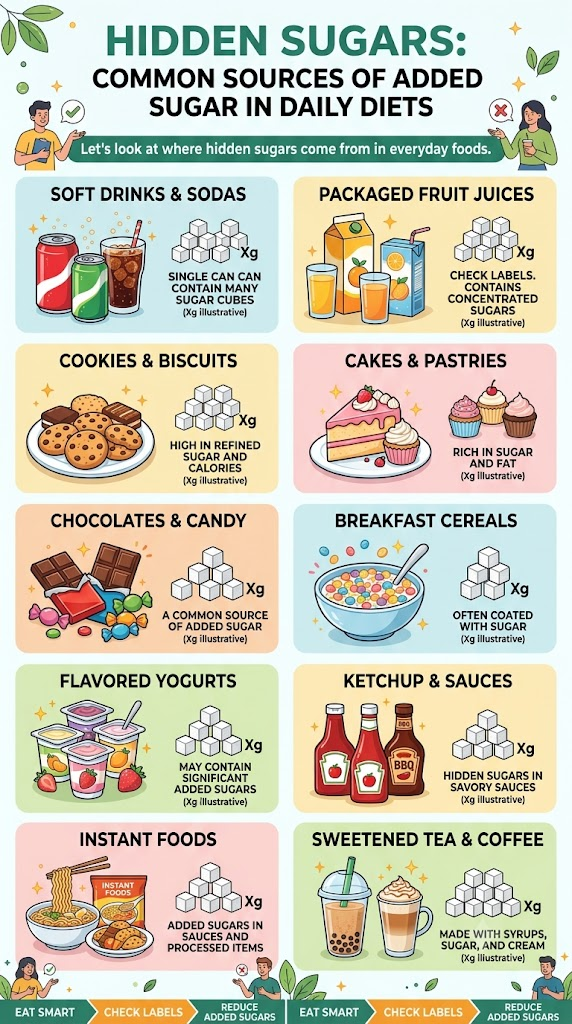
The first step in reducing sugar intake is understanding where added sugar appears in your daily diet. Many people associate sugar only with obvious foods like sweets, desserts, and candies, but added sugar is also present in many everyday products that may not seem very sweet.
Processed foods often contain sugar to improve flavor, texture, shelf life, or taste. Because these foods are consumed regularly, small amounts of added sugar from multiple sources can quickly increase your total intake.
Common sources of added sugar include:
Soft drinks and sweetened beverages
Sodas, energy drinks, and flavored beverages can contain large amounts of added sugar while providing little nutritional value.
Packaged juices
Some packaged fruit juices contain added sugar and may provide less fiber compared to eating whole fruits.
Cookies and biscuits
Many packaged snacks contain sugar along with refined flour and added fats.
Cakes and pastries
Desserts and bakery items are often high in added sugar and calories.
Candy and chocolates
These foods are usually concentrated sources of sugar and are easy to overconsume.
Sweetened breakfast cereals
Some cereals marketed as quick breakfast options may contain significant amounts of added sugar.
Flavored yogurt
Fruit-flavored or sweetened yogurts can contain more sugar than plain yogurt.
Sauces and dressings
Items such as ketchup, salad dressings, and ready-made sauces may contain hidden sugars.
Instant foods
Some packaged meals, snacks, and ready-to-eat products include added sugar for taste enhancement.
Sweetened tea and coffee
Daily beverages can become a major source of added sugar when multiple teaspoons are added regularly.
Checking ingredient labels can help you identify hidden sources of sugar and make better choices. Look for terms such as sugar, syrup, glucose, fructose, sucrose, and other sweeteners listed among the ingredients.
Easy Ways to Cut Down Sugar in Your Daily Diet
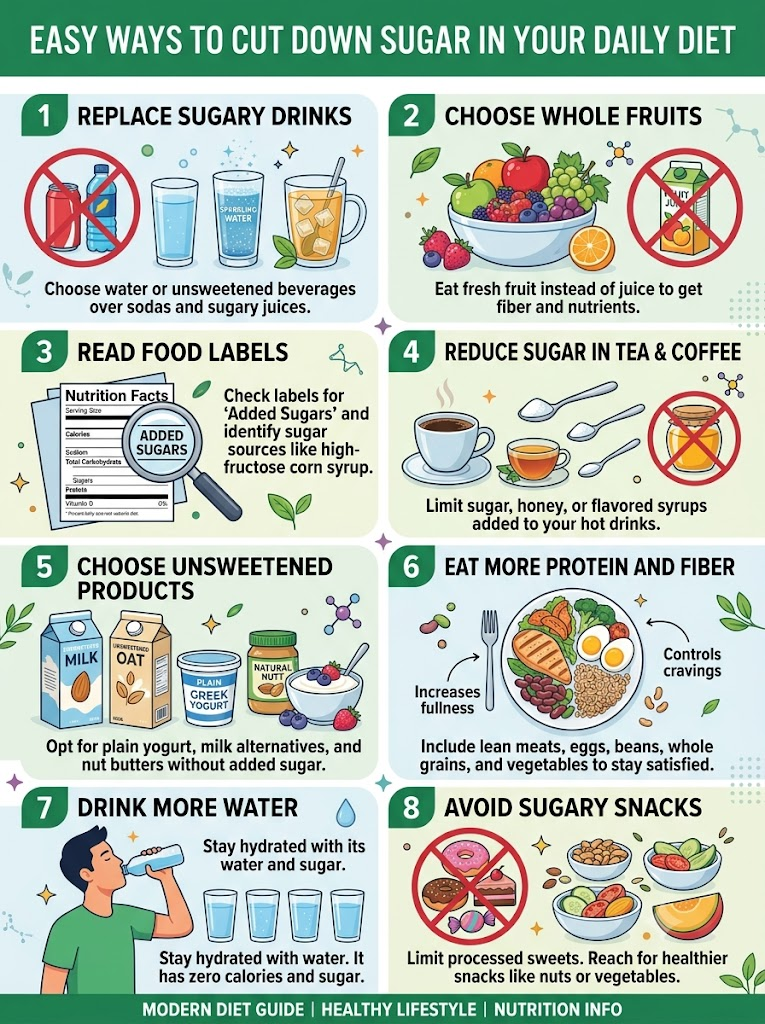
Reducing sugar intake does not always require making drastic changes. Small adjustments to your daily food and drink choices can gradually lower your added sugar consumption while helping you develop healthier eating habits.
Reduce Sugary Drinks
Sugary drinks are one of the biggest sources of added sugar in many diets. Since liquids do not create the same feeling of fullness as solid foods, it is easy to consume large amounts of sugar through beverages without realizing it.
Try replacing:
- Soft drinks with sparkling water or plain water
- Sweetened juices with whole fruits
- Sugary coffee drinks with less-sweet versions
- Packaged beverages with homemade drinks
If you regularly add sugar to tea or coffee, reduce the amount gradually instead of stopping suddenly. Slowly lowering sweetness allows your taste buds to adjust and makes the change easier to maintain.
Choose Whole Fruits Instead of Sweet Snacks
Fruits contain natural sugar along with fiber, vitamins, minerals, and antioxidants. Unlike many processed snacks, whole fruits provide nutrients that support overall health and help you feel satisfied for longer.
Instead of reaching for:
- Candy
- Cookies
- Chocolate bars
- Sweet pastries
Try:
- Apples
- Bananas
- Berries
- Oranges
- Seasonal fruits
The fiber in whole fruits helps slow digestion and provides more steady energy compared to many sugary snacks.
Read Food Labels Carefully
Sugar can appear under many different names on ingredient lists. Learning to identify these terms can help you make better choices when buying packaged foods.
Look for terms such as:
- Sugar
- Syrup
- Glucose
- Fructose
- Maltose
- Dextrose
- Sucrose
- High-fructose corn syrup
Comparing similar products can help you choose options with less added sugar. Pay attention not only to the ingredient list but also to the nutrition information panel, which shows the total sugar content.
Reduce Sugar in Tea and Coffee
Many people consume a significant amount of sugar through their daily beverages, especially when drinking multiple cups of tea or coffee.
Simple changes include:
- Using less sugar each week
- Trying unsweetened tea occasionally
- Adding cinnamon or natural flavors for taste
- Avoiding flavored syrups and sweetened creamers
Gradually reducing sweetness allows your taste buds to adjust over time, making naturally flavored foods and drinks more enjoyable.
Replace Sweet Breakfast Foods
Breakfast foods can sometimes contain large amounts of hidden sugar, especially packaged and flavored products.
Common sugary breakfast choices include:
- Sweet cereals
- Flavored oatmeal packets
- Sweet pastries
- Sugary spreads
Healthier options may include:
- Plain oats with fruits and nuts
- Eggs with whole-grain foods
- Unsweetened yogurt with fresh fruit
- Homemade breakfast options
A balanced breakfast containing protein and fiber can help control hunger and reduce cravings later in the day.
Choose Unsweetened Versions
Many everyday products are available in both sweetened and unsweetened varieties. Choosing the unsweetened option gives you more control over how much sugar you consume.
Consider choosing:
- Plain yogurt instead of flavored yogurt
- Unsweetened almond or dairy milk
- Plain oatmeal instead of flavored packets
- Unsweetened peanut butter instead of sweetened spreads
You can add natural sweetness with fruits, cinnamon, or nuts instead of relying on added sugar.
Avoid Keeping Too Many Sugary Snacks at Home
Food choices are often influenced by convenience. When sugary snacks are easily available, it becomes harder to make healthier choices, especially during moments of hunger.
Try:
- Keeping fruits visible and easily accessible
- Buying fewer packaged sweets
- Preparing healthy snacks in advance
- Storing treats away from immediate reach
Creating a healthier food environment can make better choices easier and reduce unnecessary sugar consumption.
Eat More Protein and Fiber
Meals that contain enough protein and fiber can help you feel full for longer and may reduce frequent cravings for sugary foods.
Include protein sources such as:
- Eggs
- Beans
- Lentils
- Fish
- Chicken
- Nuts
- Yogurt
Include fiber-rich foods such as:
- Vegetables
- Fruits
- Whole grains
- Legumes
Balanced meals can help prevent sudden hunger, energy crashes, and the desire for quick sugary snacks.
Drink More Water
Sometimes thirst can be mistaken for hunger or sugar cravings. Staying properly hydrated throughout the day may help reduce unnecessary snacking and support better food choices.
Simple habits include:
- Carrying a reusable water bottle
- Drinking water before meals
- Choosing water instead of sugary beverages
- Adding lemon, mint, or fruit slices for flavor without adding much sugar
Making water your regular beverage choice is one of the easiest ways to reduce daily sugar intake.
How to Manage Sugar Cravings
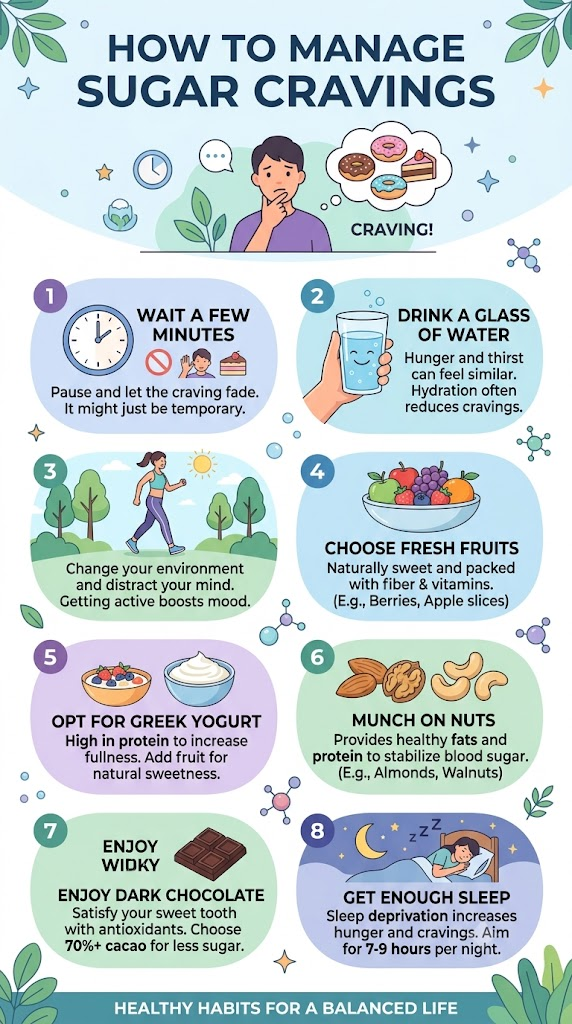
Sugar cravings are common, especially when you are trying to reduce your intake of sweet foods. A sudden change in eating habits can make you want sugary snacks more often, but these cravings can usually be managed with simple strategies.
Instead of relying only on willpower, focus on creating healthy habits that make it easier to choose better options.
Wait Before Giving In
When a sugar craving appears, try waiting for a few minutes before immediately reaching for a sweet snack. Many cravings are temporary and may become weaker if you give your mind and body some time.
Try:
- Drinking water
- Taking a short walk
- Doing another activity
- Stepping away from the food trigger
Delaying the decision can help you understand whether you are truly hungry or simply experiencing a temporary craving.
Choose Healthier Sweet Alternatives
If you still want something sweet, choose options that provide more nutritional value than highly processed sugary snacks.
Healthier alternatives include:
- Fruit with yogurt
- Nuts with a small amount of dark chocolate
- Homemade smoothies without added sugar
- Dates in moderation
- Fresh fruits with nut butter
These options can satisfy a sweet craving while also providing nutrients such as fiber, vitamins, minerals, and healthy fats.
Get Enough Sleep
Poor sleep can affect hunger signals and may increase cravings for high-sugar foods. When you are tired, your body may look for quick sources of energy, which can make sugary snacks more tempting.
Aim for:
- A consistent sleep schedule
- Enough nighttime rest
- Reduced screen time before bed
- A relaxing bedtime routine
Good sleep supports better decision-making, helps regulate appetite, and makes it easier to maintain healthier eating habits throughout the day.
Common Mistakes When Reducing Sugar
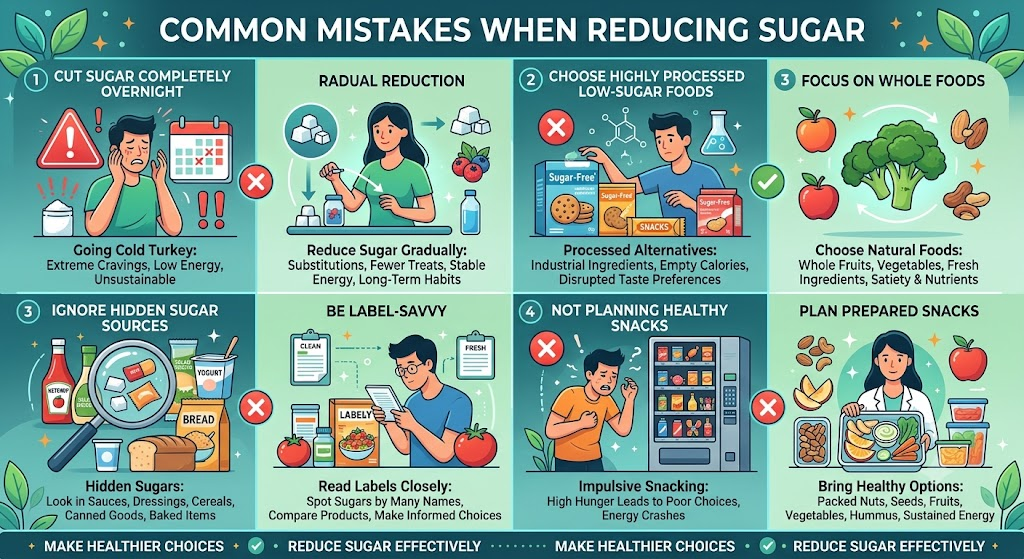
Reducing sugar intake is a positive step toward healthier eating habits, but certain approaches can make the process more difficult. Understanding common mistakes can help you create a balanced and sustainable plan.
Cutting Sugar Completely Overnight
Removing all sweet foods suddenly may feel challenging, especially if your body and taste preferences are used to regular sugar intake. Strict restrictions can sometimes lead to stronger cravings and make it harder to maintain the habit long term.
A gradual reduction is often easier to follow. Start by making small changes, such as reducing sugar in beverages, choosing healthier snacks, and limiting highly processed sweet foods.
Replacing Sugar With Highly Processed Foods
Some products marketed as “low sugar” or “sugar-free” may still contain highly processed ingredients or may not always be the healthiest choice.
Instead of focusing only on one ingredient, consider the overall quality of the food.
Look for options that include:
- Whole ingredients
- More fiber
- Adequate protein
- Fewer unnecessary additives
A balanced diet is more important than simply choosing foods labeled as low sugar.
Ignoring Hidden Sugar Sources
Many people reduce obvious sweets but continue consuming added sugar through everyday foods and drinks.
Hidden sources may include:
- Sweetened beverages
- Packaged sauces
- Breakfast cereals
- Flavored dairy products
- Ready-to-eat foods
Checking food labels and understanding your overall diet can help identify these less obvious sources of sugar.
Not Planning Healthy Snacks
When hunger suddenly appears, people often choose convenient sugary foods because they are easily available.
Preparing healthier options in advance can prevent impulsive choices.
Keep options such as:
- Fresh fruits
- Nuts
- Plain yogurt
- Homemade snacks
- Cut vegetables
Planning ahead makes it easier to stay consistent with your goal of reducing sugar intake.
Simple Daily Habits to Reduce Sugar
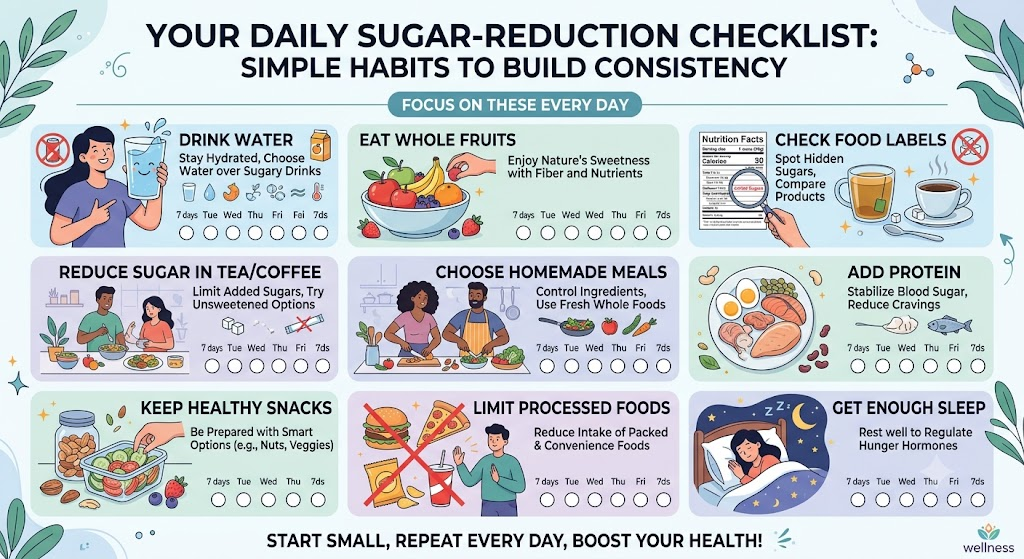
Reducing sugar intake becomes easier when small healthy habits become part of your daily routine. Instead of making major changes all at once, focus on simple steps that you can follow consistently over time.
Small habits that can help reduce sugar include:
Drink water instead of sugary beverages
Choosing water over soft drinks, sweetened juices, and sugary drinks is one of the easiest ways to lower added sugar intake. Keeping a water bottle nearby can make hydration a regular habit.
Eat whole fruits instead of desserts
When you crave something sweet, choose whole fruits that provide natural sweetness along with fiber, vitamins, and minerals.
Check food labels before buying packaged foods
Reading ingredient lists and nutrition labels can help you identify hidden sources of added sugar and choose better alternatives.
Reduce sugar in tea and coffee gradually
Slowly decreasing the amount of sugar added to beverages allows your taste buds to adjust without making the change feel too difficult.
Choose homemade meals more often
Preparing meals at home gives you better control over ingredients and helps reduce the added sugar often found in processed foods.
Include protein in meals
Adding protein sources such as eggs, lentils, beans, fish, chicken, nuts, or yogurt can help you stay full and reduce cravings for sugary snacks.
Keep healthy snacks available
Having nutritious options ready, such as fruits, nuts, or yogurt, makes it easier to avoid reaching for packaged sweets when hunger strikes.
Limit processed foods
Many processed foods contain hidden added sugars. Choosing more whole foods can improve overall diet quality and reduce unnecessary sugar intake.
Consistency matters more than perfection. Small, regular improvements are more likely to become lasting habits than strict rules that are difficult to maintain.
Benefits of Reducing Added Sugar Gradually
Making gradual changes to reduce added sugar can help your body adjust and make healthier habits easier to maintain. Instead of making sudden restrictions, slowly changing your food choices allows you to develop a more balanced and sustainable approach to eating.
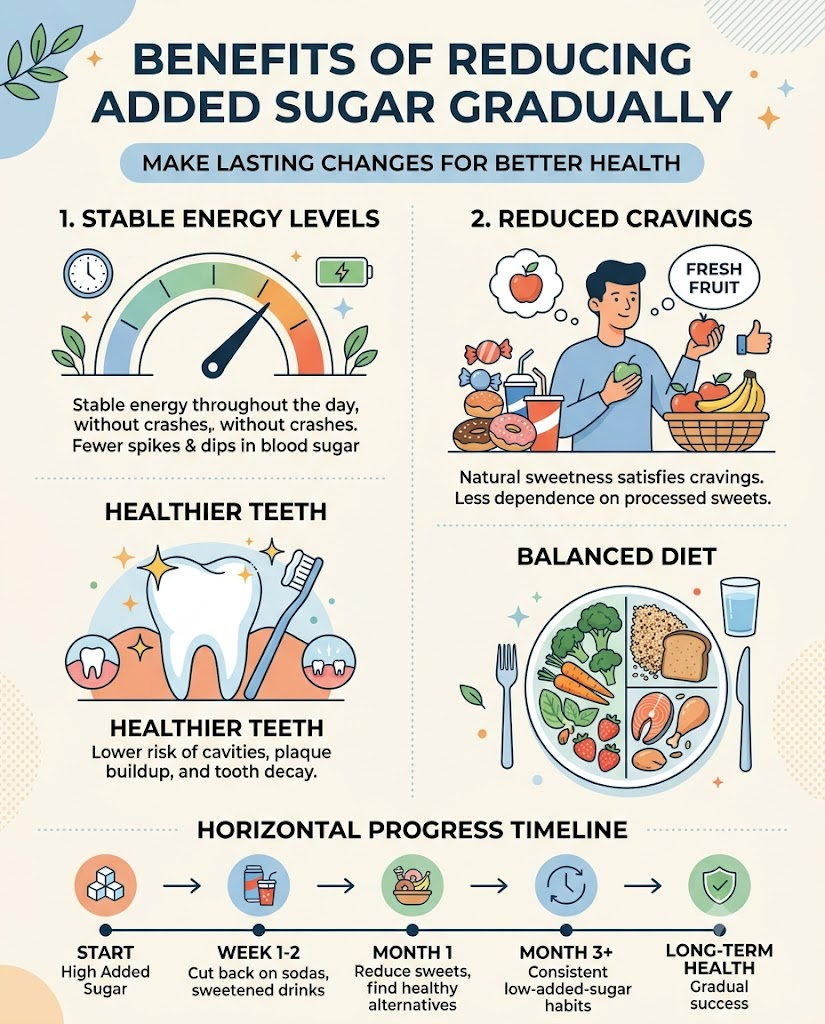
Reducing sugar gradually may offer several benefits:
More stable energy levels
Cutting back on high-sugar foods and drinks may help reduce sudden energy spikes and drops throughout the day. Choosing balanced meals with protein, fiber, and healthy carbohydrates can support more consistent energy.
Better control over food choices
As you reduce your dependence on very sweet foods, it may become easier to recognize hunger signals and make more mindful decisions about snacks and meals.
Improved dental care habits
Lowering added sugar intake can support better oral health by reducing frequent exposure to sugary foods and drinks that may contribute to tooth problems.
Reduced dependence on very sweet flavors
Over time, your taste preferences can adjust, and naturally sweet foods like fruits may become more satisfying without needing extra sugar.
Better overall diet balance
Replacing sugary foods with nutrient-rich options can improve the overall quality of your diet by increasing your intake of fruits, vegetables, whole grains, and protein-rich foods.
Remember that everyone’s dietary needs are different. People with specific health conditions, dietary restrictions, or concerns about major diet changes should consider discussing their plans with a healthcare professional.Everyone’s dietary needs are different, so people with specific health conditions should consider discussing major diet changes with a healthcare professional.
Conclusion
Learning easy ways to cut down sugar in your daily diet does not mean you need to completely avoid all sweet foods. The most effective approach is to make small, consistent changes that reduce added sugar while improving the overall quality of your diet.
Simple steps such as replacing sugary drinks with healthier options, choosing whole fruits instead of processed snacks, reading food labels, and gradually reducing sugar in tea and coffee can make a meaningful difference over time.
Developing healthier habits is a gradual process. By making mindful food choices and focusing on balance rather than strict restrictions, you can create a more sustainable approach to eating and build a healthier relationship with food.
Small improvements made consistently can help you enjoy a balanced diet while still allowing occasional treats in moderation.
Medical Disclaimer: This article is for informational and educational purposes only. It is not intended to replace professional medical advice, diagnosis, or treatment. Always consult a qualified healthcare provider for medical concerns or before making healthcare decisions.