
Hot summer weather can put extra stress on the body, especially during outdoor activities or in places without adequate cooling. Spending too much time in the heat can lead to dehydration, overheating, or heat-related illnesses, with dizziness often being one of the first warning signs.
When the body gets too hot, it loses water and electrolytes through sweating. This can affect blood circulation and make it harder for enough blood to reach the brain, causing a person to feel lightheaded, weak, or unsteady. If ignored, these symptoms may worsen and develop into more serious heat-related illnesses.
Feeling dizzy on a hot day should never be ignored. In many cases, simple first-aid measures can help the person recover, but it is also important to recognize when the symptoms may indicate a more serious condition that requires immediate medical attention.
This guide explains what to do if someone feels dizzy on a hot summer day, common causes, first-aid steps, prevention tips, and when to seek emergency care.
Why Hot Weather Can Cause Dizziness
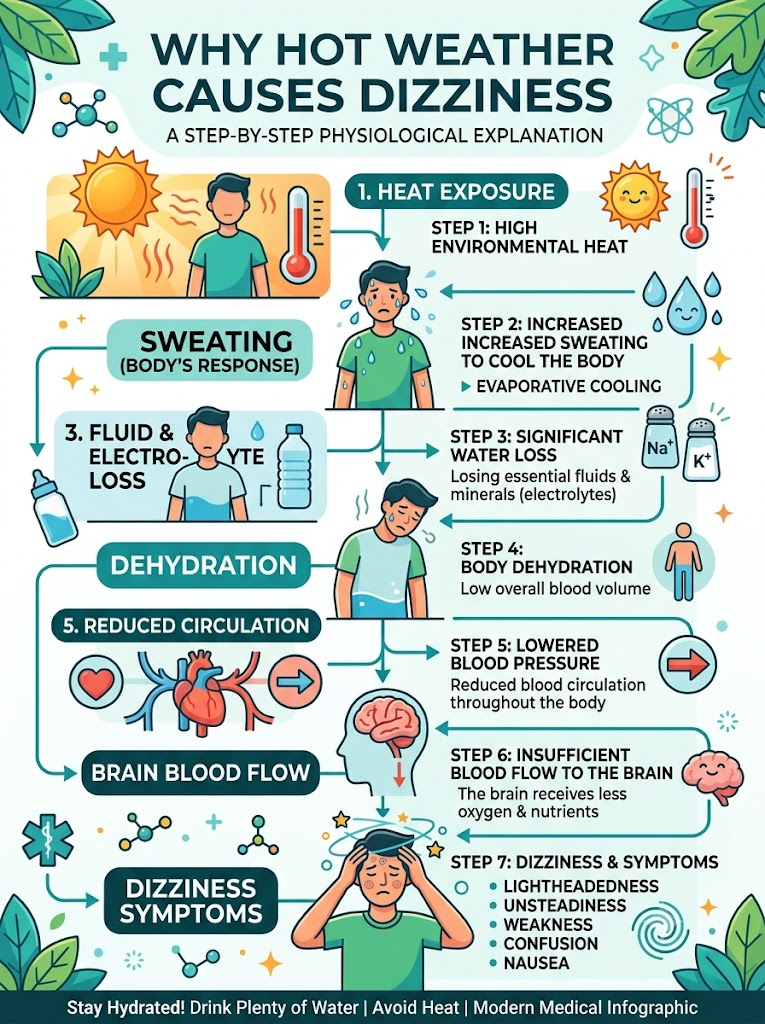
High temperatures make the body work harder to maintain a normal internal temperature. One of the body’s main cooling methods is sweating, but as you sweat, you lose water and electrolytes. If these fluids are not replaced, dehydration can develop, making it more difficult for the body to function normally.
Hot weather can also cause blood vessels to widen to help release excess heat. In some people, this may lower blood pressure, reducing the amount of blood reaching the brain. As a result, a person may feel dizzy, lightheaded, weak, or unsteady, particularly after standing for long periods or moving suddenly.
Several factors can increase the risk of heat-related dizziness, including:
- Spending long periods outdoors, especially in direct sunlight
- Intense physical activity or exercise in hot weather
- Not drinking enough water throughout the day
- High humidity, which makes it harder for sweat to cool the body
- Wearing heavy, tight, or dark-colored clothing that traps heat
- Skipping meals or having low blood sugar
- Certain medications that affect hydration, sweating, or blood pressure
Understanding these risk factors can help you take simple precautions to stay hydrated, keep cool, and reduce the chances of developing dizziness during hot summer weather.
Common Signs That May Accompany Dizziness
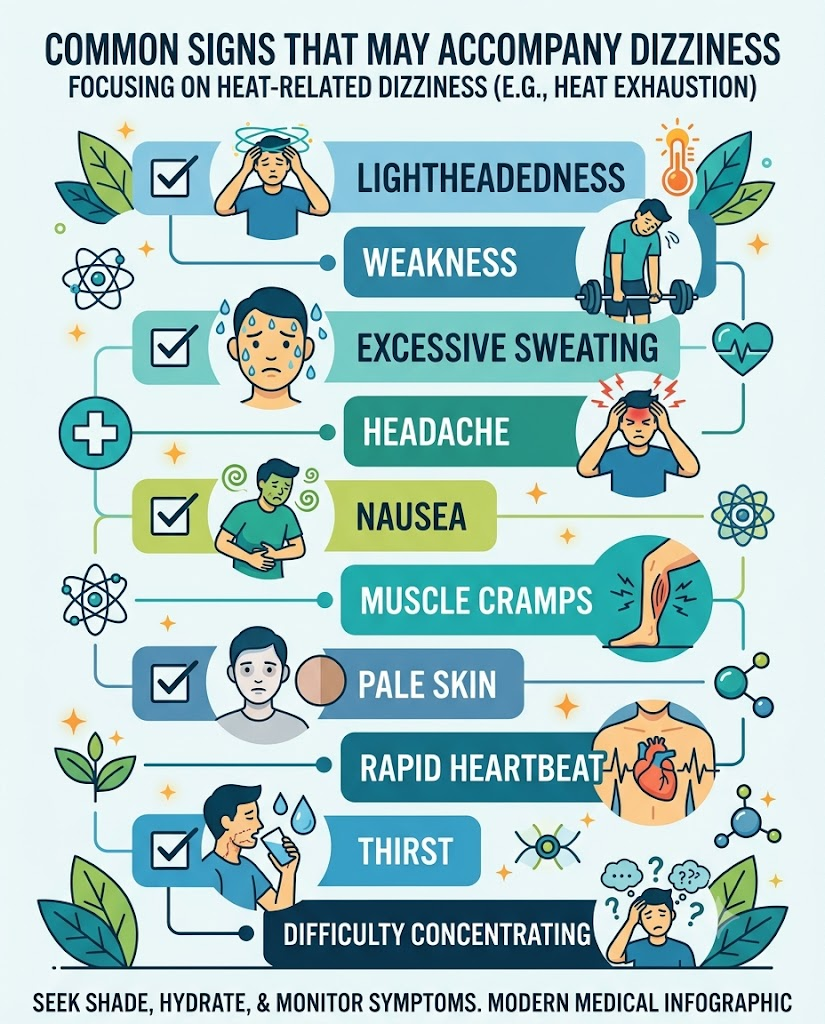
Dizziness caused by hot weather is often accompanied by other symptoms that indicate the body is becoming overheated or dehydrated. Recognizing these early warning signs allows you to respond quickly and may help prevent the condition from progressing to heat exhaustion or heat stroke.
Common symptoms include:
- Lightheadedness or feeling faint
- Weakness or unusual fatigue
- Excessive sweating
- Headache
- Nausea or an upset stomach
- Muscle cramps, especially in the legs or arms
- Pale, cool, or clammy skin
- Rapid heartbeat
- Feeling very thirsty or having a dry mouth
- Difficulty concentrating or feeling unusually tired
Some people may also experience dizziness when standing up suddenly after sitting or lying down for a long time, particularly if they are dehydrated.
If these symptoms become more severe, do not ignore them. Confusion, difficulty speaking, loss of consciousness, seizures, or hot, dry skin may be signs of a medical emergency and require immediate medical attention.
What to Do if Someone Feels Dizzy on a Hot Summer Day
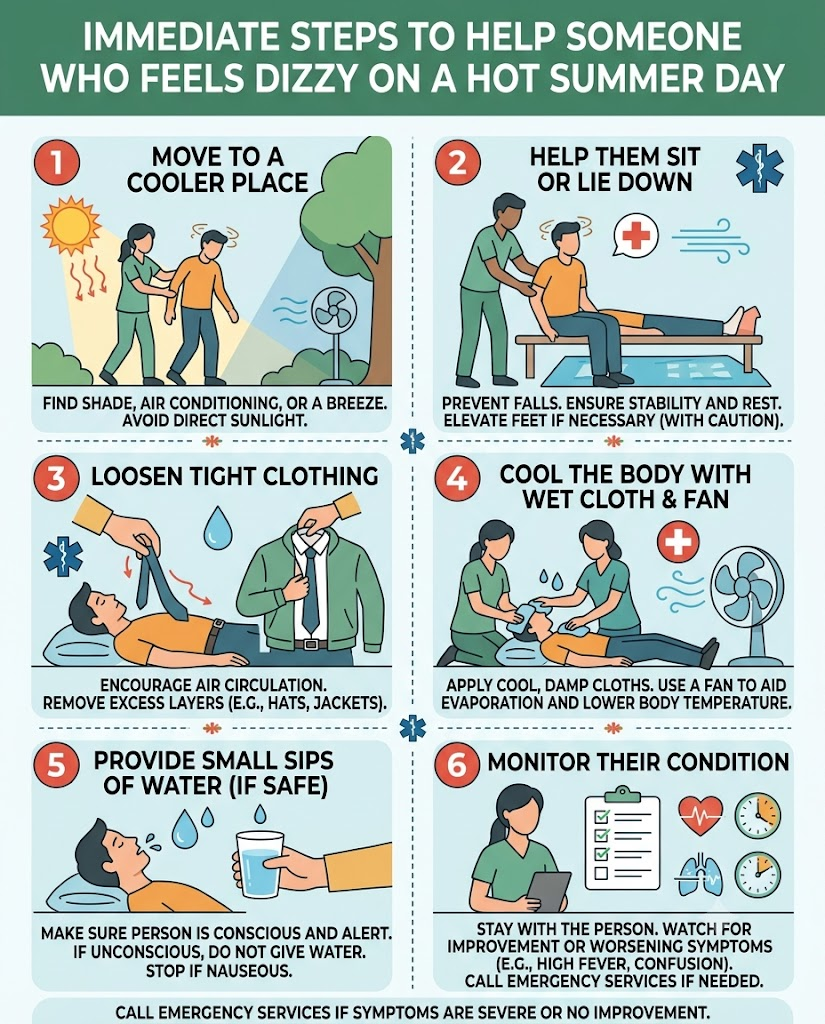
Acting quickly when someone feels dizzy in hot weather can help cool the body, improve circulation, and reduce the risk of the condition becoming more serious. In many cases, simple first-aid measures are enough to help the person recover, but it is important to monitor them closely for any signs that their condition is worsening.
Move the Person to a Cooler Place
The first priority is to get the person away from the heat source as quickly and safely as possible. Reducing heat exposure allows the body to begin cooling naturally.
Move them to:
- An air-conditioned room
- A shaded area
- Indoors if possible
- A place with good airflow
If indoors is not available, choose the coolest shaded location nearby and encourage the person to rest.
Help the Person Sit or Lie Down
Ask the person to stop any physical activity immediately and encourage them to rest.
If they feel faint:
- Help them sit down.
- If possible, have them lie flat.
- Elevate the legs slightly if they feel lightheaded.
This position may improve blood flow to the brain, reduce dizziness, and lower the risk of falling or injury. Encourage the person to stand up slowly only after they feel better.
Loosen Tight Clothing
Removing or loosening tight clothing helps improve air circulation and allows excess body heat to escape more easily.
Loosen or remove items such as:
- Jackets
- Tight collars
- Belts
- Scarves
If the person is wearing heavy clothing, help them remove extra layers while maintaining their comfort and privacy.
Cool the Body
Begin cooling the person as soon as possible to help lower their body temperature.
You can:
- Apply cool, damp cloths to the neck, forehead, armpits, and wrists.
- Use a fan to increase air circulation.
- Move the person into an air-conditioned environment if available.
- Mist the skin lightly with cool water.
Avoid using ice directly on the skin, as extreme cold may cause discomfort and is generally unnecessary for mild heat-related dizziness.
Encourage Small Sips of Water
If the person is fully awake, alert, and able to swallow safely, encourage them to drink cool water slowly.
Keep these tips in mind:
- Offer small, frequent sips rather than large amounts at once.
- Encourage them to continue drinking as they begin to feel better.
- If heavy sweating has occurred, an oral rehydration solution or sports drink may help replace lost electrolytes.
Do not give anything to drink if the person is unconscious, confused, vomiting repeatedly, or unable to swallow safely.
Stay With the Person
Do not leave the person alone while they recover. Continue to monitor their condition for several minutes.
Watch for:
- Improvement in dizziness
- Better alertness
- Reduced sweating
- Improved skin color
- Any signs that symptoms are getting worse
Even if they begin to feel better, encourage them to continue resting in a cool place and avoid returning to physical activity until they have fully recovered.
Signs That the Person Is Recovering

After moving to a cool environment, resting, and drinking fluids if appropriate, many people with mild heat-related dizziness begin to feel better within a short time. Recovery may be gradual, so it is important to continue monitoring the person rather than assuming they are fully recovered as soon as the dizziness improves.
Signs that the person is recovering may include:
- Dizziness gradually becomes less noticeable.
- Heart rate begins to return to normal.
- Excessive sweating slows down.
- Skin feels cooler and more comfortable.
- Energy and alertness begin to return.
- They can sit or stand without feeling faint or unsteady.
The person may also feel more comfortable, be able to concentrate better, and no longer complain of nausea or weakness.
Even after recovery, encourage the person to continue resting in a cool place, drink plenty of fluids, and avoid strenuous activity for the remainder of the day. If symptoms return, worsen, or do not improve after a reasonable period of rest and cooling, seek medical advice promptly.
When Should You Seek Emergency Medical Help?
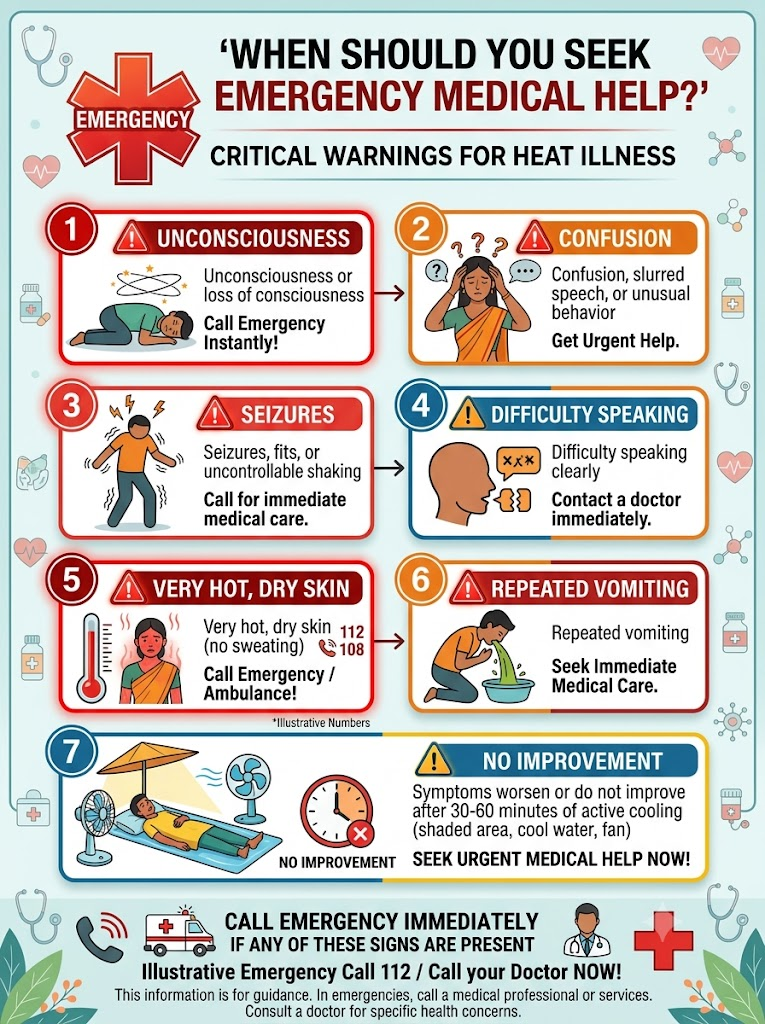
While mild heat-related dizziness often improves with rest, cooling, and hydration, some symptoms may indicate that the condition has progressed to heat exhaustion or even heat stroke, which is a life-threatening medical emergency. Recognizing these warning signs and acting quickly can make a significant difference.
Call emergency medical services immediately if the person:
- Loses consciousness or becomes difficult to wake.
- Has a seizure.
- Becomes confused, disoriented, or behaves unusually.
- Has difficulty speaking or responding to simple questions.
- Stops sweating despite being in a hot environment.
- Has very hot, dry skin.
- Has a body temperature of 40°C (104°F) or higher, if it can be measured safely.
- Has repeated vomiting or cannot keep fluids down.
- Does not improve after being moved to a cool place, cooled down, and given fluids if appropriate.
While waiting for emergency help to arrive, continue cooling the person by moving them to a shaded or air-conditioned area, applying cool, wet cloths to the skin, and using a fan if available. Do not force fluids if the person is unconscious, confused, or unable to swallow safely.
Heat stroke is a medical emergency that requires immediate professional treatment. Prompt action can help reduce the risk of serious complications.
Who Is at Higher Risk of Heat-Related Dizziness?
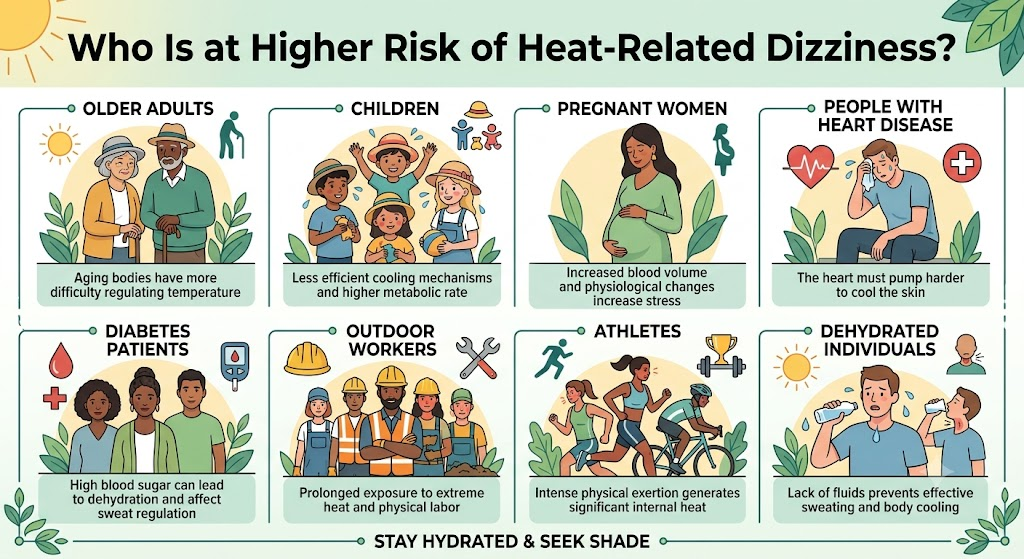
While anyone can experience dizziness during hot weather, some people are more vulnerable to heat-related illnesses because their bodies may have a harder time regulating temperature, maintaining hydration, or adapting to extreme heat.
Understanding who is at higher risk can help families take extra precautions during summer months and periods of high temperatures.
Higher-risk groups include:
Older Adults
Older adults may be more sensitive to heat because the body’s ability to regulate temperature can decrease with age. They may also have a reduced sense of thirst, making dehydration more likely.
Young Children
Children can become overheated more quickly than adults because their bodies are smaller and they may not recognize when they need water or a break from the heat.
Pregnant Women
Pregnancy can increase the body’s demand for fluids and affect how the body responds to heat. Staying hydrated and avoiding prolonged heat exposure are especially important.
People With Heart Disease
Individuals with heart conditions may have more difficulty handling the extra stress that heat places on the cardiovascular system. Heat-related dehydration can also affect blood pressure and circulation.
Individuals With Diabetes
Diabetes can affect hydration levels and the body’s response to heat. People with diabetes should take extra care to stay hydrated and monitor their health during hot weather.
People Taking Certain Medications
Some medications can affect sweating, fluid balance, or blood pressure, which may increase the risk of heat-related dizziness. People should follow their healthcare provider’s advice during hot conditions.
Outdoor Workers
People who work outdoors, such as construction workers, farmers, and delivery workers, may spend many hours exposed to high temperatures and direct sunlight.
Athletes
Athletes and people who exercise outdoors can lose significant amounts of water and electrolytes through sweating, increasing the risk of dizziness and heat-related illness.
People Who Are Dehydrated
Anyone who does not drink enough fluids or loses excessive water through sweating, illness, or physical activity has a higher risk of experiencing dizziness in hot weather.
These individuals should take extra precautions by drinking enough fluids, taking regular breaks in cooler areas, avoiding peak heat hours when possible, and paying attention to early warning signs of overheating.
How to Prevent Dizziness on Hot Summer Days
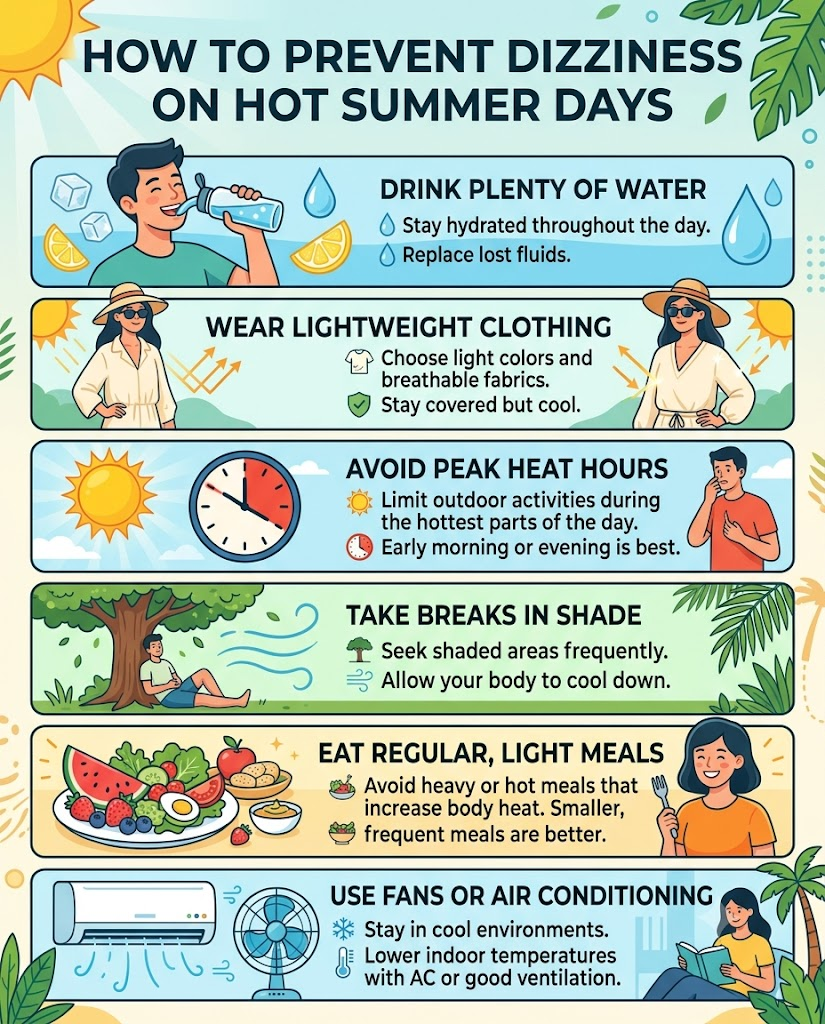
Simple preventive measures can greatly reduce the risk of heat-related dizziness and help the body handle high temperatures more effectively. Preparing in advance, staying hydrated, and avoiding excessive heat exposure are some of the easiest ways to stay safe during summer.
Stay Hydrated
Drinking enough fluids is one of the most important steps for preventing heat-related dizziness. The body loses water and electrolytes through sweating, especially during hot weather or physical activity.
Drink water regularly throughout the day, even if you do not feel thirsty, as thirst may not always appear immediately when the body needs fluids.
Increase fluid intake during:
- Outdoor activities
- Exercise or physical work
- Hot and humid weather
- Long periods spent in direct sunlight
For activities involving heavy sweating, electrolyte replacement may also be helpful.
Dress for the Weather
The right clothing can help the body release heat and stay more comfortable during hot days.
Choose:
- Lightweight clothing
- Loose-fitting fabrics
- Light-colored clothing
- Breathable materials such as cotton
A wide-brimmed hat can also provide additional protection from direct sunlight by reducing heat exposure to the head and face.
Avoid tight or heavy clothing that can trap heat and make it harder for the body to cool down.
Avoid Peak Heat Hours
Temperatures are usually highest during late morning and afternoon. Limiting outdoor activities during these hours can reduce the risk of overheating.
If possible:
- Schedule outdoor work or exercise during cooler parts of the day.
- Avoid unnecessary exposure to direct sunlight.
- Stay in shaded areas whenever possible.
Planning activities around the weather can make a significant difference during hot summer days.
Take Frequent Breaks
People working or exercising outdoors should take regular breaks to allow the body to cool down.
During breaks:
- Rest in a shaded or cool area.
- Drink water regularly.
- Remove unnecessary layers of clothing.
- Allow enough time for the body to recover before continuing activity.
Ignoring signs of fatigue or overheating can increase the risk of dizziness and heat-related illness.
Eat Regular Meals
Skipping meals during hot weather can contribute to weakness and dizziness, especially if blood sugar levels drop.
Eating balanced meals helps provide the energy needed to stay active and maintain normal body function.
Include foods that provide:
- Energy
- Essential nutrients
- Water content, such as fruits and vegetables
Regular meals combined with proper hydration can help prevent heat-related weakness.
Use Fans or Air Conditioning
When temperatures rise, staying in a cooler environment can help reduce heat stress on the body.
Helpful options include:
- Using fans to improve air circulation
- Spending time in air-conditioned rooms
- Cooling down indoors during extremely hot periods
For vulnerable individuals, such as older adults and young children, access to a cool environment is especially important during heat waves.
Following these simple habits can help prevent dizziness, dehydration, and other heat-related problems during summer.
Common Mistakes to Avoid
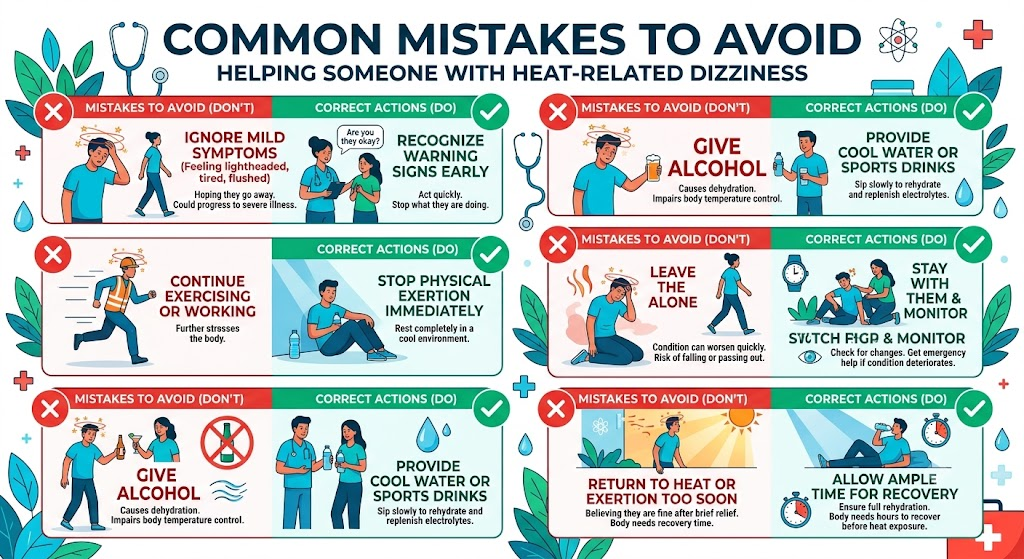
When someone feels dizzy on a hot summer day, the right response can help prevent the condition from becoming more serious. However, certain common mistakes may delay recovery or increase the risk of heat-related complications.
Avoid these mistakes when helping someone experiencing heat-related dizziness:
Ignoring Early Symptoms
Do not assume that dizziness will simply disappear without attention. It is often an early warning sign that the body is struggling with heat, dehydration, or exhaustion.
Early action, such as moving to a cooler place, resting, and providing fluids when appropriate, can help prevent the condition from worsening.
Continuing Physical Activity
A person who feels dizzy should stop physical activity immediately.
Do not encourage them to:
- Continue working
- Complete their exercise session
- “Push through” the symptoms
Rest is essential because continued activity can increase body temperature and place additional stress on the body.
Giving Alcohol or Excessive Caffeine
Alcohol and large amounts of caffeine may contribute to dehydration and are not suitable choices when someone is experiencing heat-related dizziness.
Instead, offer:
- Cool water
- Oral rehydration solution if appropriate
- Electrolyte drinks when heavy sweating has occurred
Avoid giving any drink if the person is confused, unconscious, or unable to swallow safely.
Leaving the Person Alone
Do not leave someone alone while they are recovering from heat-related dizziness.
Stay with them and monitor their condition because symptoms can change quickly. Make sure they remain comfortable, hydrated if possible, and in a cool environment.
Seek medical help if their condition worsens or warning signs appear.
Returning to the Heat Too Soon
Even if the person starts feeling better, they should not immediately return to outdoor activities or intense exercise.
The body needs time to recover after heat stress.
Encourage them to:
- Continue resting in a cool place
- Drink fluids
- Avoid strenuous activity for the rest of the day if needed
Allowing proper recovery time can reduce the chance of symptoms returning.
Tips for Staying Safe During Hot Weather
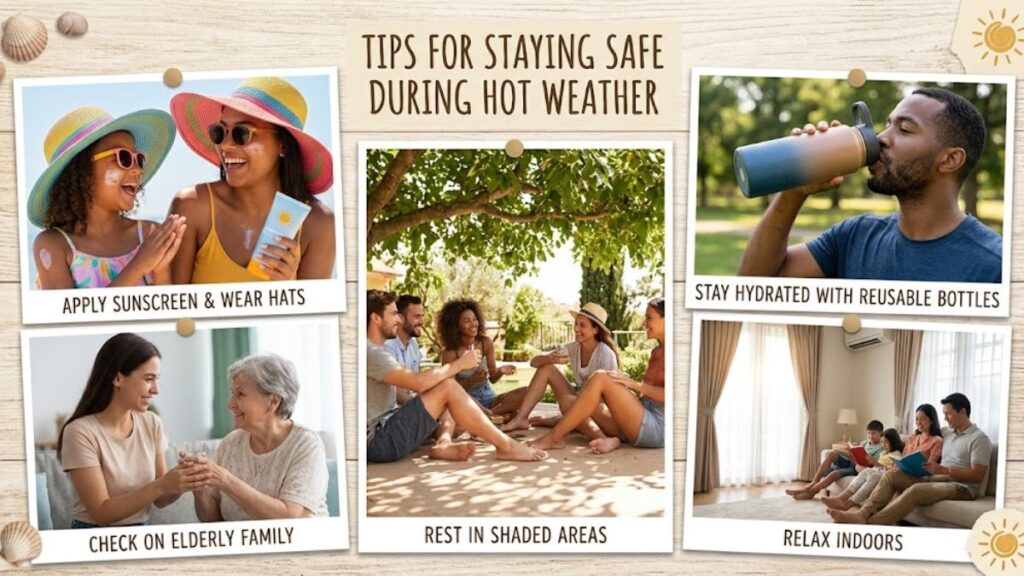
Taking simple precautions during hot weather can greatly reduce the risk of dehydration, dizziness, heat exhaustion, and other heat-related illnesses. Building healthy habits before and during extreme heat can help your body manage high temperatures more effectively.
Follow these safety tips to stay protected during hot summer days:
Drink Water Regularly
Regular hydration helps replace fluids lost through sweating and supports the body’s natural cooling process.
Keep these habits in mind:
- Drink water throughout the day instead of waiting until you feel thirsty.
- Carry water with you during outdoor activities.
- Increase fluid intake during exercise or long periods in the heat.
- Consider electrolyte replacement during activities that cause heavy sweating.
Wear Sunscreen When Outdoors
Direct sunlight can increase heat exposure and may also cause sunburn, which can affect the body’s ability to cool itself.
When spending time outdoors:
- Apply sunscreen on exposed skin.
- Reapply as directed, especially after sweating.
- Combine sunscreen use with other protection methods, such as wearing hats and protective clothing.
Carry a Reusable Water Bottle
Having water easily available makes it more likely that you will stay hydrated throughout the day.
A reusable bottle is especially useful for:
- Outdoor workers
- Travelers
- People exercising outside
- Long summer outings
Refilling your bottle regularly can help you maintain consistent fluid intake.
Take Breaks in Shaded Areas
Spending continuous time in direct sunlight increases heat stress on the body.
During outdoor activities:
- Rest in shaded or cooler areas.
- Allow your body time to recover.
- Drink fluids during breaks.
- Avoid pushing through signs of tiredness or overheating.
Check on Older Family Members During Heat Waves
Older adults may be more vulnerable to heat-related illnesses because their bodies may not adjust to temperature changes as effectively.
During extremely hot days:
- Check on elderly family members regularly.
- Encourage them to drink enough fluids.
- Make sure they have access to a cool environment.
- Watch for signs of dizziness, weakness, or confusion.
Never Leave Children or Pets in Parked Vehicles
A parked vehicle can become dangerously hot within a short time, even when windows are slightly open.
Never leave:
- Children
- Elderly individuals
- Pets
inside a parked vehicle during hot weather. Heat inside a car can rise rapidly and create a life-threatening situation.
Watch Weather Forecasts During Periods of Extreme Heat
Staying informed about weather conditions can help you plan activities safely.
During heat waves:
- Check temperature forecasts regularly.
- Avoid unnecessary outdoor activities during peak heat.
- Prepare extra water supplies.
- Follow local heat safety recommendations.
By following these simple habits, you can reduce the risk of heat-related dizziness and stay safer during the hottest days of summer.
Conclusion
Knowing what to do if someone feels dizzy on a hot summer day can help prevent a mild problem from developing into a serious heat-related emergency. Quick actions such as moving the person to a cooler place, helping them rest, cooling the body, and providing fluids when it is safe to do so can support recovery in many mild cases.
However, it is equally important to recognize warning signs that require urgent medical attention. Symptoms such as confusion, loss of consciousness, seizures, severe weakness, or dizziness that does not improve after cooling and hydration may indicate a more serious condition.
Preventing heat-related dizziness is often easier than treating it. Staying hydrated, avoiding prolonged exposure to extreme heat, wearing suitable clothing, taking regular breaks, and planning outdoor activities during cooler parts of the day can help protect the body during summer.
By understanding the causes, first-aid steps, and prevention methods, you can respond quickly and help keep yourself, your family, and others safer during hot weather.
Medical Disclaimer: This article is for informational and educational purposes only. It is not intended to replace professional medical advice, diagnosis, or treatment. Always consult a qualified healthcare provider for medical concerns or before making healthcare decisions.