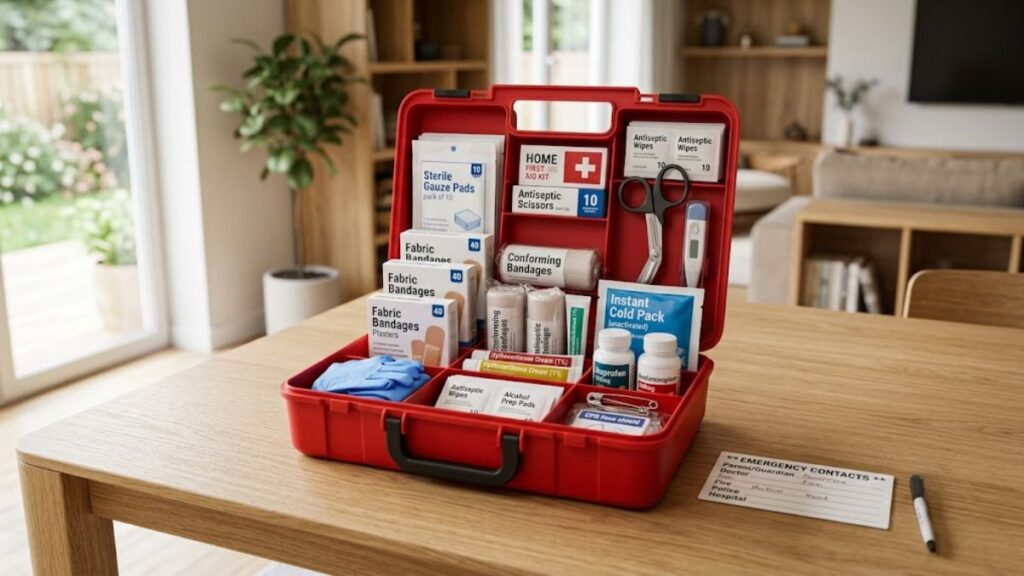
A well-stocked first-aid kit is one of the most important safety items every household should have. Minor injuries and everyday health concerns, such as small cuts, burns, sprains, insect bites, or headaches, can happen at any time. Having essential first-aid supplies readily available allows you to respond quickly while deciding whether professional medical care is needed.
A basic home first-aid kit does not replace medical treatment, but it can help manage minor injuries, reduce discomfort, and provide temporary care until medical assistance is available if necessary.
In this guide, you’ll learn what should be inside a basic home first-aid kit, why each item is important, how to organize your supplies, and tips for keeping your kit ready for emergencies.
Why Every Home Needs a First-Aid Kit?
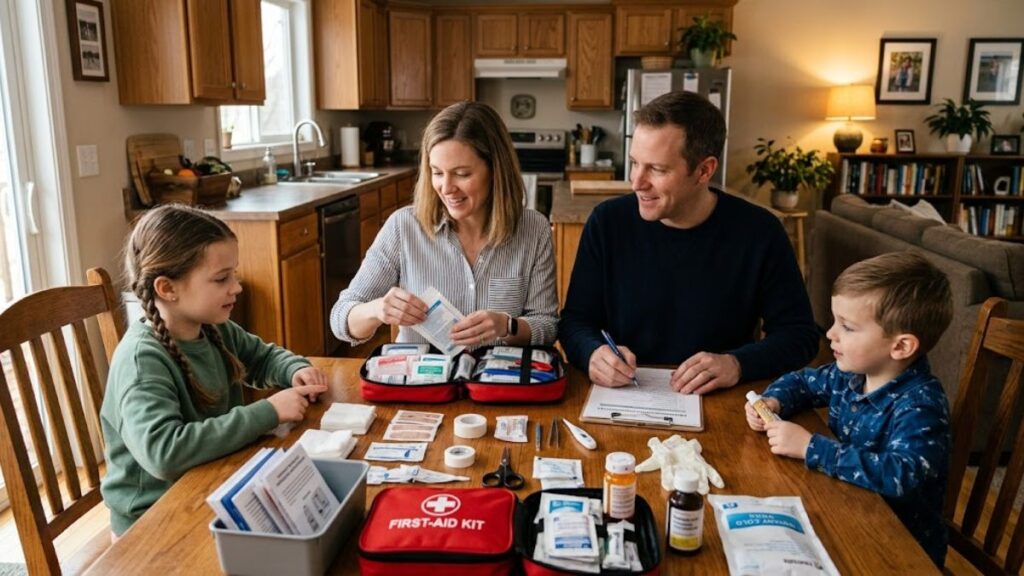
Accidents and minor injuries can happen unexpectedly during everyday activities, whether you are cooking in the kitchen, gardening, cleaning the house, working on a DIY project, or spending time with children. In these situations, having a first-aid kit nearby allows you to respond quickly and calmly without wasting time searching for basic medical supplies.
A first-aid kit helps provide immediate care for minor injuries and can prevent small problems from becoming more serious. While it cannot replace professional medical treatment, it can offer temporary support until medical help is available when needed.
A properly stocked first-aid kit can help you:
Treat Minor Cuts and Scrapes
Small cuts, scratches, and scrapes are common household injuries. Bandages, antiseptic wipes, and wound dressings help clean and protect these injuries while supporting the healing process.
Clean and Cover Wounds
Keeping wounds clean and covered helps protect them from dirt and germs. Supplies such as sterile gauze, medical tape, and antiseptic solutions are useful for providing basic wound care.
Manage Small Burns
Minor burns from hot surfaces, cooking accidents, or steam can happen at home. Burn gel, sterile dressings, and cooling supplies can help provide immediate relief and protect the affected area.
Reduce Swelling From Sprains or Minor Injuries
Twisted ankles, bumps, and minor falls can cause pain and swelling. Items such as elastic bandages and instant cold packs can provide temporary support and comfort.
Remove Splinters Safely
Small splinters from wood, plants, or other materials can be painful. Clean tweezers allow you to remove them carefully while reducing the risk of further irritation.
Provide Temporary Care Until Medical Help Arrives
In more serious situations, a first-aid kit can provide essential supplies while waiting for professional assistance. Items like gloves, gauze, and emergency contact information can help during unexpected emergencies.
Be Better Prepared During Emergencies
A home first-aid kit becomes especially valuable during situations such as power outages, storms, travel delays, or natural disasters when access to medical supplies may be limited.
Having a first-aid kit also provides peace of mind, especially for households with children, older adults, pets, or people who regularly participate in outdoor activities. Knowing that essential supplies are available allows family members to handle common injuries more confidently and efficiently.
What Should Be Inside a Basic Home First-Aid Kit?
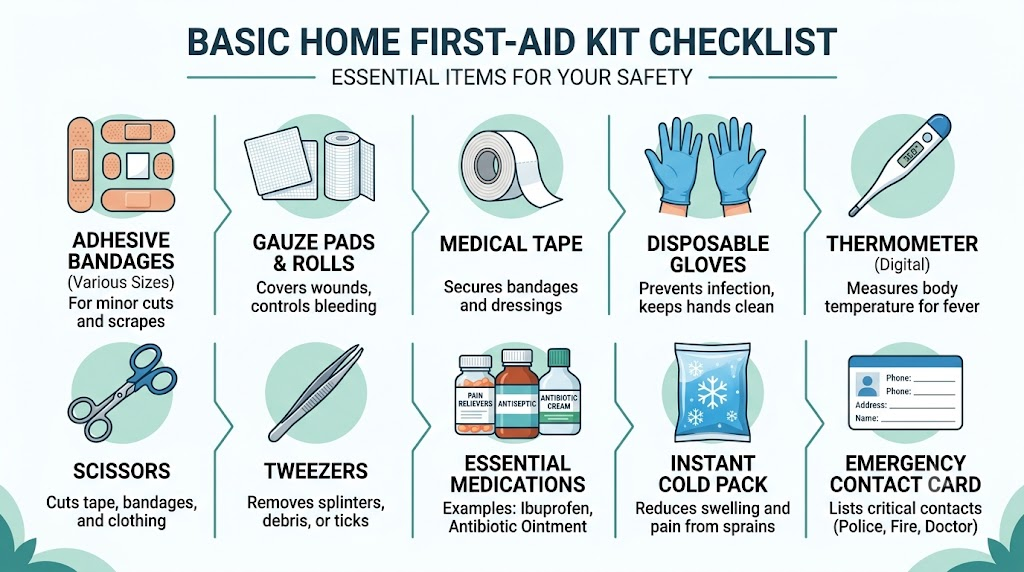
A basic home first-aid kit should contain essential supplies for cleaning wounds, controlling bleeding, protecting injuries, and managing common minor health problems. The goal of a first-aid kit is to provide quick support during everyday accidents while helping prevent minor injuries from becoming more serious.
The contents of a first-aid kit may vary depending on the needs of your family, but every home should have basic wound care supplies, medical tools, emergency items, and commonly used health products.
Adhesive Bandages (Band-Aids)
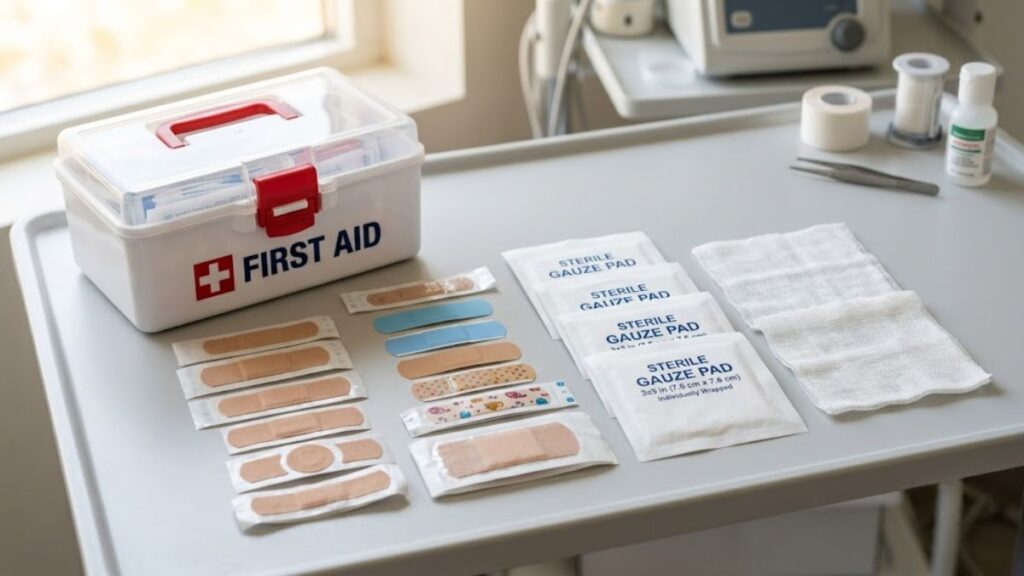
Adhesive bandages are among the most commonly used items in a first-aid kit. They are useful for covering small cuts, scratches, blisters, and minor wounds.
They help protect injured areas from dirt, bacteria, and friction while allowing the skin to heal properly.
Include different sizes, such as:
- Small fingertip bandages for cuts around fingers
- Standard strip bandages for small wounds
- Large adhesive bandages for bigger scrapes
- Knuckle bandages for flexible areas
Water-resistant bandages can be especially useful for kitchen injuries, outdoor activities, and situations where the wound may come in contact with water.
Sterile Gauze Pads
Sterile gauze pads are useful for covering larger cuts, wounds, and areas that need more protection than a regular bandage can provide.
They help absorb blood, protect damaged skin, and create a clean barrier over an injury.
Keep multiple sizes available, including:
- 2 x 2 inch gauze pads
- 3 x 3 inch gauze pads
- 4 x 4 inch gauze pads
Having different sizes allows you to handle both small and larger injuries effectively.
Medical Adhesive Tape
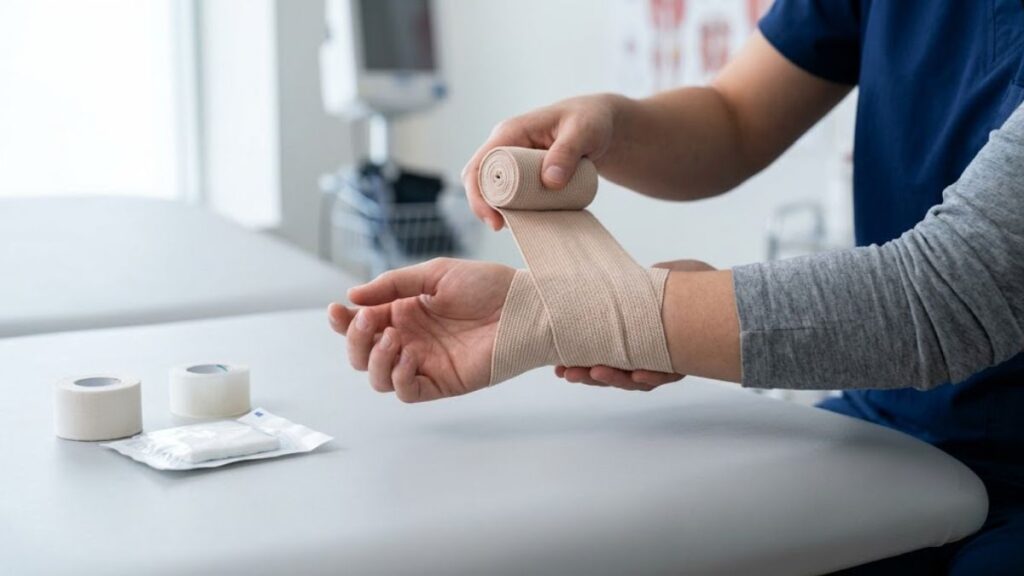
Medical adhesive tape is used to secure gauze pads, wound dressings, and other protective coverings.
Different types of tape offer different benefits:
- Paper tape is gentle and suitable for sensitive skin.
- Cloth tape provides stronger support and stays in place longer.
- Waterproof tape can be useful in areas exposed to moisture.
Choose tape that is comfortable and easy to remove without irritating the skin.
Elastic Bandage
An elastic compression bandage is useful for supporting minor sprains, strains, and swelling caused by injuries.
It can also help hold dressings securely in place when treating wounds on areas such as arms, legs, or joints.
When using an elastic bandage, it should feel supportive but not too tight. Excessive pressure can restrict blood circulation and cause discomfort.
Antiseptic Wipes
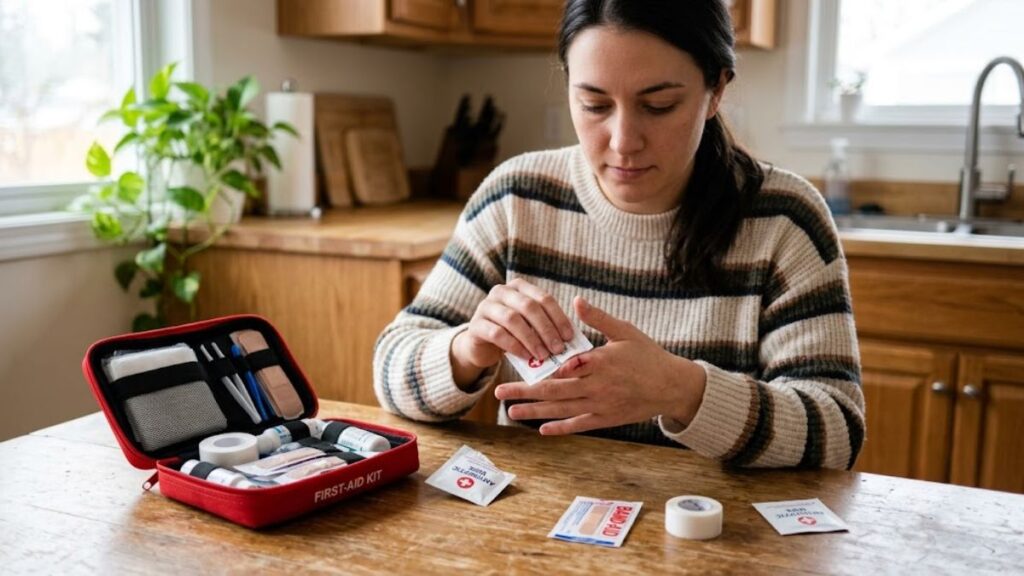
Antiseptic wipes are convenient for cleaning minor cuts, scratches, and scrapes before applying a dressing.
Cleaning the injured area helps remove dirt and reduces the risk of infection.
Individually wrapped antiseptic wipes are recommended because they remain clean, are easy to store, and can be used quickly during emergencies.
Antiseptic Solution
A small bottle of antiseptic solution can be included for cleaning wounds and supporting basic wound care.
Always follow the instructions provided with the product. Some solutions should be used carefully because improper use may irritate the skin or delay healing.
Antibiotic Ointment
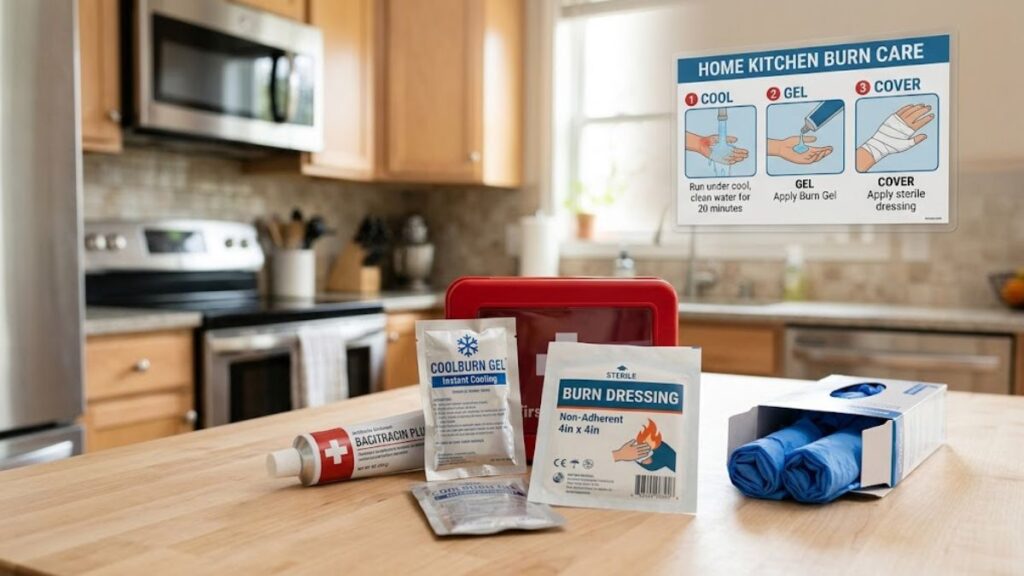
Antibiotic ointments may be used for certain minor cuts and scrapes to help protect against infection.
Apply only as directed on the product packaging. If redness, swelling, itching, or irritation develops, stop using the product and seek medical advice.
Burn Gel or Burn Dressing
Minor burns from hot cookware, boiling water, steam, or heated surfaces are common household injuries.
Burn gel and sterile burn dressings can help cool the affected area, reduce discomfort, and protect the burn while it heals.
For serious burns involving large areas, deep damage, or severe pain, professional medical care should be sought immediately.
Disposable Medical Gloves
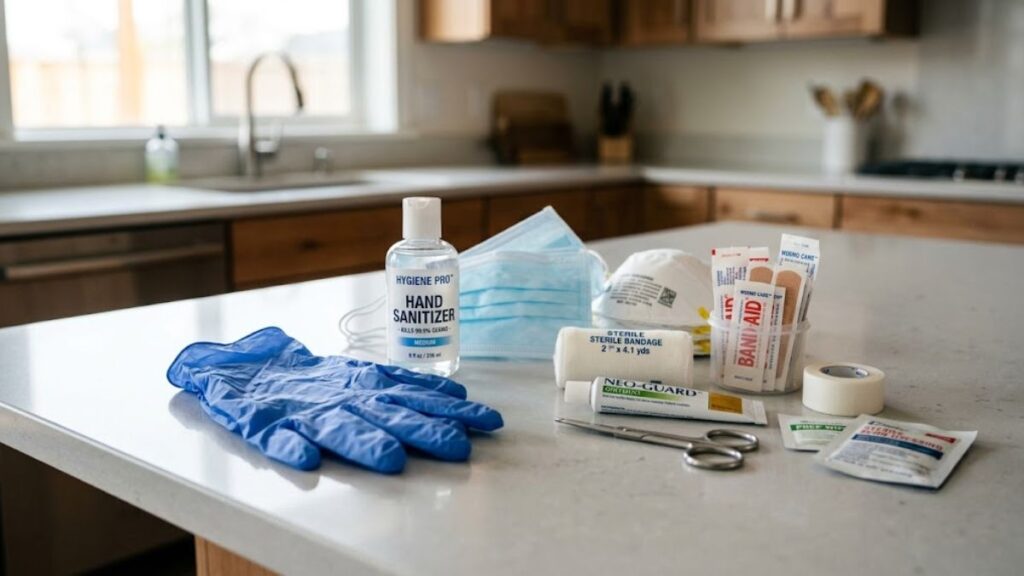
Disposable gloves are important for maintaining hygiene while treating injuries.
They help protect both the injured person and the person providing first aid by reducing the spread of germs.
Keep several pairs of latex-free nitrile gloves in your kit, preferably in different sizes for a better fit.
Tweezers
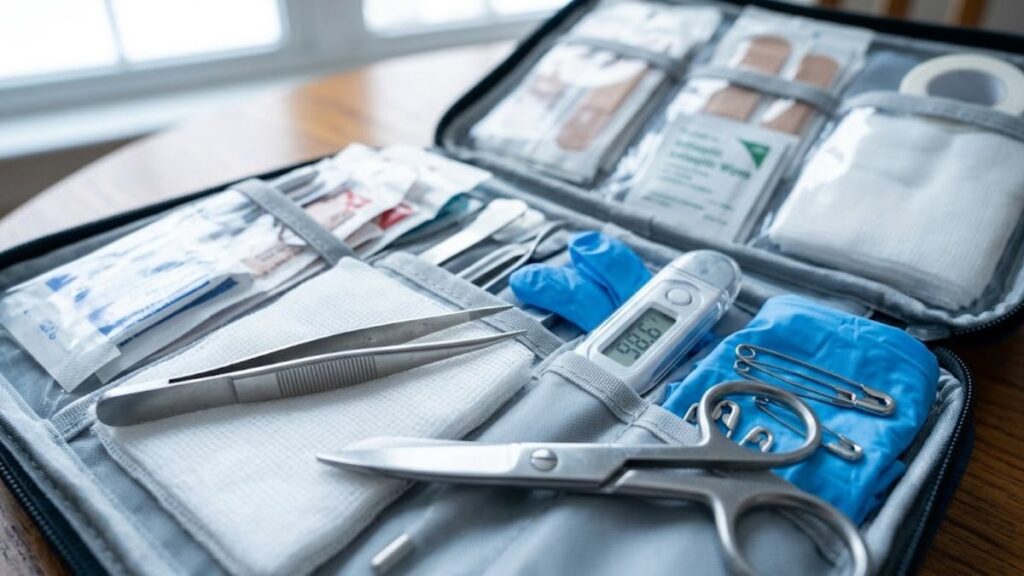
Tweezers are useful for removing small splinters, tiny pieces of debris, or similar objects from the skin.
Choose fine-tip tweezers that allow better control and precision. Always clean the tweezers before and after use.
Small Scissors
Medical scissors are useful for cutting gauze, medical tape, bandages, or clothing around an injured area.
Blunt-tip scissors are generally safer for first-aid use because they reduce the risk of accidental cuts.
Digital Thermometer
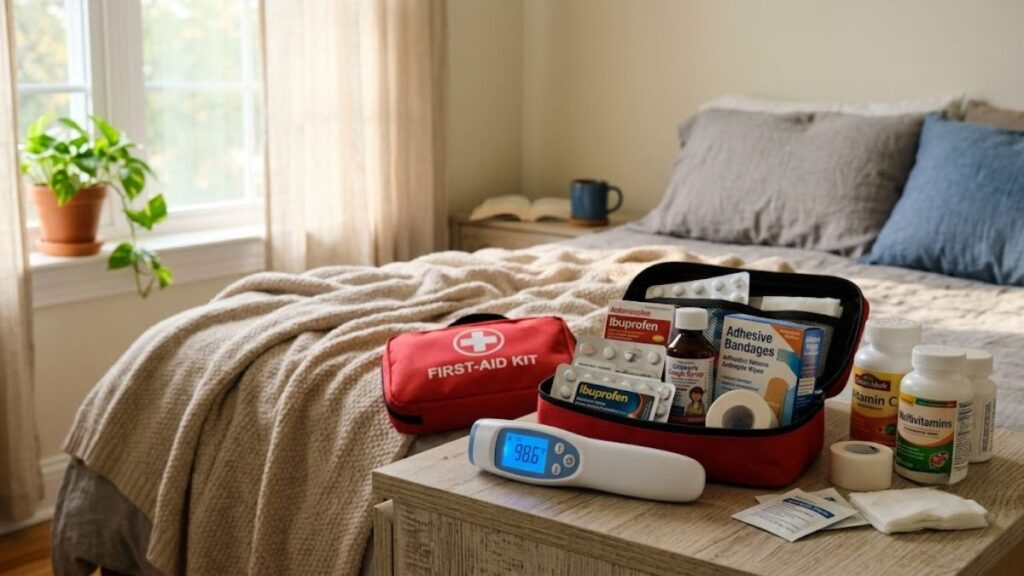
A digital thermometer helps monitor body temperature during illness or suspected fever.
Choose a reliable thermometer and keep spare batteries if required. Regularly check that it is working properly.
Instant Cold Pack
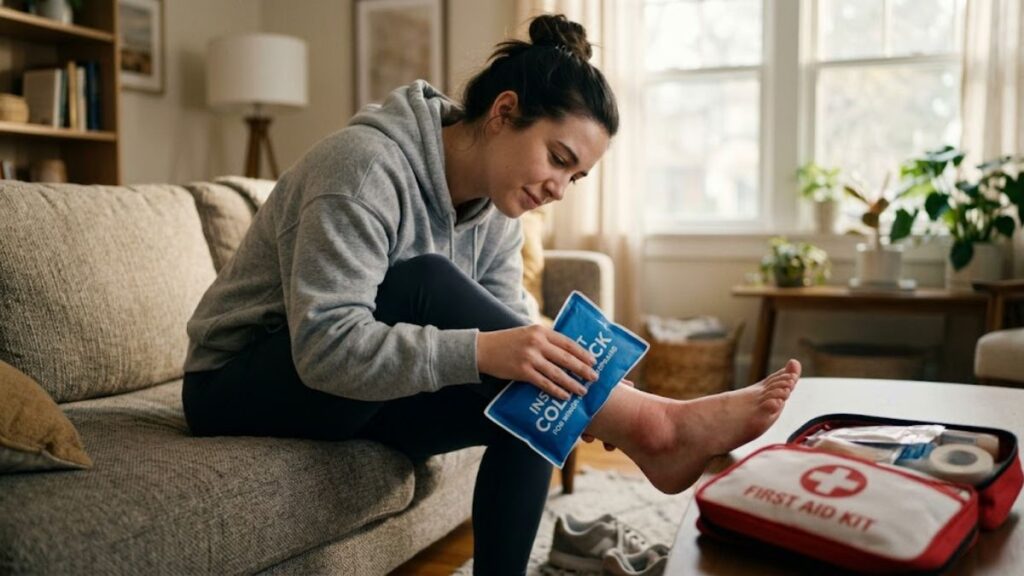
Instant cold packs are useful for reducing swelling, pain, and discomfort after minor injuries such as bumps, bruises, or sprains.
They are convenient because they do not require refrigeration. Simply activate them according to the instructions when needed.
Pain Relievers
Many home first-aid kits include over-the-counter pain relievers for temporary relief from common problems such as headaches, muscle pain, or fever.
Common examples include:
- Acetaminophen
- Ibuprofen
- Naproxen
Always follow dosage instructions carefully and store medications safely away from children.
Antihistamines
Antihistamines can help relieve mild allergic reactions, itching, and discomfort caused by insect bites.
They may provide temporary relief for minor symptoms, but severe allergic reactions involving breathing difficulty, swelling, or dizziness require immediate medical attention.
Hydrocortisone Cream
Hydrocortisone cream may help reduce itching and irritation caused by mild skin reactions, insect bites, or certain rashes.
Use it according to the product instructions and avoid prolonged use without medical guidance.
Oral Rehydration Salts (ORS)
ORS packets help replace fluids and electrolytes during mild dehydration caused by vomiting, diarrhea, or excessive fluid loss.
Keep sealed packets in your first-aid kit and prepare them according to the instructions printed on the package.
Saline Solution
Sterile saline solution can be useful for rinsing eyes, cleaning certain wounds, or removing small irritants.
Avoid using homemade solutions because they may not be sterile and could increase the risk of infection.
CPR Face Shield
A CPR face shield provides a protective barrier during rescue breathing and can be a valuable addition for households where someone has CPR training.
It helps maintain hygiene and provides extra protection during emergency situations.
Emergency Contact List
Every home first-aid kit should include an updated emergency contact list.
Important details may include:
- Emergency medical services number
- Family doctor contact information
- Nearby hospital details
- Poison control center information
- Family emergency contacts
- Important medical information of household members
Keeping this information easily available can save valuable time during urgent situations.
Optional Items to Include in a Home First-Aid Kit
While a basic first-aid kit covers common injuries and health concerns, adding a few optional items can make your kit more useful for different situations. These additional supplies are especially helpful for families with children, older adults, people who travel frequently, or households that want to be better prepared for unexpected emergencies.
Finger Splint
A finger splint can provide temporary support for injured, bent, or painful fingers. It helps keep the finger stable and prevents unnecessary movement until proper medical evaluation is available.
Triangular Bandage
A triangular bandage is a versatile first-aid item that can be used as a sling to support an injured arm or shoulder. It can also help secure dressings or provide temporary support during emergencies.
Finger Pulse Oximeter
A finger pulse oximeter measures blood oxygen levels and pulse rate. It can be useful for monitoring certain health situations, especially for people who need to regularly check their oxygen levels as advised by a healthcare professional.
Eye Wash Solution
Sterile eye wash solution can help rinse the eyes if they come into contact with dust, small particles, or mild irritants. It is useful to have in homes where people work with tools, chemicals, or spend time outdoors.
Emergency Blanket
An emergency blanket is lightweight, compact, and designed to help retain body heat during unexpected situations. It can be useful during outdoor emergencies, power outages, or situations where someone needs protection from cold conditions.
Flashlight
A small flashlight can be extremely helpful during power outages or nighttime emergencies. Choose a reliable flashlight and keep extra batteries available so it is ready when needed.
Extra Batteries
Extra batteries ensure that important emergency devices, such as flashlights, thermometers, or other battery-operated tools, continue working when required.
Safety Pins
Safety pins can be useful for securing bandages, temporary clothing repairs, or holding materials together during emergencies.
Cotton Swabs
Cotton swabs can be useful for applying certain creams or cleaning small areas around an injury. They should be used carefully and not inserted into deep wounds or sensitive areas.
Hand Sanitizer
Hand sanitizer helps clean hands before and after providing first aid, especially when soap and water are not immediately available.
Face Masks
Face masks can provide additional protection when caring for someone who may have a contagious illness. They can also be useful during dusty conditions or emergencies involving poor air quality.
Notepad and Pen
A notepad and pen can help record important details during an emergency, such as symptoms, medication times, or instructions from healthcare professionals. They can also be used to update emergency contact information when needed.
Including these optional items allows you to customize your first-aid kit according to your family’s lifestyle and specific needs. However, remember that the most important part of any kit is keeping essential supplies organized, accessible, and regularly checked.
Medications to Keep in Your Home First-Aid Kit
Including a few commonly used over-the-counter medications in your home first-aid kit can help manage minor health concerns quickly. These medicines can provide temporary relief for common issues such as headaches, fever, allergies, stomach discomfort, or cough symptoms.
However, medications should always be stored carefully, used according to the instructions on the label, and checked regularly for expiration dates.
Some commonly included medications are:
Pain Relievers
Pain relievers can help provide temporary relief from common discomforts such as headaches, muscle aches, minor injuries, or body pain.
Examples may include:
- Acetaminophen
- Ibuprofen
- Naproxen
Always follow the recommended dosage and avoid taking medicines that may not be suitable for certain health conditions.
Fever Reducers
Fever reducers can help manage mild fever and discomfort associated with common illnesses.
Keep medicines that are appropriate for the members of your household and follow age-specific instructions, especially when giving medication to children.
Antihistamines
Antihistamines can help relieve mild allergy symptoms such as sneezing, itching, skin irritation, or reactions caused by insect bites.
They may provide temporary relief, but severe allergic reactions require immediate medical attention.
Antacid Tablets
Antacid tablets can help provide short-term relief from occasional acidity, heartburn, or indigestion.
Keep them stored properly and use them only as directed on the packaging.
Anti-Diarrheal Medication
Anti-diarrheal medicines may help manage temporary diarrhea symptoms in some situations.
However, severe diarrhea, signs of dehydration, blood in stool, or symptoms lasting for an extended period should be evaluated by a healthcare professional.
Cough Drops
Cough drops can help soothe throat irritation and provide temporary comfort during coughs or mild throat discomfort.
They are useful to keep at home, especially during seasonal changes when throat irritation is more common.
Important Medication Safety Tips
When storing medications in your first-aid kit:
- Check expiration dates regularly.
- Keep medicines in their original packaging.
- Store them away from heat, moisture, and direct sunlight.
- Keep medications out of children’s reach.
- Follow dosage instructions carefully.
- Replace expired medicines promptly.
Avoid storing prescription medications in a shared first-aid kit unless they are specifically prescribed for an individual household member. Personal medicines should be clearly labeled and stored according to medical advice.
How to Organize Your First-Aid Kit
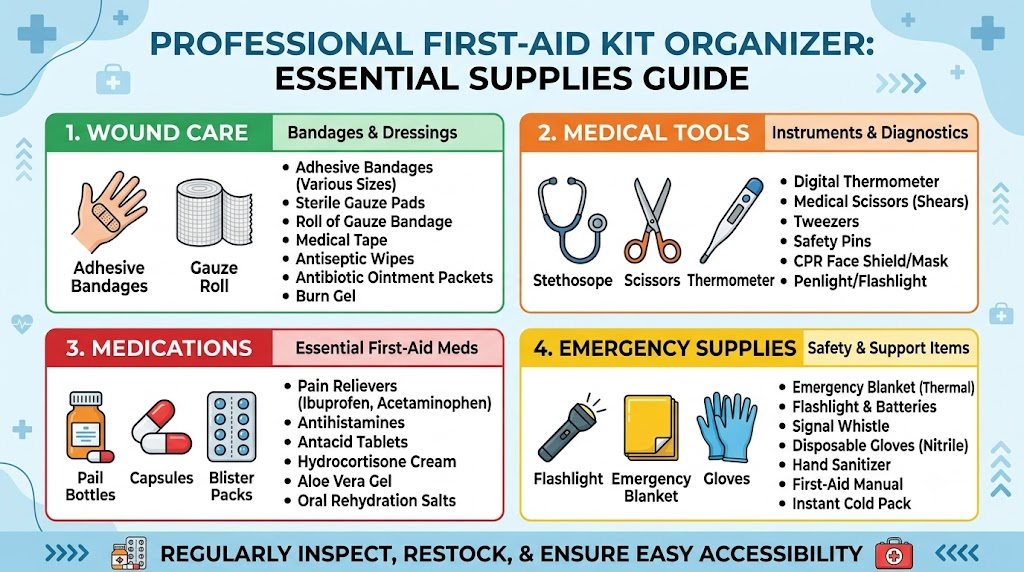
A well-organized first-aid kit helps you find the right supplies quickly during an emergency. When someone is injured, searching through a box of mixed items can waste valuable time. Keeping supplies arranged in clear categories makes it easier for anyone in the household to use the kit when needed.
Using labeled pouches, small containers, or separate compartments can help keep items organized and prevent important supplies from getting lost.
Consider organizing your first-aid kit into these categories:
Wound Care Supplies
This section should contain items used for cleaning, covering, and protecting injuries.
Keep items such as:
- Adhesive bandages
- Sterile gauze pads
- Medical adhesive tape
- Antiseptic wipes
- Antiseptic solution
- Antibiotic ointment
- Burn dressings
Keeping wound care supplies together allows you to quickly treat cuts, scrapes, burns, and other minor injuries.
Medical Tools
Medical tools help with basic first-aid tasks, such as checking symptoms or handling injuries safely.
Include:
- Digital thermometer
- Tweezers
- Small scissors
- Disposable gloves
- Elastic bandage
- CPR face shield
Keeping tools in one section prevents them from getting mixed with medicines or smaller supplies.
Medications
Store commonly used medications separately so they can be located easily.
This section may include:
- Pain relievers
- Fever reducers
- Antihistamines
- ORS packets
- Hydrocortisone cream
- Antacid tablets
- Cough drops
Keep medicines in their original packaging and regularly check expiration dates.
Emergency Supplies
Emergency items should be placed in an easily accessible section because they may be needed quickly.
Include:
- Instant cold pack
- CPR face shield
- Flashlight
- Extra batteries
- Emergency contact list
- Notepad and pen
These supplies can be especially useful during power outages, accidents, or situations where immediate assistance is needed.
Tips for Better Organization
To keep your first-aid kit ready at all times:
- Use transparent pouches so items are easy to identify.
- Label each section clearly.
- Keep frequently used items near the top.
- Replace supplies immediately after use.
- Review the kit every few months.
- Store emergency contact information in a visible location.
A properly organized first-aid kit saves time, reduces stress, and helps your family respond more confidently during minor injuries or unexpected situations.
Where Should You Store a Home First-Aid Kit?
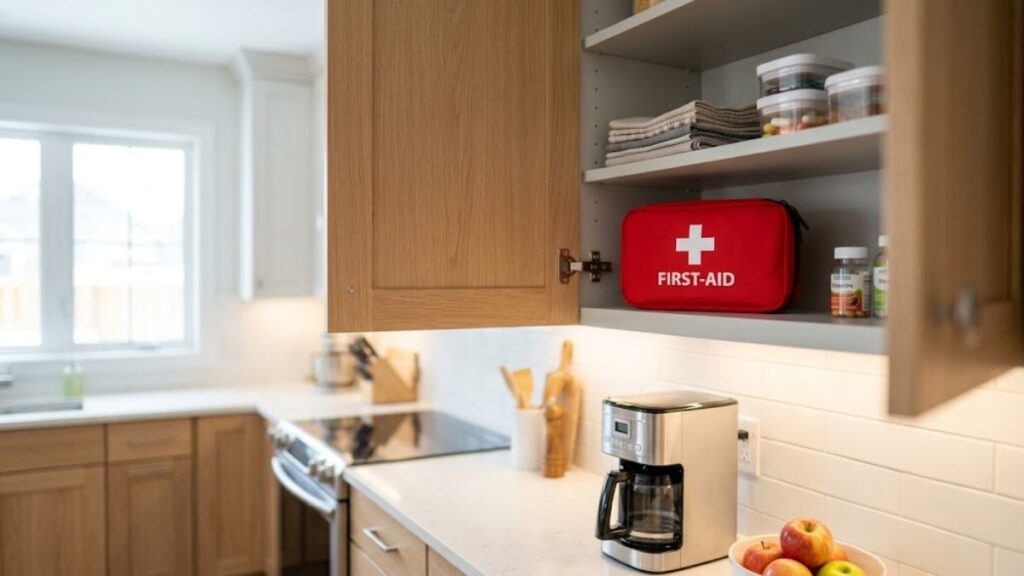
Choosing the right location for your first-aid kit is just as important as keeping it properly stocked. A first-aid kit is only useful when it can be found quickly during an emergency. The ideal storage location should allow adults to access it easily while keeping the supplies safe and protected.
Choose a location that is:
Easy for Adults to Access
Store your first-aid kit in a place where adults can quickly find and reach it during an emergency. Avoid keeping it in hidden areas, locked cabinets, or places that require moving many items before access.
Everyone in the household should know where the kit is kept so there is no confusion during an injury or emergency.
Dry and Cool
First-aid supplies, especially medications, bandages, and medical products, should be stored in a dry and cool environment.
Avoid areas with high humidity or frequent temperature changes, such as:
- Bathrooms with excessive moisture
- Areas near kitchen heat sources
- Places exposed to water leaks
Proper storage helps maintain the quality and effectiveness of supplies.
Away From Direct Sunlight
Direct sunlight and heat can damage certain medications, ointments, and medical supplies over time.
Keep the kit in a shaded location away from windows or areas that receive strong sunlight throughout the day.
Out of Reach of Young Children
Although children should know that the first-aid kit exists, it should be stored safely out of their reach.
Medications, scissors, and other medical tools can be dangerous if used without adult supervision. Consider using a child-safe storage option if necessary.
Known by Everyone in the Household
A first-aid kit is most effective when all family members know its location.
Explain to children and other household members where the kit is stored and what it is used for. Older children can also be taught basic first-aid awareness.
Consider Keeping Additional First-Aid Kits
Many families choose to keep smaller first-aid kits in other locations where injuries may occur, such as:
- Cars for road trips and travel emergencies
- Travel bags for vacations or outdoor activities
- Workplaces or home offices
- Garages or workshops
Having additional kits in frequently used locations ensures that basic supplies are available even when the main home kit is not nearby.
A well-placed and easily accessible first-aid kit helps your household stay prepared and respond quickly when unexpected injuries happen.
How Often Should You Check Your First-Aid Kit?
A first-aid kit should be checked regularly to ensure that all supplies are available, safe to use, and in good condition when needed. Over time, medications may expire, bandages may run out, and some items may become damaged due to storage conditions.
It is recommended to inspect your first-aid kit every six months. Regular checks help keep your kit prepared for everyday injuries and unexpected emergencies.
During each inspection, make sure to:
Replace Expired Medications
Medicines, ointments, and other health products have expiration dates. Using expired products may reduce their effectiveness.
Check items such as:
- Pain relievers
- Antihistamines
- Creams and ointments
- ORS packets
- Other over-the-counter medications
Remove expired items and replace them with new supplies when necessary.
Restock Used Supplies
After using items from your first-aid kit, replace them as soon as possible.
Commonly used supplies include:
- Adhesive bandages
- Gauze pads
- Antiseptic wipes
- Medical tape
- Disposable gloves
Keeping your kit fully stocked ensures that important items are available during the next emergency.
Check Batteries
Some first-aid kits include battery-operated items such as:
- Flashlights
- Digital thermometers
- Other emergency devices
Check that batteries are working properly and replace weak or expired batteries.
Replace Damaged Packaging
Inspect the packaging of all supplies. Items with torn, opened, or damaged packaging may no longer be clean or safe to use.
Replace any damaged:
- Sterile dressings
- Bandages
- Medical wipes
- Gloves
Update Emergency Phone Numbers
Emergency contact information can change over time. Review your contact list and update details such as:
- Emergency services number
- Family doctor contact
- Nearby hospital information
- Family emergency contacts
Having updated information available can save valuable time during urgent situations.
Ensure Everything Remains Clean and Organized
A first-aid kit should remain clean, dry, and easy to use.
During your inspection:
- Remove unnecessary items.
- Organize supplies into categories.
- Clean the storage container if needed.
- Make sure labels are visible.
A neat kit allows you to find supplies quickly when every second matters.
Create a Regular Reminder
It can be easy to forget about checking your first-aid kit. Setting a reminder on your phone, calendar, or household planner every six months can help you maintain it consistently.
Regular inspections ensure that your first-aid kit remains reliable, organized, and ready whenever your family needs it.
Common Mistakes to Avoid When Managing a First-Aid Kit
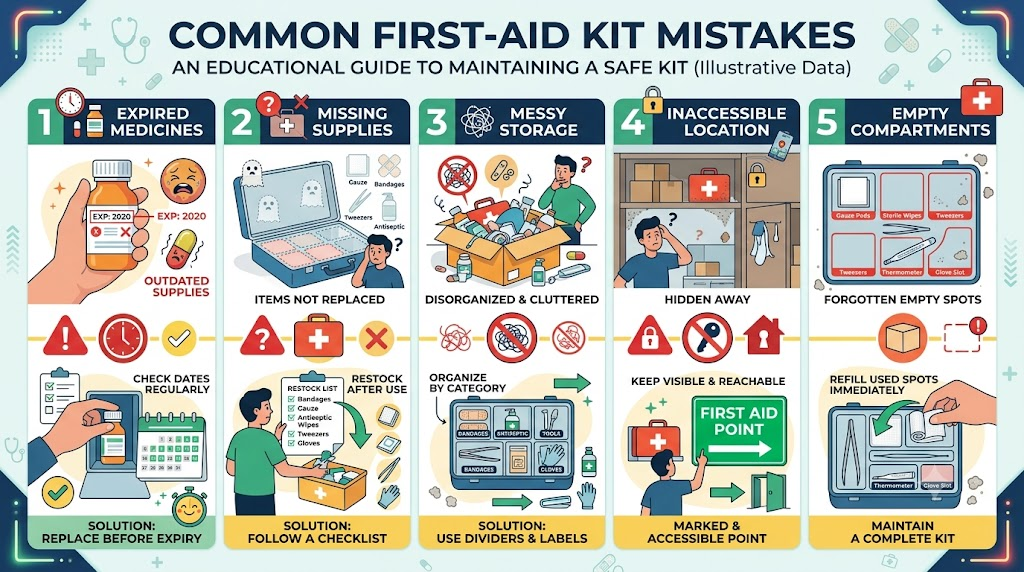
A well-stocked first-aid kit is only useful when it is properly maintained and easy to access. Many households make simple mistakes that can reduce the effectiveness of their kit during emergencies.
Avoid these common first-aid kit mistakes:
Letting Supplies Expire
One of the most common mistakes is forgetting to check expiration dates. Medications, ointments, antiseptic products, and some medical supplies can lose their effectiveness over time.
Make it a habit to regularly check:
- Pain relievers
- Antihistamines
- Creams and ointments
- ORS packets
- Other over-the-counter medicines
Replace expired items promptly so your kit remains reliable when needed.
Forgetting Personal Medical Needs
A basic first-aid kit should also be customized according to the needs of your household.
Some family members may require specific supplies recommended by a healthcare professional, such as:
- Allergy medication
- Spare medical devices
- Personal emergency supplies
- Special wound care items
Consider the age, lifestyle, and health requirements of family members when preparing your kit.
Using the Kit as General Storage
Another common mistake is filling the first-aid box with unrelated household items.
A first-aid kit should only contain medical and emergency supplies. Adding random items can make it difficult to quickly find important materials during an injury.
Keeping the kit dedicated only to first-aid items helps maintain organization and saves time.
Not Replacing Used Items
After using supplies from your first-aid kit, many people forget to replace them.
Items such as:
- Bandages
- Gauze pads
- Antiseptic wipes
- Gloves
- Medical tape
should be restocked immediately after use.
A kit that is missing essential supplies may not be helpful during the next emergency.
Storing It in a Hard-to-Reach Place
A first-aid kit should always be stored where it can be found quickly.
Avoid placing it:
- Behind heavy furniture
- In difficult-to-open containers
- In areas known only to one person
All household members should know its location so they can access it when needed.
A properly maintained and easily accessible first-aid kit helps your family respond faster and more confidently during minor injuries and emergencies.
Tips for Maintaining Your First-Aid Kit
Keeping your first-aid kit updated and properly maintained ensures that it remains ready when you need it most. A kit that is organized, fully stocked, and regularly checked can help you respond more effectively during minor injuries and unexpected situations.
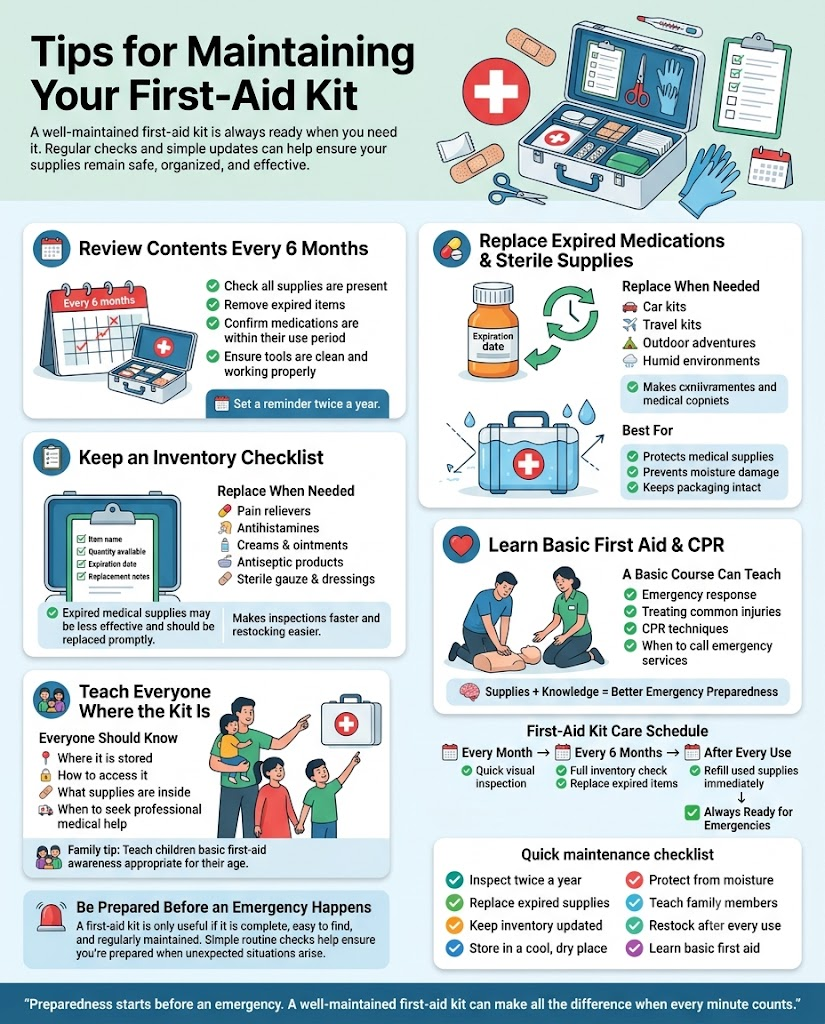
Follow these simple maintenance tips to keep your first-aid kit reliable:
Review Contents Every Six Months
Regularly checking your first-aid kit helps identify missing, expired, or damaged items before an emergency occurs.
During each review:
- Check all supplies are present.
- Remove items that are expired.
- Confirm medications are within their use period.
- Ensure tools are clean and working properly.
A six-month review schedule makes it easier to keep your kit prepared throughout the year.
Replace Expired Medications and Sterile Supplies
Expired medicines, ointments, and sterile items may not work as effectively and should be replaced when necessary.
Pay special attention to:
- Pain relievers
- Antihistamines
- Creams and ointments
- Antiseptic products
- Sterile gauze and dressings
Replacing these items regularly ensures that your kit contains safe and usable supplies.
Keep an Inventory Checklist Inside the Lid
An inventory checklist helps you quickly identify what is available and what needs to be replaced.
Your checklist can include:
- Item name
- Quantity available
- Expiration dates
- Replacement notes
Keeping the list inside the kit makes regular inspections faster and more convenient.
Store Items in Waterproof Containers if Needed
Protecting your first-aid supplies from moisture helps maintain their quality.
A waterproof container or sealed pouch can be especially useful for:
- Travel kits
- Car first-aid kits
- Outdoor emergency kits
- Areas with high humidity
Keeping supplies dry helps prevent damage to packaging and medical products.
Teach Family Members Where the Kit Is Located
A first-aid kit is most useful when everyone knows where to find it.
Make sure family members understand:
- The storage location
- How to access the kit
- Which supplies are available
- When to seek professional medical help
Teaching children basic awareness of first-aid supplies can also help them respond calmly during emergencies.
Consider Taking a Basic First-Aid and CPR Course
Having supplies is important, but knowing how to use them correctly is equally valuable.
A basic first-aid and CPR course can help you learn:
- How to respond during emergencies
- How to treat common injuries
- How to perform CPR properly
- When to seek medical assistance
Proper knowledge combined with a well-maintained first-aid kit can help you provide safer and more confident support when someone needs help.
Conclusion
Knowing what should be inside a basic home first-aid kit is an important part of keeping your household prepared for everyday accidents and minor medical situations. A well-stocked kit can help you clean wounds, manage small injuries, reduce discomfort, and provide temporary care until professional help is available if needed.
Review your supplies regularly, replace expired items, and store the kit in an easily accessible location. Combined with basic first-aid knowledge, a properly maintained first-aid kit can help you respond more confidently when unexpected situations arise.
Medical Disclaimer: This article is for informational and educational purposes only. It is not intended to replace professional medical advice, diagnosis, or treatment. Always consult a qualified healthcare provider for medical concerns or before making healthcare decisions.