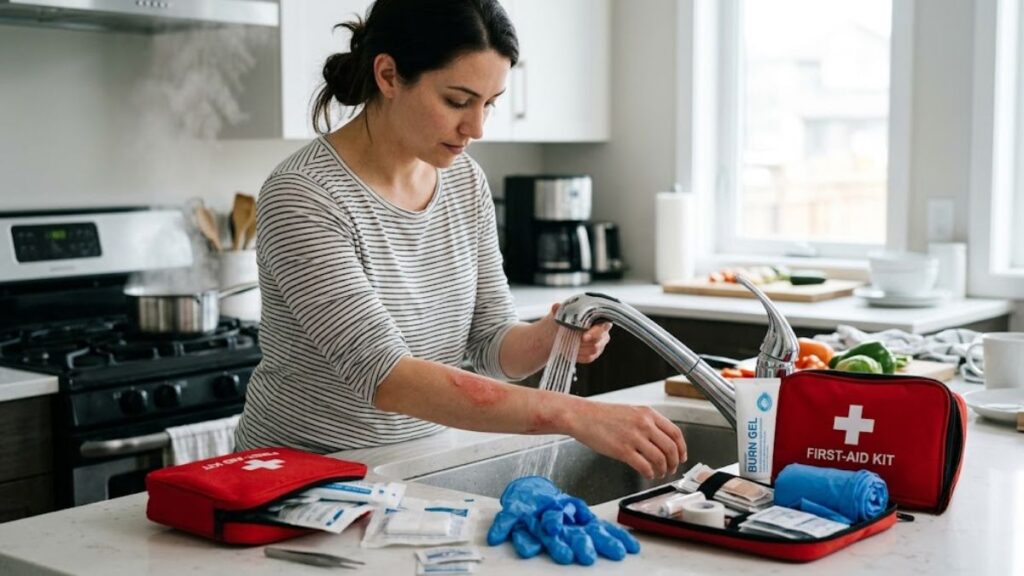
Kitchen accidents are common, and steam burns are among the frequent injuries that can happen while cooking. Activities such as opening a hot pot, removing a pressure cooker lid, draining boiling water, or standing close to rising steam can expose the skin to high temperatures within seconds.
Although steam may seem harmless, it can transfer heat quickly and cause painful burns. A minor steam burn may lead to redness, pain, tenderness, and mild swelling. Some burns may also cause small blisters on the affected area.
Many minor steam burns can be managed at home with proper first-aid care. Taking the right steps immediately can help reduce discomfort, protect the skin, and support the healing process.
This guide explains how to safely treat a minor kitchen steam burn, including the immediate actions to take, what to avoid, and when medical attention may be necessary.
Understanding Kitchen Steam Burns
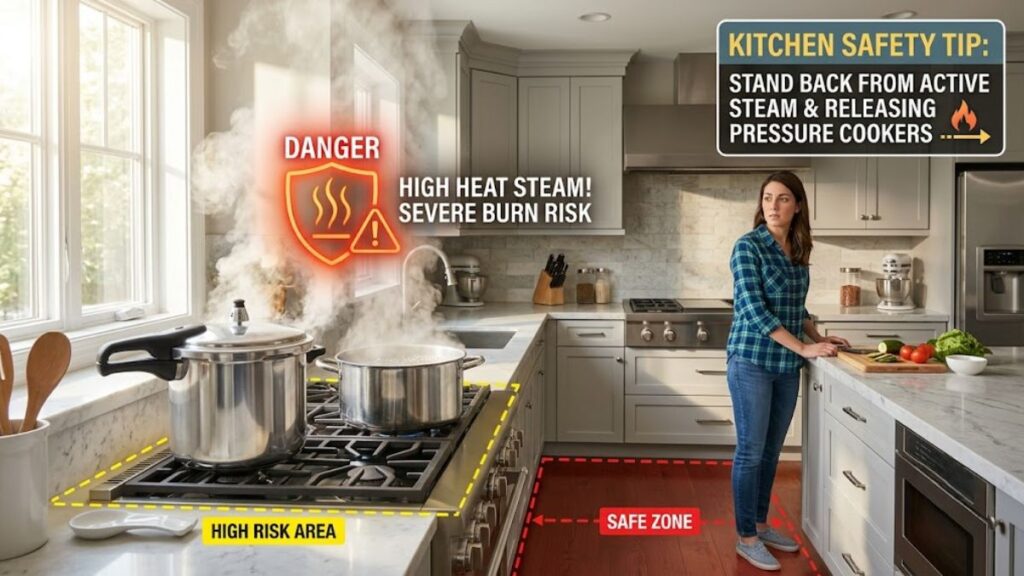
Steam burns occur when hot water vapor comes into direct contact with the skin and transfers heat quickly. Although steam may appear harmless because it is invisible or difficult to notice, it can carry a significant amount of heat and cause painful skin injuries within seconds.
When steam touches the skin, it can release heat energy rapidly, sometimes causing more damage than expected. Unlike a simple splash of hot water, steam can spread across an area quickly and may affect deeper layers of the skin.
Common kitchen situations that can cause steam burns include:
- Opening a pressure cooker too quickly
- Removing a lid from a boiling pot
- Draining pasta, vegetables, or rice
- Opening a microwave container filled with hot food
- Standing too close to boiling liquids
- Handling appliances that release hot steam, such as steamers or electric cookers
Steam burns can sometimes appear smaller on the surface while the heat has affected deeper skin layers. This is why it is important to treat the injury carefully, even if the affected area does not initially look severe.
Understanding how steam burns happen can help you take better precautions in the kitchen and respond quickly if an accident occurs.
Signs of a Minor Steam Burn
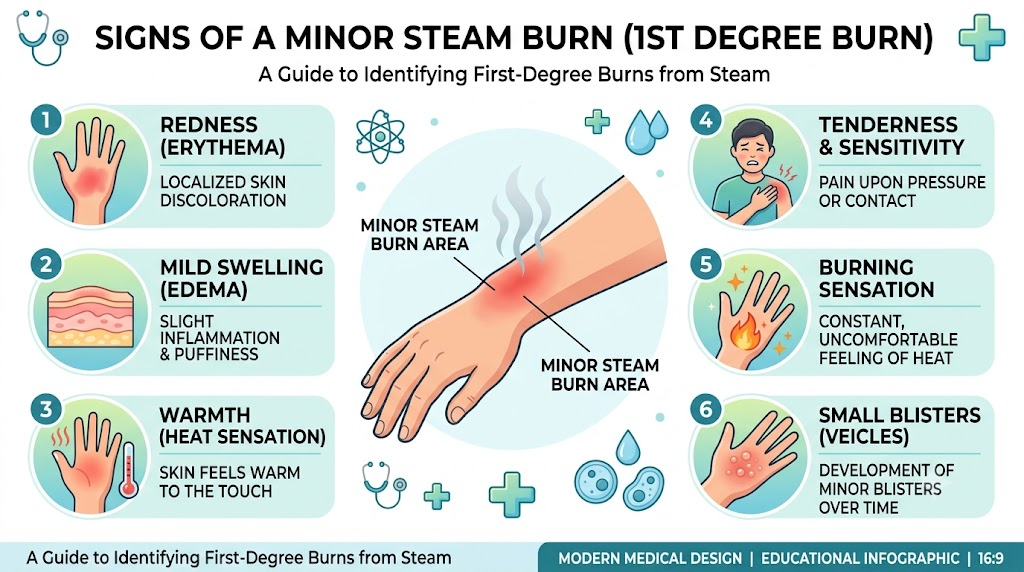
A minor steam burn, often referred to as a first-degree burn, usually affects the outermost layer of the skin. These burns are generally less severe than deeper burns but can still cause discomfort and require proper care to support healing.
Common signs and symptoms of a minor steam burn include:
Red or Pink Skin
The affected area may appear red or pink due to irritation and increased blood flow near the surface of the skin. This is one of the most common early signs after a steam injury.
Mild Swelling
Some swelling may occur around the burned area as the body responds to the injury. Mild swelling is common and usually improves as the skin begins to heal.
Burning or Stinging Sensation
A steam burn may cause a burning, tingling, or stinging feeling. This discomfort can continue for some time after the initial exposure to heat.
Tenderness When Touched
The burned area may feel sensitive or painful when touched. Even gentle pressure or contact with clothing may cause discomfort.
Skin Feeling Warm
The affected skin may feel warmer than the surrounding area due to the heat exposure and the body’s natural healing response.
Mild Pain
Minor steam burns often cause mild to moderate pain that gradually improves with proper cooling and care.
In some cases, small blisters may develop after a steam burn. Avoid breaking or popping these blisters because they act as a natural protective layer for the skin underneath and help reduce the risk of infection.
If symptoms become worse, the burn covers a large area, or signs of infection appear, seek medical advice for proper evaluation and treatment.
Immediate Steps to Treat a Minor Kitchen Steam Burn
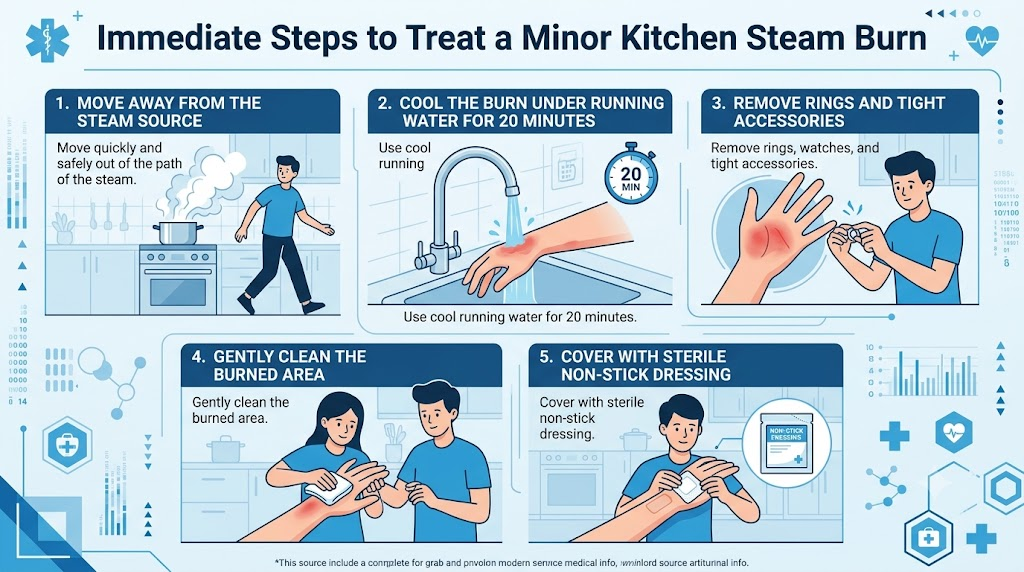
Taking quick and correct first-aid steps after a steam burn can help reduce pain, limit further skin damage, and support the healing process. The most important actions are to remove the heat source, cool the affected area, and protect the injured skin.
Move Away From the Steam Source
The first step is to safely move away from the source of heat. Continuing exposure to hot steam can worsen the burn and increase skin damage.
Follow these steps:
- Turn off the appliance if it is safe to do so.
- Move away from the hot steam or boiling liquid.
- Make sure you are no longer at risk of additional burns.
If clothing, jewelry, or accessories near the burned area are hot, carefully remove them. Avoid pulling away anything that is stuck to the skin, as this can cause further injury.
Cool the Burn Under Running Water
Cooling the burned area is one of the most important first-aid steps. Place the affected skin under cool (not cold) running water for around 20 minutes.
Cool water helps:
- Reduce heat trapped in the skin
- Relieve burning and discomfort
- Limit further tissue damage
- Reduce swelling
Avoid using ice directly on the burn. Extreme cold can damage the skin and may slow the natural healing process.
If running water is not available, place a clean cloth soaked in cool water over the burn. Replace the cloth regularly to maintain a cool temperature.
Remove Tight Items Near the Burn
Steam burns may cause swelling around the injured area. Remove tight items as soon as possible before swelling increases.
Items to remove may include:
- Rings
- Bracelets
- Watches
- Tight clothing
Remove these items gently to avoid putting extra pressure on the burned skin.
Gently Clean the Burned Area
After cooling the burn, gently clean the affected area using mild soap and clean water.
Proper cleaning helps remove dirt and reduces the chance of infection.
Avoid:
- Scrubbing the burned skin
- Using harsh chemicals
- Applying strong antiseptic products unless recommended by a healthcare professional
The goal is to keep the area clean while preventing additional irritation.
Protect the Burn With a Clean Covering
After cooling and cleaning the burn, cover it with a clean, non-stick dressing or sterile gauze.
A protective covering can help:
- Protect the injured skin from dirt and friction
- Reduce irritation from clothing or movement
- Prevent contamination
- Keep the area more comfortable during healing
Avoid placing rough materials, loose cotton fibers, or anything that may stick directly onto the burn. A proper non-stick dressing is safer and more comfortable for the healing skin.
Following these immediate steps can help manage a minor steam burn effectively and reduce the chance of complications.
What Can You Apply on a Minor Steam Burn?
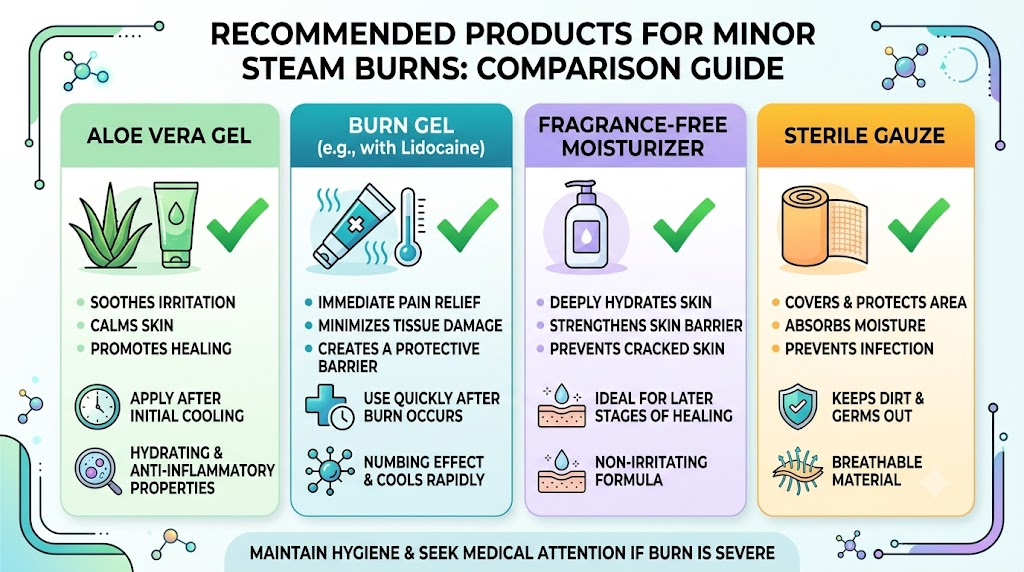
After properly cooling a minor steam burn, certain products may help soothe discomfort and support the healing process. However, the most important first step is always to cool the burned area with running water before applying any creams, gels, or lotions.
Applying products too early, before the heat has been removed from the skin, may trap heat and delay recovery.
Some options that may provide comfort include:
Aloe Vera Gel
Pure aloe vera gel may provide a cooling and soothing effect for minor burns. It can help calm irritated skin and reduce feelings of dryness or discomfort.
When choosing aloe vera gel:
- Select products with minimal ingredients.
- Avoid products containing added fragrances or alcohol, which may irritate sensitive skin.
- Apply gently without rubbing the burned area.
Aloe vera is generally used for minor burns after the skin has been cooled properly.
Burn Gel
Over-the-counter burn gels specifically designed for minor burns may help provide temporary relief from discomfort.
These products are often formulated to:
- Soothe irritated skin
- Provide cooling relief
- Keep the affected area comfortable
Always follow the instructions provided on the product packaging and avoid using products that are not intended for burn care.
Moisturizing Lotion
For mild burns after the skin has cooled and started healing, a gentle moisturizer may help prevent dryness and support skin comfort.
Choose a mild, fragrance-free moisturizer to reduce the chance of irritation.
Avoid applying lotions or creams immediately after the burn occurs. First cool the area properly, then apply suitable products if needed.
Important Reminder
Avoid using home remedies such as butter, cooking oil, toothpaste, or other unapproved substances on a steam burn. These products may trap heat, irritate the skin, or increase the risk of complications.
Proper cooling, gentle care, and protection of the injured area are the most important steps in helping a minor steam burn heal safely.
What Should You Avoid Putting on a Steam Burn?
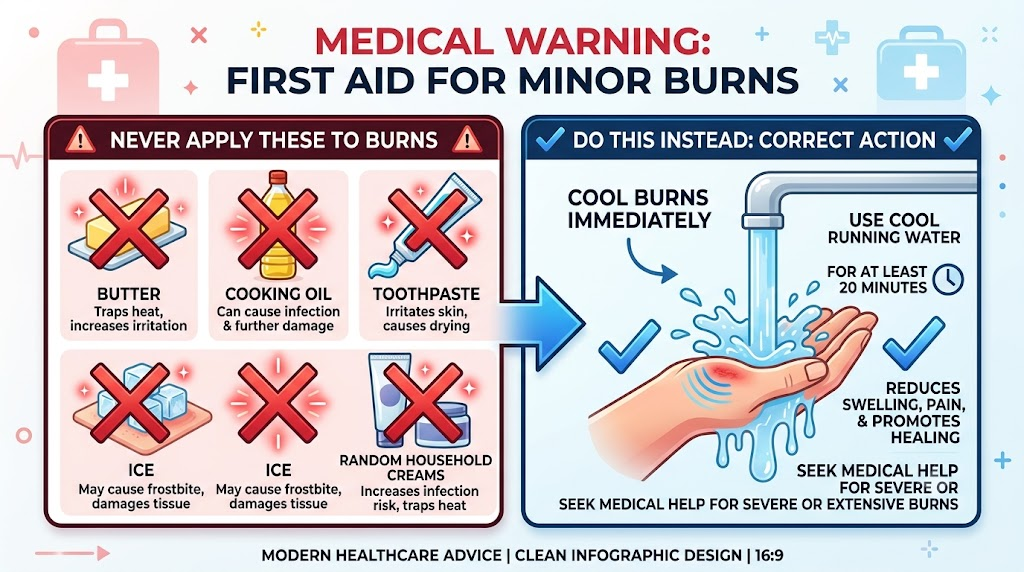
After a steam burn, many people try traditional home remedies to reduce pain or speed up healing. However, some commonly used substances can do more harm than good by trapping heat, irritating the skin, or increasing the risk of infection.
The safest approach is to cool the burn properly with running water and use only products that are suitable for minor burn care.
Avoid applying:
Butter or Oil
Butter, cooking oil, and other greasy substances are common home remedies, but they are not recommended for treating burns.
These substances can:
- Trap heat inside the skin
- Prevent proper cooling
- Make the burned area harder to clean
- Increase the risk of irritation
The priority after a steam burn should be removing heat from the skin rather than covering it with oily products.
Toothpaste
Toothpaste is sometimes used as a quick home treatment for burns, but it is not suitable for damaged skin.
Toothpaste may contain ingredients such as:
- Flavoring agents
- Chemicals
- Abrasive substances
These ingredients can irritate burned skin and may increase discomfort during the healing process.
Ice
Although ice may seem helpful because it feels cold, placing ice directly on a burn is not recommended.
Direct ice contact can:
- Damage skin tissue
- Reduce blood flow to the affected area
- Delay healing
Instead of ice, use cool running water to safely reduce heat and relieve discomfort.
Household Creams or Chemicals
Avoid applying random creams, powders, or household substances unless they are specifically designed for burn care.
Some products may:
- Irritate sensitive skin
- Interfere with healing
- Increase the risk of infection
Always choose products intended for minor burn treatment and follow the instructions carefully.
Remember
The best immediate care for a minor steam burn is simple: cool the area under running water, protect the skin with a clean covering, and avoid unverified home remedies. Proper first aid helps reduce discomfort and supports safer healing.
Managing Pain From a Minor Steam Burn

A minor steam burn may continue to cause discomfort for several hours after the initial injury. The pain usually occurs because the skin has been affected by heat and the body is responding with inflammation and increased sensitivity.
With proper care, discomfort can often be reduced while the skin begins to heal. The goal is to protect the injured area, avoid further irritation, and support the body’s natural recovery process.
You can help manage discomfort by:
Cooling the Area Properly
Proper cooling is one of the most effective ways to reduce pain after a steam burn.
Running cool water over the affected area can help:
- Remove remaining heat from the skin
- Reduce the burning sensation
- Calm irritation
- Minimize swelling
Avoid using ice directly because extreme cold can cause additional skin damage.
Keeping the Burn Protected
Protecting the burned area helps prevent unnecessary irritation and discomfort.
A clean, non-stick dressing or sterile covering can help:
- Reduce contact with clothing
- Protect sensitive skin
- Prevent dirt and bacteria from reaching the area
Keep the covering clean and replace it if it becomes wet or dirty.
Taking Over-the-Counter Pain Medication if Suitable
If the discomfort is bothersome, over-the-counter pain medication may help provide temporary relief for some people.
Always:
- Follow the dosage instructions on the package.
- Choose medication that is suitable for your health condition.
- Avoid taking medicines that may interact with your existing medications.
If you have medical conditions, allergies, or concerns about using pain relievers, consult a healthcare professional before taking them.
Avoiding Pressure or Friction on the Burned Area
Friction and pressure can increase irritation and slow comfort during healing.
Try to:
- Avoid tight clothing over the burned area.
- Prevent unnecessary rubbing.
- Handle the skin gently while cleaning or changing dressings.
Giving the injured skin time to recover can help reduce discomfort and support healing.
If pain becomes severe, continues to worsen, or is accompanied by signs of infection, seek medical advice for proper evaluation.
How to Care for a Steam Burn During Healing
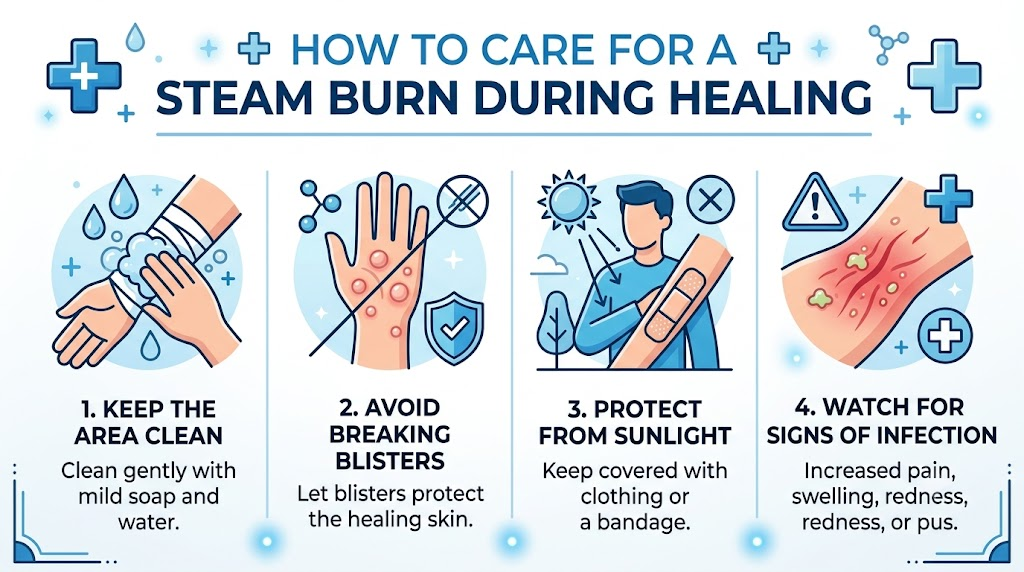
Proper aftercare is important for helping a minor steam burn heal safely and reducing the risk of irritation or infection. Even after the initial pain decreases, the burned skin may remain sensitive and require gentle care.
Following simple steps can help protect the injured area and support the body’s natural healing process.
Keep the Area Clean
Keeping the burned area clean helps prevent bacteria from entering damaged skin.
Follow these steps:
- Wash the area gently with mild soap and clean water.
- Avoid rubbing or scrubbing the burned skin.
- Keep dressings clean and dry.
- Replace coverings if they become wet, dirty, or damaged.
A clean environment allows the skin to heal properly and reduces the chance of complications.
Avoid Breaking Blisters
If blisters appear after a steam burn, avoid popping or breaking them.
Blisters act as a natural protective layer by covering the damaged skin underneath. Breaking them can:
- Increase the risk of infection
- Slow the healing process
- Cause additional irritation and pain
Allow blisters to heal naturally, and keep the area protected with an appropriate covering if needed.
Protect the Skin From Sun Exposure
Newly healed skin is often more sensitive than normal skin and may be more vulnerable to irritation from sunlight.
To protect recovering skin:
- Avoid direct sun exposure on the affected area.
- Cover the area when outdoors.
- Use appropriate sun protection once the skin has healed and is suitable for sunscreen use.
Protecting the skin during recovery can help prevent further irritation and discomfort.
Watch for Signs of Infection
Most minor steam burns heal without problems when cared for properly. However, it is important to monitor the area for signs that may indicate infection.
Seek medical advice if you notice:
- Increasing redness around the burn
- Growing swelling
- Pus or unusual discharge
- Increasing pain instead of improvement
- Fever
- Red streaks spreading away from the burned area
Early medical attention can help prevent a minor burn from becoming a more serious problem.
Proper cleaning, protection, and monitoring are key parts of caring for a steam burn while it heals.
When Should You Seek Medical Help?
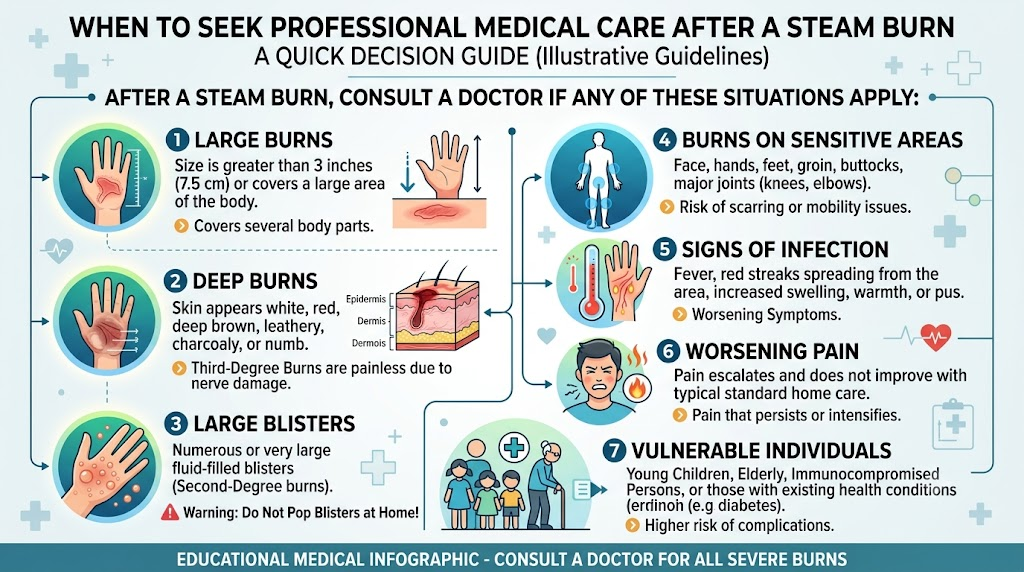
While many minor steam burns can be treated at home with proper first-aid care, some burns require professional medical attention. It is important to recognize warning signs that indicate the injury may be more serious than it first appears.
Seek medical help if:
The Burn Covers a Large Area
A burn affecting a large portion of the skin may require medical evaluation, even if the symptoms initially seem mild. Larger burns have a higher risk of complications and may need specialized care.
The Burn Is Deep or Severe
Seek medical attention if the burn appears deeper than a typical minor injury or causes significant skin damage.
Signs of a more serious burn may include:
- Severe pain
- Loss of sensation in the affected area
- Extensive skin damage
- Changes in skin appearance
Large Blisters Develop
Small blisters may occur with some burns, but large or multiple blisters should be evaluated by a healthcare professional.
Avoid breaking blisters yourself, as this can increase the risk of infection.
The Burn Affects the Face, Hands, Feet, or Joints
Burns in certain areas may require extra care because they can affect movement, function, or sensitive structures.
Seek medical advice if the burn involves:
- Face
- Hands
- Feet
- Fingers
- Major joints
The Skin Appears White, Black, or Leathery
Changes in skin color or texture may indicate a deeper burn.
Skin that appears:
- White
- Charred or black
- Dry and leathery
should be evaluated by a medical professional.
Pain Becomes Severe or Worsens
Minor burns usually improve gradually. If pain becomes stronger instead of improving, it may indicate a complication or a more serious injury.
Signs of Infection Appear
Seek medical help if you notice signs such as:
- Increasing redness
- Worsening swelling
- Pus or unusual discharge
- Fever
- Red streaks spreading from the burn
These symptoms may indicate an infection that requires treatment.
The Injured Person Is a Young Child, Older Adult, or Has Health Conditions Affecting Healing
Some people may have a higher risk of complications from burns.
Extra care should be taken if the injured person is:
- A young child
- An older adult
- Someone with conditions that affect healing or immunity
When in doubt, it is safer to seek medical advice. Proper evaluation can help ensure the burn receives appropriate care and heals safely.
How to Prevent Kitchen Steam Burns
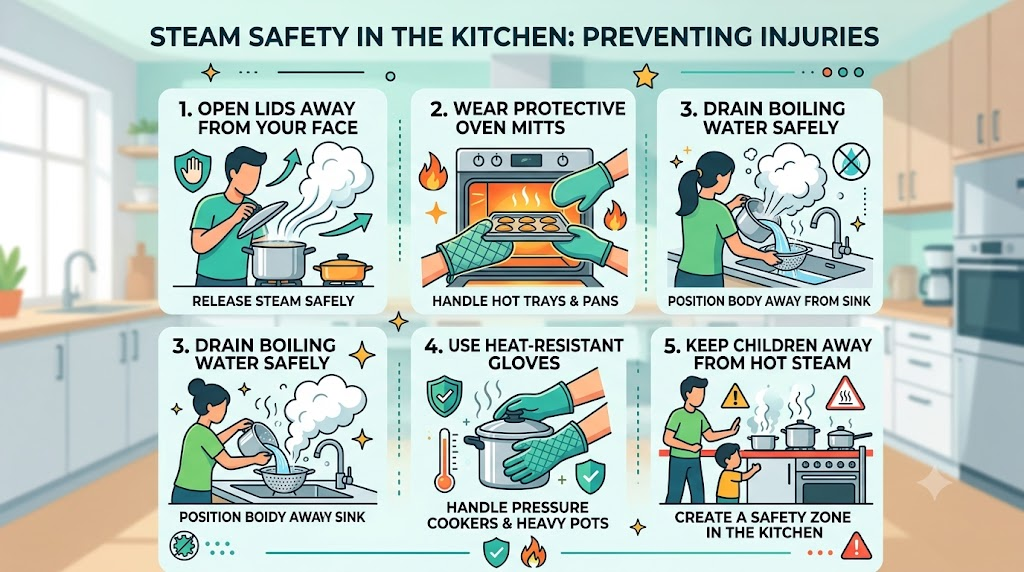
Prevention is the best way to avoid painful steam injuries in the kitchen. Many steam burns happen during routine cooking activities, but simple safety habits can significantly reduce the risk of accidents.
Being aware of hot steam sources, using proper protection, and handling hot containers carefully can help keep your kitchen safer.
Open Hot Containers Carefully
Hot containers and sealed cookware can release a sudden burst of steam when opened. Always take precautions when handling items such as pots, pressure cookers, and sealed food containers.
When opening hot containers:
- Open lids away from your face and hands.
- Allow steam to escape slowly before looking inside.
- Use oven mitts or heat-resistant gloves when handling hot cookware.
- Stand slightly away from the container while releasing steam.
Taking a few extra seconds can help prevent unexpected steam exposure.
Use Proper Kitchen Protection
Using the right protective equipment can reduce the chance of burns while cooking.
Wear:
- Oven mitts when handling hot cookware
- Long sleeves when appropriate
- Heat-resistant gloves for tasks involving steam or high temperatures
Avoid handling hot cookware with wet cloths or damp towels because moisture transfers heat quickly and can increase the risk of burns.
Be Careful While Cooking
Many steam burns occur during everyday cooking tasks. Pay extra attention when working with boiling liquids and hot food.
Take extra care while:
- Draining boiling water from pasta, vegetables, or rice
- Removing covers from microwave containers
- Stirring hot liquids
- Opening steaming containers
- Moving pots filled with hot water
Move slowly and avoid placing your face or hands directly above areas where steam may escape.
Keep Children Away From Hot Steam
Children may not understand that steam can cause serious burns because it is often invisible and does not look dangerous.
Keep children away from:
- Boiling pots
- Pressure cookers
- Hot kitchen appliances
- Cooking areas
Use safety measures such as turning pot handles inward and creating a safe distance between children and cooking surfaces.
By following these precautions, you can reduce the risk of kitchen steam burns and create a safer cooking environment for everyone at home.
Common Mistakes When Treating Steam Burns
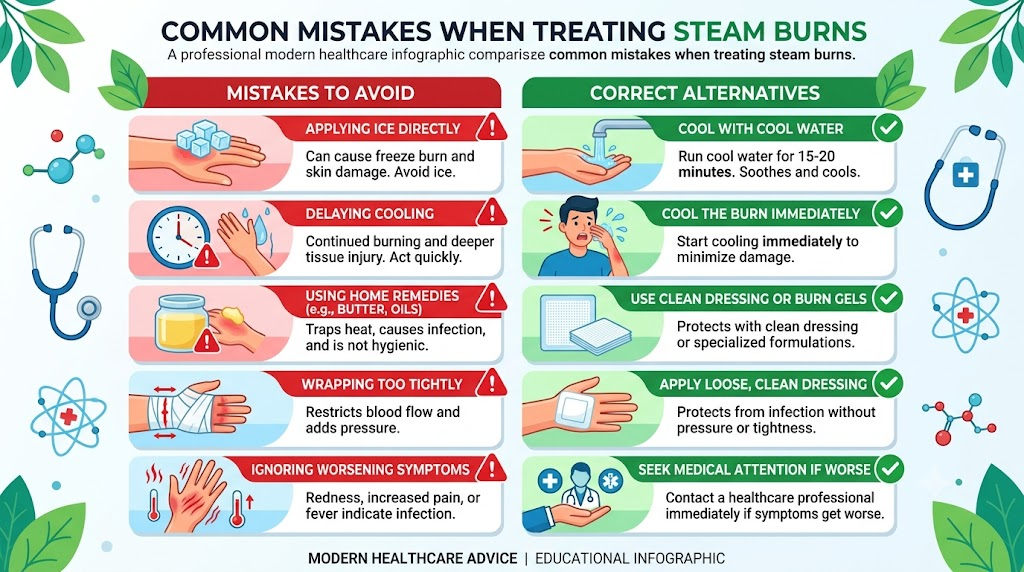
Knowing what to do after a steam burn is important, but knowing what to avoid is equally important. Some common mistakes can increase discomfort, slow healing, or raise the risk of skin irritation and infection.
Avoid these common steam burn treatment mistakes:
Applying Ice Directly
Many people use ice immediately after a burn because it feels like it may provide quick relief. However, placing ice directly on burned skin is not recommended.
Ice can:
- Cause additional damage to the skin
- Reduce blood flow to the affected area
- Delay the natural healing process
Instead, use cool running water to safely reduce heat and soothe the burn.
Delaying Cooling
Cooling the burn quickly is one of the most important first-aid steps.
Waiting too long before cooling the affected area can allow heat to remain in the skin and may increase discomfort.
After a steam burn:
- Move away from the heat source.
- Cool the area with running water as soon as possible.
- Avoid applying creams or home remedies before proper cooling.
Quick action can help reduce the severity of the injury.
Using Home Remedies
Many traditional remedies are shared for treating burns, but some may irritate damaged skin or increase the risk of complications.
Avoid applying unverified substances such as:
- Toothpaste
- Butter
- Cooking oil
- Random household creams
Use products specifically designed for minor burn care and follow proper first-aid guidance.
Covering the Burn Too Tightly
A dressing should protect the burn without putting unnecessary pressure on the injured area.
A tight covering may:
- Increase discomfort
- Restrict movement
- Irritate swollen skin
Use a clean, non-stick dressing or sterile gauze that allows the area to remain protected and comfortable.
Ignoring Worsening Symptoms
Most minor steam burns improve with proper care, but symptoms that become worse should not be ignored.
Seek medical advice if:
- Pain increases instead of improving
- Swelling becomes worse
- Redness spreads
- Pus or discharge appears
- Fever develops
Monitoring the burn during healing helps identify problems early and ensures proper treatment when needed.
Avoiding these common mistakes can help a minor steam burn heal more safely and reduce the chance of unnecessary complications.
Conclusion
Knowing how to safely treat a minor kitchen steam burn can help reduce pain, protect the skin, and support proper healing. The most important first step is cooling the burn under cool running water for around 20 minutes, followed by gentle cleaning and protection with a clean dressing.
Avoid using harmful home remedies such as butter or ice, and monitor the burn for signs of complications. While most minor steam burns heal with proper care, serious burns or worsening symptoms require medical attention.
Being careful around hot steam, using proper kitchen safety habits, and keeping basic first-aid supplies available can help prevent and manage common kitchen injuries.
Medical Disclaimer: This article is for informational and educational purposes only. It is not intended to replace professional medical advice, diagnosis, or treatment. Always consult a qualified healthcare provider for medical concerns or before making healthcare decisions.