
College life can be exciting and challenging at the same time. Between attending classes, completing assignments, preparing for exams, managing part-time work, participating in extracurricular activities, and maintaining a social life, many students often struggle to find enough time for a healthy breakfast.
Busy schedules, early morning lectures, and late-night study sessions can make breakfast seem less important. As a result, some students skip their first meal of the day, while others depend on quick options such as packaged snacks, sugary drinks, or fast food that may not provide the nutrients needed to support their active lifestyle.
However, starting the day with a balanced breakfast can play an important role in supporting energy levels, concentration, and overall wellness. A nutritious morning meal provides the body with essential nutrients after overnight fasting and can help students feel more prepared for long classes, studying, and daily activities.
A healthy breakfast does not need to be complicated, expensive, or time-consuming. With a little planning and the right ingredients, college students can prepare quick meals that provide a combination of protein, fiber, healthy fats, vitamins, and minerals.
Simple options such as overnight oats, fruit and yogurt bowls, smoothies, eggs, sandwiches, and whole-grain meals can be prepared in advance or made within a few minutes, making them suitable for even the busiest mornings.
This guide explores easy and healthy breakfast ideas for busy college students, including quick, affordable, and nutritious options for mornings when you have limited time but still want to start your day with a balanced meal.
Why Breakfast Is Important for College Students
Breakfast is the first meal your body receives after several hours without food during sleep. It helps restore energy levels and provides essential nutrients needed to start the day.
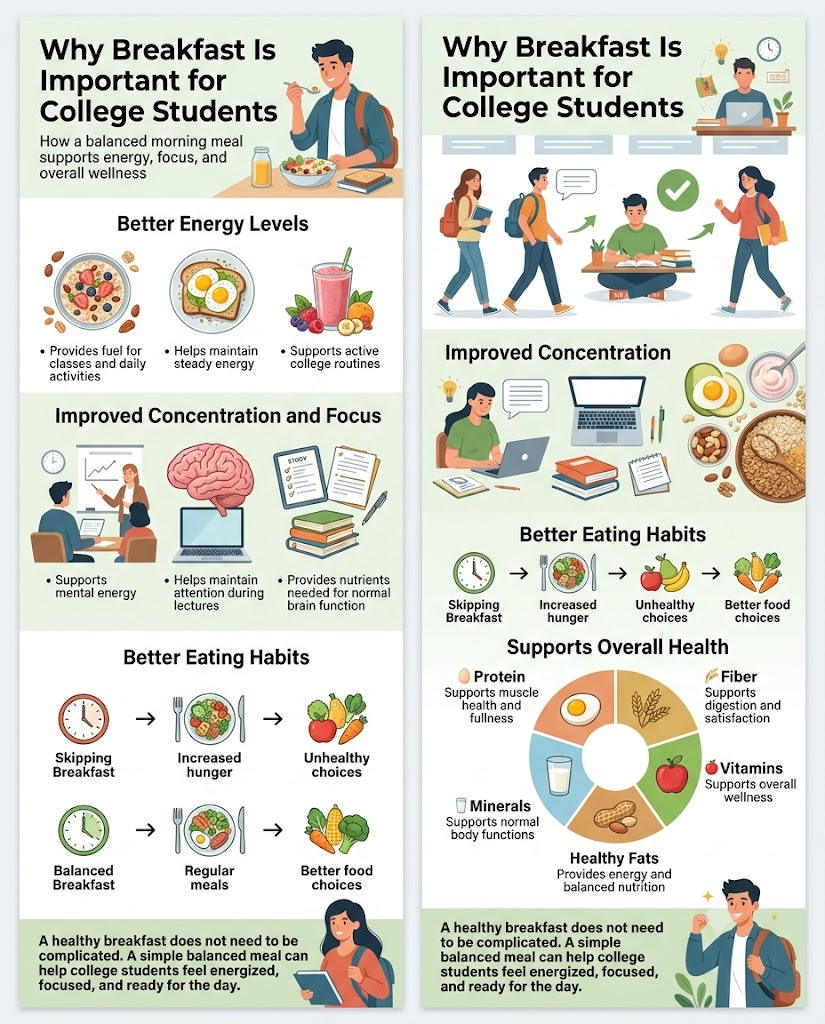
For college students, who often have demanding schedules filled with classes, assignments, exams, and other activities, a nutritious breakfast can be an important part of maintaining energy and focus.
Many students underestimate the importance of breakfast and may skip it because of early lectures, lack of time, or busy routines. However, regularly choosing a balanced morning meal can support better daily habits and help students feel more prepared to handle academic and personal responsibilities.
For college students, a nutritious breakfast may help support:
Better Energy Levels
College schedules often involve long lectures, walking between classes, studying for extended periods, and participating in different activities throughout the day. A balanced breakfast provides fuel that helps students stay active and avoid feeling tired during the morning.
Foods containing complex carbohydrates, protein, and healthy fats provide more sustained energy compared with sugary snacks or drinks that may cause quick energy increases followed by sudden drops.
Examples of energy-supporting breakfast foods include:
- Oats with fruits and nuts
- Whole-grain toast with eggs
- Yogurt with granola
- Smoothies with fruits and protein sources
These options can help provide steady energy to support busy college routines.
Improved Concentration and Focus
College students need mental energy for attending lectures, understanding new concepts, completing assignments, and preparing for exams. The nutrients from a healthy breakfast can support normal brain function and help maintain concentration during academic activities.
A breakfast that includes protein, fiber, vitamins, and minerals can help students feel more satisfied and focused compared with starting the day without food.
For example, adding foods such as eggs, nuts, fruits, yogurt, or whole grains can provide nutrients that support a balanced morning meal.
Better Eating Habits
Skipping breakfast may sometimes lead to increased hunger later in the day. When students become extremely hungry, they may be more likely to choose convenient but less nutritious foods or eat larger portions than needed.
Starting the day with a balanced breakfast can help create a more structured eating routine and encourage healthier food choices throughout the day.
A consistent breakfast habit can also make it easier to maintain regular meal timing, especially for students with unpredictable schedules.
Supports Overall Health
A healthy breakfast contributes to a balanced diet by providing important nutrients that the body needs for daily functioning.
Common nutrients found in nutritious breakfast foods include:
- Vitamins: Support normal body functions and overall wellness.
- Minerals: Help maintain various processes in the body.
- Protein: Supports muscle health and helps keep you feeling satisfied.
- Fiber: Supports digestive health and helps maintain fullness.
- Healthy fats: Provide energy and support balanced nutrition.
By including a variety of nutrient-rich foods in breakfast, college students can develop healthy eating habits that support their physical and mental well-being during their academic years.
A good breakfast does not need to be large or complicated. Even a simple meal with the right combination of nutrients can help students begin their day feeling energized, focused, and ready to manage their responsibilities.
What Makes a Healthy Breakfast?
A healthy breakfast is not just about eating something in the morning. It is about choosing foods that provide the right balance of nutrients to support energy, focus, and overall wellness throughout the day.
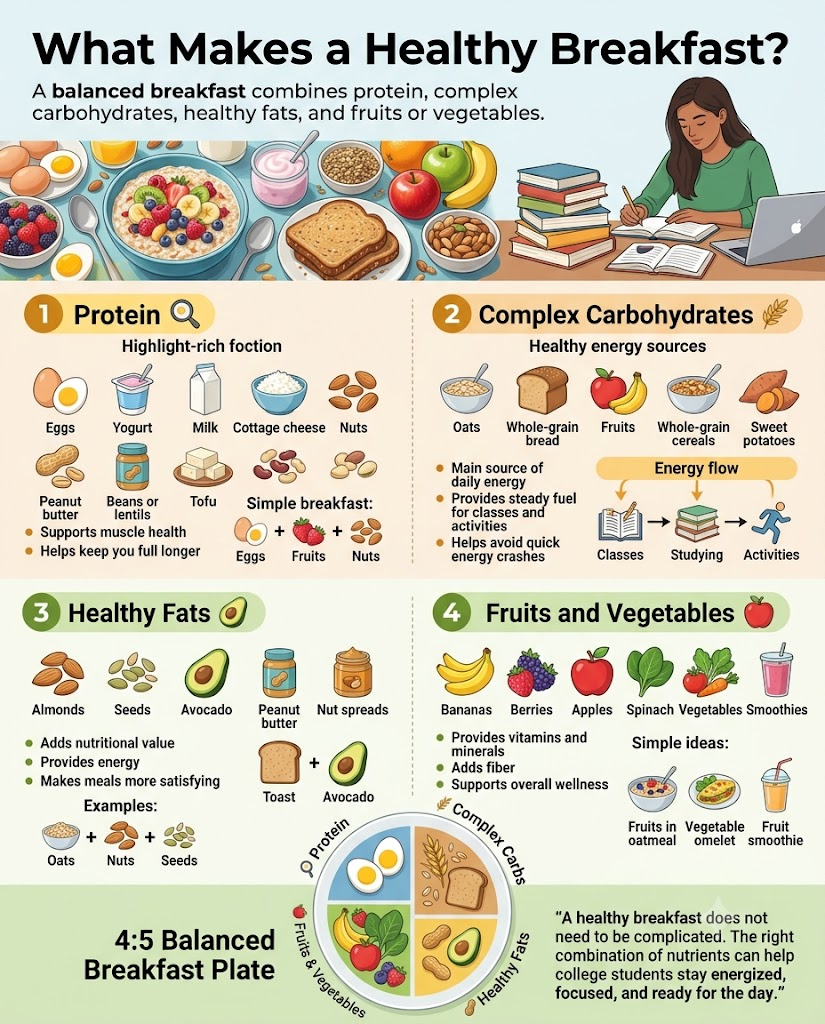
For college students, a good breakfast should include a combination of different food groups rather than relying on only one type of food. A balanced meal with protein, complex carbohydrates, healthy fats, and fruits or vegetables can help provide sustained energy and keep you satisfied until your next meal.
A nutritious breakfast usually contains:
Protein
Protein is an important part of a balanced breakfast because it helps provide lasting energy and supports muscle health. Including protein in your morning meal can also help you feel full for longer, reducing the urge to snack frequently.
Good breakfast protein sources include:
- Eggs
- Yogurt
- Milk
- Cottage cheese
- Nuts
- Peanut butter
- Beans or lentils
- Tofu or other plant-based protein options
Examples of protein-rich breakfast ideas include eggs with whole-grain toast, yogurt with nuts and fruits, or a smoothie with milk and peanut butter.
Complex Carbohydrates
Carbohydrates are one of the body’s main sources of energy. For students who spend long hours attending classes, studying, or participating in activities, choosing the right type of carbohydrates can help maintain steady energy levels.
Complex carbohydrates are digested more slowly and can provide longer-lasting fuel compared with highly processed foods that may cause quick energy spikes.
Healthy carbohydrate sources include:
- Oats
- Whole-grain bread
- Fruits
- Whole-grain cereals
- Sweet potatoes
- Brown rice-based breakfast options
Adding complex carbohydrates to breakfast can help support daily activities and provide energy needed for concentration and learning.
Healthy Fats
Healthy fats are another important component of a balanced breakfast. They provide energy and help improve the overall nutritional value of a meal.
Including moderate amounts of healthy fats can make breakfast more satisfying and help create a balanced combination of nutrients.
Examples of healthy fat sources include:
- Nuts
- Seeds
- Avocado
- Peanut butter
- Nut-based spreads
For example, adding almonds to oatmeal, seeds to yogurt, or avocado to whole-grain toast can make a simple breakfast more nutritious.
Fruits and Vegetables
Fruits and vegetables add important vitamins, minerals, antioxidants, and fiber to your breakfast. They help increase the variety of nutrients in your diet and contribute to overall wellness.
Even adding one serving of fruit or vegetables can improve the nutritional quality of your morning meal.
Easy ways to include them include:
- Adding bananas or berries to oatmeal
- Mixing fruits into yogurt
- Preparing a vegetable omelet
- Adding spinach or vegetables to sandwiches
- Drinking a homemade fruit smoothie
A balanced breakfast does not need to be complicated. By combining a source of protein, healthy carbohydrates, good fats, and fruits or vegetables, college students can create simple meals that support energy, focus, and healthy eating habits throughout their busy day.
Quick and Healthy Breakfast Ideas for Busy College Students
College mornings can often feel rushed. Early classes, assignments, exams, and busy schedules may leave students with little time to prepare a proper meal. However, skipping breakfast regularly can make it harder to maintain energy and focus throughout the day.
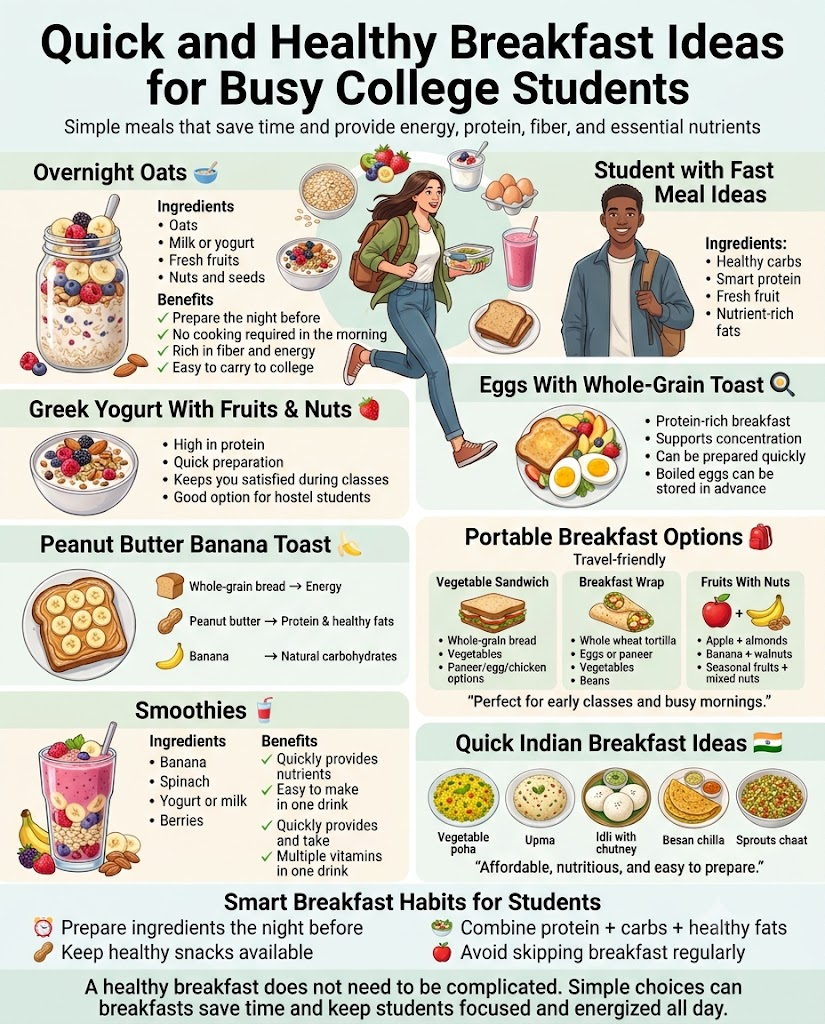
The good news is that a healthy breakfast does not have to take a lot of time. With simple ingredients and a little preparation, students can enjoy quick meals that provide important nutrients such as protein, fiber, healthy fats, and carbohydrates.
Here are some easy breakfast ideas that are practical for busy college students:
Overnight Oats
Overnight oats are one of the easiest breakfast options for students who have limited time in the morning.
They can be prepared the night before by combining:
- Oats
- Milk or yogurt
- Fruits
- Nuts or seeds
- A small amount of honey, if desired
Simply mix the ingredients, store them in the refrigerator overnight, and enjoy a ready-to-eat breakfast the next morning.
Why It Works for Students
- Takes only a few minutes to prepare
- Requires no cooking in the morning
- Easy to carry to college
- Provides fiber and long-lasting energy
- Can be customized with different flavors and toppings
Students can experiment with combinations such as banana and peanut butter, berries with nuts, or apple with cinnamon.
Greek Yogurt With Fruits and Nuts
Greek yogurt is a convenient breakfast choice because it provides protein and requires minimal preparation.
For a more complete meal, add:
- Fresh fruits
- Nuts
- Seeds
- Granola
This combination provides protein, fiber, vitamins, and healthy fats, helping students stay satisfied during morning classes.
It is also a good option for hostel students because it can be prepared quickly without cooking.
Peanut Butter Banana Toast
A simple toast can become a nutritious breakfast when the right ingredients are added.
Try combining:
- Whole-grain bread
- Peanut butter
- Sliced banana
This breakfast provides:
- Carbohydrates for energy
- Protein from peanut butter
- Healthy fats for better nutrition
- Natural sweetness from bananas
It is an excellent choice for mornings when you need something filling within a few minutes.
Eggs With Whole-Grain Toast
Eggs are a versatile breakfast food and a convenient source of protein.
Quick options include:
- Boiled eggs prepared in advance
- Scrambled eggs
- Vegetable omelets
- Egg sandwiches
Pairing eggs with whole-grain toast and a serving of fruit can create a balanced breakfast that supports energy and concentration during classes.
Students with busy schedules can prepare boiled eggs in advance and store them for quick morning meals.
Smoothies
Smoothies are a great option for students who do not feel hungry early in the morning or need a breakfast they can consume while traveling.
A simple smoothie can include:
- Banana
- Milk or yogurt
- Peanut butter
- Oats
- Berries or other fruits
Additional ingredients such as nuts, seeds, or spinach can increase the nutritional value.
Benefits of Smoothies
- Quick to prepare
- Easy to carry
- Provides multiple nutrients in one meal
- Can be customized based on personal preferences
Vegetable Sandwich
A healthy sandwich is a practical breakfast option because it is easy to prepare and carry.
Possible ingredients include:
- Whole-grain bread
- Fresh vegetables
- Cheese or paneer
- Egg or chicken (optional)
- Healthy spreads
Vegetable sandwiches can be prepared the night before and packed for students who have early morning lectures.
They provide a convenient combination of carbohydrates, protein, and nutrients while being easy to eat on busy days.
Homemade Breakfast Wraps
Breakfast wraps are another filling and convenient option for college students.
You can include:
- Whole wheat tortilla
- Eggs or paneer
- Vegetables
- Cheese
- Beans
- Healthy sauces or spreads
Wraps can be prepared ahead of time and stored, making them ideal for mornings when there is little time for cooking.
They are also easy to carry, making them suitable for students who eat breakfast while commuting.
Fruits With Nuts
When you have very little time, eating fruits with nuts is a better option than skipping breakfast completely.
Simple combinations include:
- Apple with almonds
- Banana with walnuts
- Seasonal fruits with mixed nuts
- Dates with nuts
Although simple, this option provides important nutrients such as fiber, vitamins, minerals, and healthy fats.
Keeping fruits and nuts available in your room or backpack can make it easier to choose a healthier option during busy mornings.
Homemade Breakfast Bowls
Breakfast bowls are flexible and can be prepared using ingredients already available at home or in a hostel.
Possible combinations include:
- Yogurt with fruits and oats
- Rice with vegetables and eggs
- Chickpea or bean bowls
- Smoothie bowls with nuts and seeds
These meals allow students to combine multiple food groups into one convenient dish.
Quick Indian Breakfast Options
For students who prefer traditional meals, several Indian breakfast options can be both healthy and convenient.
Examples include:
- Vegetable poha
- Upma with vegetables
- Idli with chutney
- Besan chilla
- Paratha with yogurt (in moderate portions)
- Sprouts chaat
These options can provide carbohydrates, protein, and other nutrients while fitting easily into a student’s routine.
A healthy breakfast does not need to be expensive or time-consuming. By choosing simple ingredients and preparing meals in advance, college students can maintain better eating habits even with demanding schedules. Small changes, such as preparing overnight oats or keeping fruits and nuts available, can make it easier to start each day with proper nutrition.
Budget-Friendly Breakfast Ideas for College Students
College students often need to balance tuition expenses, accommodation costs, study materials, transportation, and daily living expenses. Because of this, many students look for affordable food options that are both nutritious and easy to prepare.
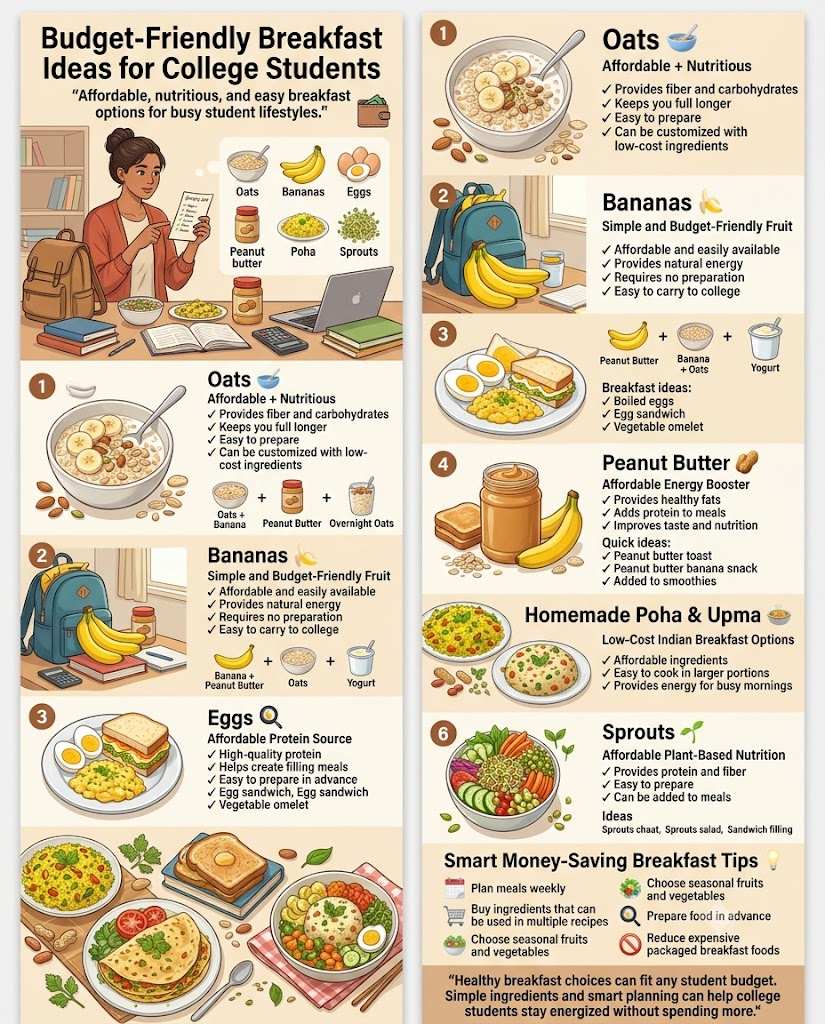
The good news is that eating a healthy breakfast does not always require expensive ingredients or complicated recipes. Many affordable foods provide essential nutrients such as carbohydrates, protein, fiber, vitamins, and minerals that can help support energy and concentration during busy college days.
Here are some budget-friendly breakfast options for students:
Oats
Oats are one of the most affordable and convenient breakfast choices. They are easy to prepare and can be customized with different ingredients based on your preference and budget.
You can prepare oats with:
- Milk or yogurt
- Bananas
- Nuts or seeds
- Seasonal fruits
- Peanut butter
Oats provide fiber and carbohydrates, making them a filling option that can help provide steady energy throughout the morning.
For students living in hostels or managing busy schedules, instant or overnight oats can be a practical breakfast solution.
Bananas
Bananas are an affordable, easily available, and convenient fruit option for college students.
They require no preparation and can be carried easily in a bag, making them useful for students who are rushing to class.
Bananas provide:
- Natural carbohydrates for energy
- Fiber
- Important vitamins and minerals
A banana can be eaten alone or combined with foods like oats, peanut butter, yogurt, or whole-grain toast for a more balanced breakfast.
Eggs
Eggs are a cost-effective source of high-quality protein and can be prepared in several simple ways.
Affordable egg breakfast options include:
- Boiled eggs
- Scrambled eggs
- Egg sandwiches
- Vegetable omelets
Adding eggs to breakfast can make a meal more satisfying and provide protein that supports overall nutrition.
Students can also prepare boiled eggs in advance to save time during busy mornings.
Peanut Butter
Peanut butter is a convenient and affordable source of energy and healthy fats.
It can be added to several quick breakfast options, including:
- Whole-grain toast
- Bananas
- Oats
- Smoothies
A small amount of peanut butter can improve the taste and nutritional value of a simple breakfast while helping students create a more filling meal.
Homemade Poha or Upma
Traditional Indian breakfast options such as poha and upma are affordable, simple to prepare, and suitable for students.
These meals can be made healthier by adding:
- Vegetables
- Peanuts
- Sprouts
- Fresh herbs
- Spices
Poha and upma provide carbohydrates for energy and can be prepared in larger portions, making them practical for students with busy schedules.
Sprouts
Sprouts are a budget-friendly food option that provides protein, fiber, and other nutrients.
They can be eaten as:
- Sprouts chaat
- Sprouts salad
- A filling added to sandwiches or wraps
Sprouts are especially useful for students looking for affordable plant-based nutrition.
Tips for Eating Healthy on a Student Budget
Along with choosing affordable foods, a few simple habits can make healthy eating easier:
- Plan breakfast options before the week begins.
- Buy ingredients that can be used in multiple meals.
- Prepare some foods in advance to save time.
- Choose seasonal fruits and vegetables.
- Avoid spending regularly on expensive packaged breakfast items.
Healthy eating during college does not have to be costly. By choosing simple, affordable ingredients and preparing meals at home whenever possible, students can enjoy nutritious breakfasts while managing their budget effectively.
Breakfast Preparation Tips for Busy Students
For many college students, the biggest challenge is not knowing what to eat but finding enough time to prepare breakfast. Early classes, assignments, exams, and busy routines can make mornings feel rushed.
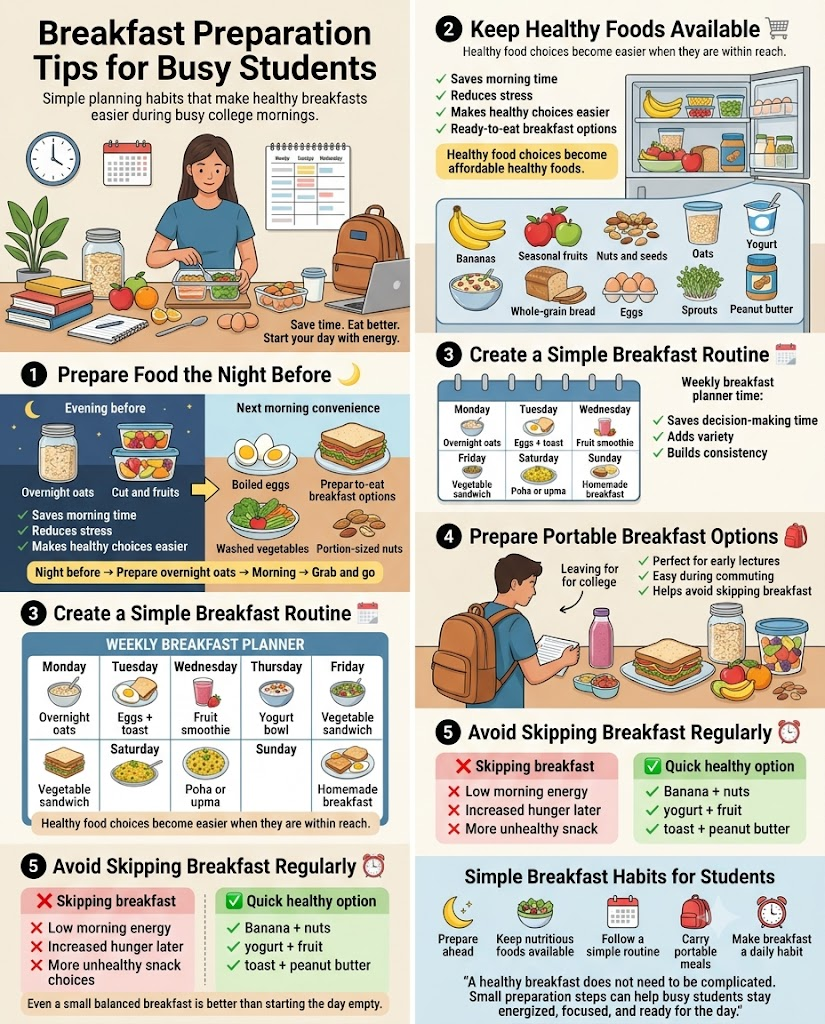
However, with a little planning, students can make healthy breakfast choices easier and more convenient. Preparing ingredients in advance and creating simple routines can help ensure that breakfast becomes a regular part of the day.
Here are some practical breakfast preparation tips for busy students:
Prepare Food the Night Before
Morning schedules are often packed, and preparing breakfast from scratch may feel difficult when you are running late. Preparing some ingredients the night before can save valuable time and make mornings less stressful.
Simple preparation ideas include:
- Soaking oats overnight
- Cutting fruits and storing them properly
- Boiling eggs in advance
- Preparing sandwich fillings
- Washing and storing vegetables
- Portioning nuts or seeds for quick use
For example, preparing overnight oats before sleeping allows you to have a ready-to-eat breakfast in the morning without spending extra time cooking.
Small preparation steps can make it much easier to maintain healthy eating habits during busy college days.
Keep Healthy Foods Available
One of the easiest ways to avoid unhealthy breakfast choices is to keep nutritious foods easily accessible.
When healthy options are available, students are more likely to choose balanced meals instead of skipping breakfast or relying on processed snacks.
Useful foods to keep in your kitchen or hostel room include:
- Fruits such as bananas, apples, or seasonal fruits
- Nuts and seeds
- Oats
- Yogurt
- Whole-grain bread
- Peanut butter
- Eggs
- Sprouts
Having these basic ingredients available allows you to prepare quick meals even on mornings when you have limited time.
Create a Simple Breakfast Routine
You do not need to prepare a completely different breakfast every day. Having a simple routine can make healthy eating easier and reduce decision-making in the morning.
A weekly breakfast rotation can help you stay organized.
Example:
Monday: Overnight oats with fruits
Tuesday: Eggs with whole-grain toast
Wednesday: Fruit smoothie
Thursday: Yogurt bowl with nuts
Friday: Vegetable sandwich
Saturday: Poha or upma
Sunday: Homemade breakfast of choice
A planned routine saves time and helps ensure variety throughout the week.
Prepare Portable Breakfast Options
Some college students have early lectures or long commutes, making it difficult to sit down for breakfast at home.
In such cases, portable breakfast options can be helpful.
Easy carry options include:
- Homemade sandwiches
- Fruit and nuts
- Energy bars made with healthy ingredients
- Smoothies in a travel bottle
- Overnight oats in a container
Preparing portable meals allows students to maintain better nutrition even on busy days.
Avoid Skipping Breakfast Regularly
Occasionally missing breakfast may happen because of a busy schedule, late mornings, or other responsibilities. However, making it a regular habit can make it more difficult to maintain balanced nutrition.
Regularly skipping breakfast may lead to:
- Low energy during morning activities
- Increased hunger later in the day
- Difficulty maintaining regular meal patterns
- Greater dependence on quick, less nutritious foods
To avoid this, keep simple breakfast options available for rushed mornings.
Even a small meal, such as a banana with nuts or yogurt with fruit, can be a better choice than starting the day without any food.
Make Breakfast Simple and Sustainable
The best breakfast routine is one that fits your lifestyle. College students do not need complicated recipes or expensive ingredients to eat well.
By preparing ahead, keeping healthy foods available, and following a simple routine, students can make breakfast a consistent habit that supports energy, concentration, and overall wellness throughout their college years.
Common Breakfast Mistakes College Students Make
While trying to manage busy schedules, many college students develop breakfast habits that may not provide enough nutrition to support their daily activities. Lack of time, limited food options, and rushed mornings can often lead to choices that provide short-term convenience but do not support long-lasting energy and focus.
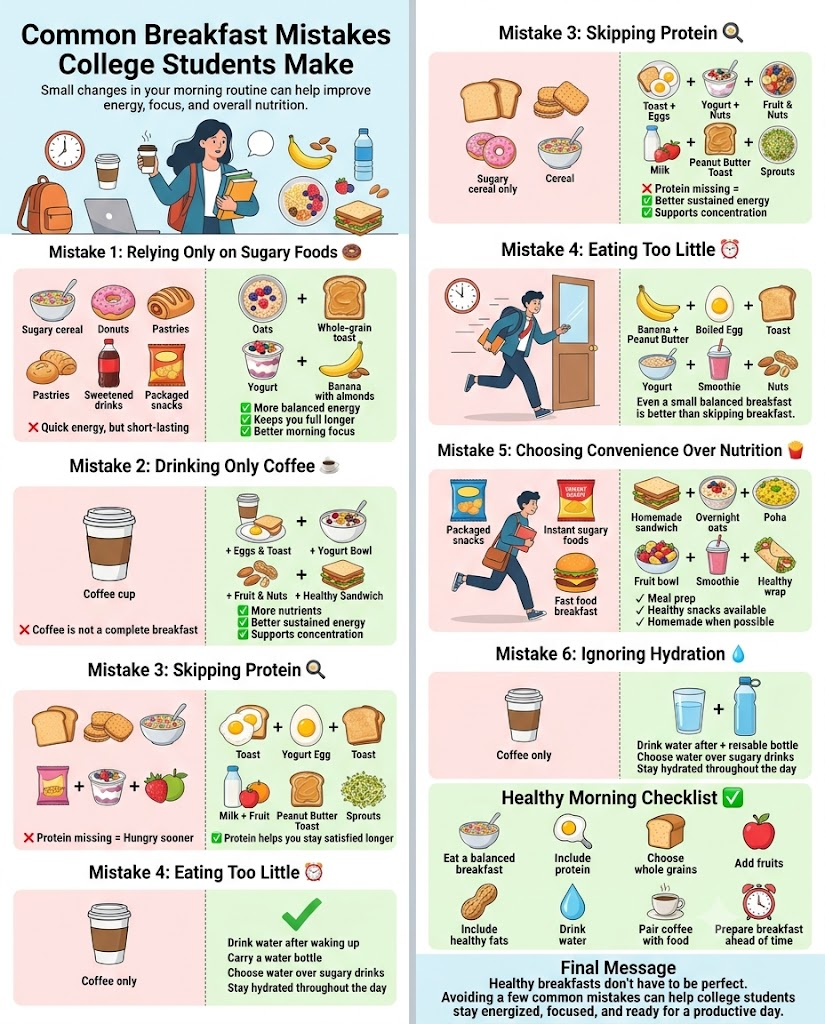
Understanding common breakfast mistakes can help students make small changes and create healthier morning routines without adding too much extra effort.
Relying Only on Sugary Foods
Many students choose quick breakfast options such as sugary cereals, pastries, sweetened beverages, or packaged snacks because they are easy to grab on busy mornings.
While these foods may provide quick energy, they often do not keep you satisfied for a long time. A sudden rise in energy may be followed by a drop that can leave you feeling tired, hungry, or less focused.
Instead of relying only on sugary foods, try combining carbohydrates with protein and healthy fats.
Better options include:
- Oats with fruits and nuts
- Whole-grain toast with peanut butter
- Yogurt with fruits
- Banana with nuts
Adding different food groups creates a more balanced breakfast that provides more sustained energy.
Drinking Only Coffee
Many college students start their day with coffee because it helps them feel more awake, especially during early classes or late study nights.
However, coffee alone does not provide the nutrients your body needs from a balanced breakfast. While it may temporarily increase alertness, it cannot replace foods that provide protein, fiber, vitamins, and minerals.
Instead of having only coffee, try pairing it with a nutritious meal or snack.
Examples:
- Coffee with eggs and toast
- Coffee with a yogurt bowl
- Coffee with a fruit and nut combination
- Coffee with a healthy sandwich
A balanced breakfast along with your morning coffee can provide better overall nutrition.
Skipping Protein
Protein is an important part of a healthy breakfast because it helps support muscle health and keeps you feeling satisfied.
Some students eat breakfasts that contain only carbohydrates, such as bread, biscuits, or sugary cereals, without adding a protein source.
A breakfast without enough protein may leave you feeling hungry again quickly and make it harder to maintain steady energy levels.
Good breakfast protein sources include:
- Eggs
- Yogurt
- Milk
- Nuts
- Peanut butter
- Cottage cheese
- Beans or sprouts
Adding even one protein-rich food can improve the nutritional value of your meal.
Eating Too Little Due to Lack of Time
Busy mornings often cause students to eat very small portions or skip breakfast completely.
While it may not always be possible to prepare a full meal, eating something balanced is usually better than starting the day without food.
Quick options for rushed mornings include:
- A banana with peanut butter
- A handful of nuts with fruit
- Yogurt with oats
- A boiled egg with toast
- A homemade smoothie
Keeping simple foods available can help you avoid skipping breakfast when your schedule becomes busy.
Choosing Convenience Over Nutrition Too Often
Packaged foods and fast breakfast options can be convenient, especially for students living in hostels or managing tight schedules. However, depending on them too frequently may result in a diet that lacks important nutrients.
Try balancing convenience with nutrition by:
- Preparing meals in advance
- Keeping healthy snacks available
- Choosing homemade options when possible
- Including different food groups in your meals
Small improvements can make a big difference over time.
Ignoring Hydration in the Morning
Some students focus only on food and forget about hydration. After several hours of sleep, your body needs fluids to function properly.
Starting the day with water and maintaining hydration throughout the day can support overall wellness.
Simple habits include:
- Drinking water after waking up
- Carrying a reusable water bottle
- Choosing water instead of sugary drinks
A healthy breakfast does not need to be perfect every day. The goal is to create simple habits that provide your body with the nutrients it needs. By avoiding these common mistakes and making small improvements, college students can build breakfast routines that support better energy, focus, and overall health.
Conclusion
A healthy breakfast can make a meaningful difference in the daily routine of college students. With demanding schedules, early classes, assignments, and limited time, choosing quick and nutritious breakfast options can help support energy levels, concentration, and overall wellness throughout the day.
Simple meals such as overnight oats, smoothies, yogurt bowls, eggs with whole-grain toast, vegetable sandwiches, poha, upma, and fruits with nuts can provide important nutrients while fitting easily into a busy student lifestyle. These options are affordable, convenient, and can often be prepared in advance.
The goal is not to create complicated meals or spend a lot of time cooking every morning. Instead, focus on building a consistent habit of starting the day with balanced and nourishing foods.
A few minutes of planning, such as preparing ingredients the night before or keeping healthy foods available, can make breakfast easier to maintain. By making small but consistent choices, college students can stay energized, improve focus, and better manage the challenges of academic and personal life.
Additional Resources
Medical Disclaimer: This article is for informational and educational purposes only. It is not intended to replace professional medical advice, diagnosis, or treatment. Always consult a qualified healthcare provider for medical concerns or before making healthcare decisions.