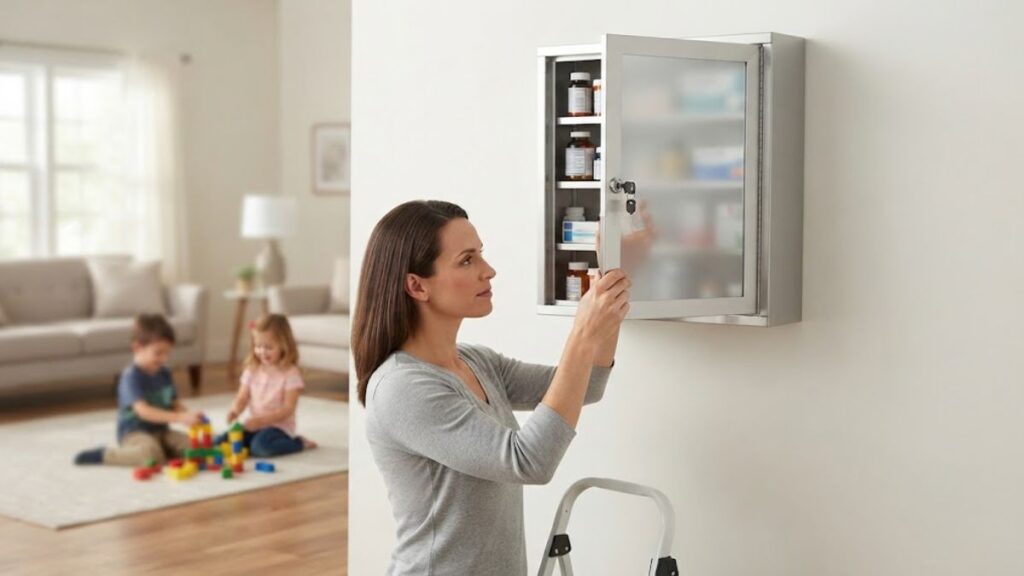
Medicines play an important role in treating illnesses, relieving symptoms, and managing both short-term and long-term health conditions. However, they can also pose serious risks if they are not stored properly.
Young children are naturally curious and often explore their surroundings by opening drawers, cabinets, and containers. Colorful tablets, capsules, gummies, or flavored liquid medicines may look like candy or drinks, making accidental swallowing a real concern.
Even a small amount of certain medications can be harmful if taken accidentally by a child. For this reason, safe medicine storage should be a routine part of every household, especially in homes with young children, visiting grandchildren, or pets.
Proper storage not only helps prevent accidental poisoning but also protects medicines from heat, moisture, direct sunlight, and other environmental conditions that may reduce their quality or effectiveness over time. Keeping medicines organized also makes it easier to find the right medication when needed and helps prevent confusion between different prescriptions or over-the-counter products.
This guide explains how to store medicines safely at home away from children, including the best storage locations, practical storage tips, common mistakes to avoid, safe disposal methods, and simple steps to help keep your household protected.
Why Safe Medicine Storage Is Important
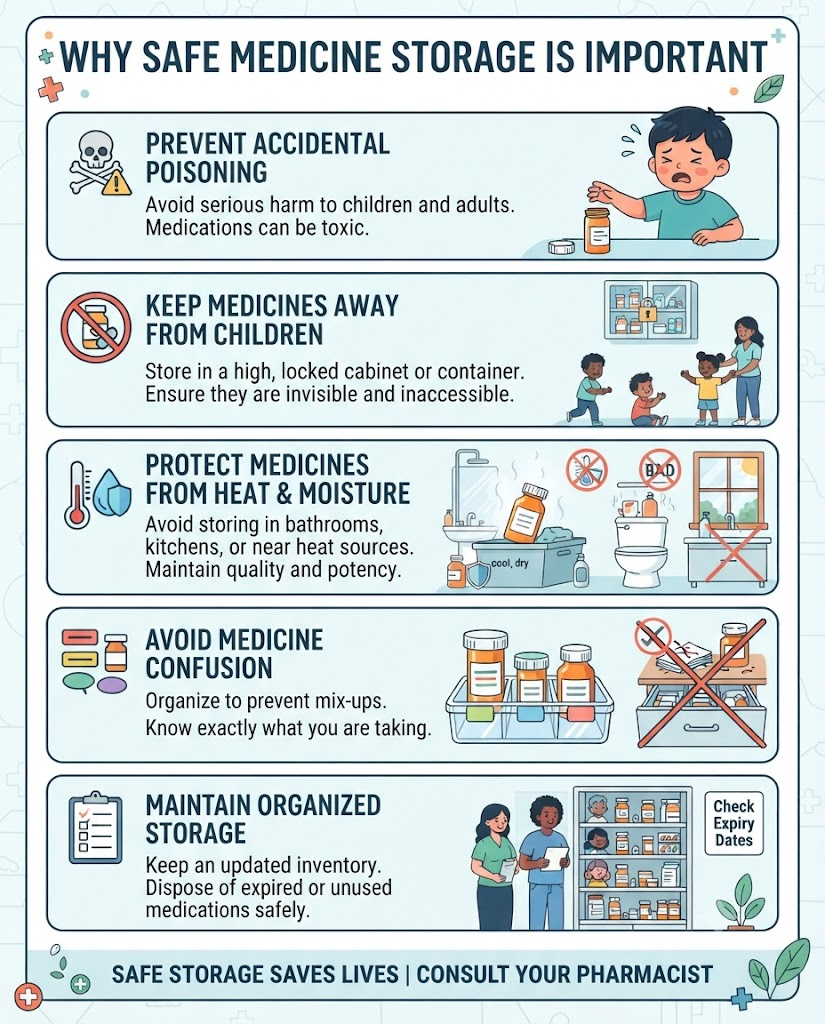
Storing medicines correctly helps protect both your family and the effectiveness of the medications. While adults understand how and when medicines should be used, young children may not recognize the dangers of swallowing tablets or drinking liquid medicine without supervision. Curious children may explore cabinets, drawers, or bags, making it essential to keep all medicines securely stored.
Improper storage can also expose medicines to excessive heat, humidity, direct sunlight, or moisture, which may reduce their effectiveness or shorten their shelf life. Following the storage instructions provided with each medication helps ensure it remains safe and effective until its expiration date.
Safe medicine storage may help:
- Reduce the risk of accidental poisoning
Keeping medicines safely stored lowers the chance of children or pets accidentally swallowing them. - Keep medicines out of children’s reach
Storing medications in high, locked cabinets makes them much harder for young children to access. - Protect medications from heat, moisture, and light
Proper storage conditions help preserve the quality and effectiveness of many medicines. - Prevent confusion between different medicines
Keeping medicines organized and in their original containers makes it easier to identify the correct medication and dosage. - Make it easier to find medications when needed
A well-organized medicine storage area allows adults to quickly locate medicines during illness or emergencies.
Taking a few simple precautions can greatly improve safety at home while helping ensure that medicines remain effective and ready to use when needed.
How to Store Medicines Safely at Home Away From Children
A few seconds of curiosity can lead to a serious accident. Learn how to store medicines safely at home away from children with simple tips to prevent accidental poisoning and keep your family protected.
Choose a Safe Storage Location
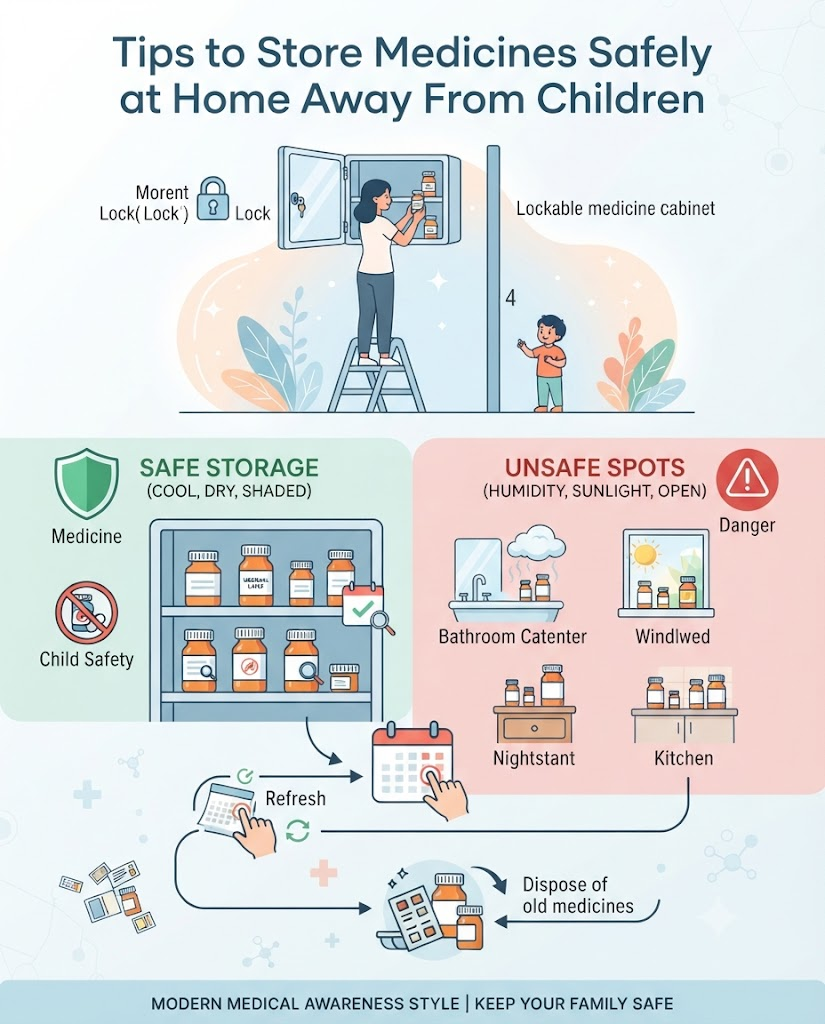
Not every cabinet or drawer is suitable for storing medicines. The ideal location should keep medications safely away from children while also providing the right environmental conditions to maintain their quality. Choosing the proper storage place helps reduce the risk of accidental access and protects medicines from damage caused by heat, moisture, or sunlight.
A good storage location should be:
- High and out of children’s reach: Store medicines on a high shelf or in an upper cabinet where young children cannot easily see or reach them.
- Locked if possible: A locked medicine cabinet provides an extra layer of protection, especially in homes with toddlers or young children.
- Cool and dry: Most medicines should be kept in a cool, dry place away from excess heat and humidity, unless the label provides different storage instructions.
- Away from direct sunlight: Direct sunlight can affect the stability of certain medications, so choose a shaded storage area.
- Easy for responsible adults to access: While medicines should be difficult for children to reach, they should still be easy for adults to find quickly when needed.
Avoid storing medicines in places that experience frequent temperature changes or high humidity, such as bathrooms, near kitchen stoves, windowsills, or inside vehicles. Always follow any specific storage instructions provided on the medication label or packaging.
Keep Medicines in Their Original Containers
Medicines should always remain in the containers provided by the pharmacy or manufacturer unless a healthcare professional advises otherwise. Original packaging is designed to protect the medication and provides important information that helps ensure it is used safely and correctly.
Keeping medicines in their original containers helps:
- Display dosage instructions: The label provides clear directions on how much medicine to take and how often it should be used.
- Show expiration dates: You can easily check whether the medicine is still within its recommended use period.
- Identify the medication correctly: The original label includes the medicine’s name, strength, and other important details, reducing the chance of confusion.
- Reduce the risk of taking the wrong medicine: Keeping medications in their labeled containers helps prevent accidental mix-ups, especially when several medicines look similar.
- Protect medicines from moisture and contamination: Manufacturer-approved containers are designed to help preserve the quality and stability of the medication.
Avoid transferring pills into unmarked containers, plastic bags, or other household containers, as this can increase the risk of mistakes. If you use a pill organizer for daily doses, choose one with clearly labeled compartments and refill it carefully according to your prescribed schedule.
Always Use Child-Resistant Packaging
Many medicines are sold in child-resistant containers that are designed to make it more difficult for young children to open them. These special caps provide an extra layer of protection and can help reduce the risk of accidental poisoning.
However, it is important to remember that child-resistant does not mean childproof. Some children may still be able to open these containers if they have enough time or are left unattended. Safe storage is still essential, even when medicines come in child-resistant packaging.
Always remember to:
- Close the cap tightly after every use: Make sure the cap is securely fastened so the child-resistant mechanism works as intended.
- Check that safety locks are fully engaged: After closing the container, confirm that the locking feature is properly activated.
- Return medicines to their storage place immediately after use: Never leave medicines on a countertop, bedside table, or dining table, even for a short time.
- Never leave medicine bottles open or loosely closed: An unsecured container can be much easier for a child to open and may also expose the medicine to moisture or contamination.
Using child-resistant packaging together with proper storage habits provides the best protection for children and helps keep medicines safe when they are not in use.
Store Medicines Out of Sight and Reach
Children are naturally curious and often explore their surroundings by climbing onto chairs, opening drawers, and searching through bags, purses, or cabinets. Because many medicines are colorful or flavored, children may mistake them for candy or treats. Keeping medicines completely out of sight and reach is one of the most effective ways to help prevent accidental poisoning.
To reduce the risk:
- Store medicines in high cabinets: Choose a cabinet or shelf that young children cannot easily reach, even if they climb on furniture.
- Use locked medicine cabinets when available: A locked cabinet provides an extra level of protection and helps prevent unauthorized access.
- Keep medicines away from countertops: Avoid leaving medications on kitchen counters, bathroom sinks, or tables where children can easily see or reach them.
- Never leave medicines on bedside tables: Medicines left near the bed can be easily accessed by children, especially during visits or while playing.
- Keep handbags containing medicines out of children’s reach: Purses, backpacks, and travel bags often contain medications. Store them in a secure location where children cannot access them.
Remember that vitamins, dietary supplements, herbal products, and even medicated creams should also be stored safely. Although they may seem harmless, some of these products can be dangerous if a child consumes them in large amounts.
Avoid Storing Medicines in the Bathroom
Many people keep medicines in bathroom cabinets because they are easy to access. However, bathrooms are often warm and humid due to showers, baths, and steam. Over time, excess moisture and frequent temperature changes may affect the quality, stability, or effectiveness of certain medications.
For this reason, it is generally better to choose a storage location that stays consistently cool and dry.
Better storage locations include:
- Bedroom closets: A high shelf inside a bedroom closet is often cooler and less humid than a bathroom.
- Hallway cabinets: Hallway storage cabinets located away from heat sources can provide a suitable environment for most medicines.
- Dedicated medicine cabinets outside humid areas: A locked medicine cabinet installed in a cool, dry part of the home offers both safety and proper storage conditions.
- High shelves in cool, dry rooms: Upper shelves in bedrooms or other dry rooms help keep medicines safely out of children’s reach while protecting them from heat and moisture.
Always follow the specific storage instructions provided on the medication label or by your pharmacist. Some medicines require refrigeration, while others should be stored at room temperature in a dry place.
Keep Liquid Medicines Secure
Liquid medicines require extra care because many of them have sweet flavors, bright colors, or appealing textures that may attract young children. A child may mistake a bottle of medicine for a drink or treat, increasing the risk of accidental consumption.
To store liquid medicines safely:
- Keep bottles tightly closed: Always secure the cap properly after every use to prevent children from opening the bottle and to protect the medicine from contamination.
- Store them upright to prevent leaks: Keeping liquid medicine bottles in an upright position helps prevent spills, leaks, and damage to labels.
- Use child-resistant caps: Child-resistant closures provide an additional safety barrier and make it more difficult for young children to access the medicine.
- Return medicines to a secure location immediately after measuring a dose: Do not leave liquid medicines on counters, tables, or near the child’s reach after giving a dose. Put them away as soon as possible.
- Clean up any spills promptly: Wipe up spilled medicine immediately to prevent children from coming into contact with it and to keep the storage area clean.
Always use the measuring device provided with the medicine, such as a dosing cup, syringe, or spoon, to ensure the correct amount is given. Avoid using regular household spoons, as they may not provide accurate measurements.
Refrigerate Medicines Only When Required
Some medications require refrigeration to maintain their effectiveness, while many others should be stored at room temperature. Keeping medicines in the refrigerator when it is not required may not always be beneficial and could affect certain products.
Always check the medication label or follow your healthcare provider’s instructions to understand the correct storage conditions.
If refrigeration is necessary:
- Follow the storage temperature listed on the label: Keep the medicine within the recommended temperature range to help maintain its quality and effectiveness.
- Keep medicines away from food when possible: Store medications separately from food items to reduce the risk of confusion, spills, or accidental use.
- Store them in a secure container or designated area: Use a sealed container or a specific refrigerator section to keep medicines organized and protected.
- Keep refrigerated medicines out of children’s reach: Even when stored in the refrigerator, medicines should be placed where children cannot easily access them.
- Do not freeze medicines unless specifically instructed: Freezing may damage some medications and affect how they work. Only freeze a medicine if the storage instructions specifically recommend it.
Regularly check refrigerated medicines for expiration dates and proper packaging to ensure they remain safe and suitable for use.
Store Medicines Separately From Household Products
Medicines should never be stored alongside cleaning products, chemicals, pesticides, or other potentially hazardous household substances. Keeping these items together can increase the risk of accidental mix-ups, especially when containers look similar or are stored in the same area.
A separate storage space for medicines helps create a safer and more organized home environment.
Keeping medicines separate helps:
- Prevent accidental mix-ups: Storing medicines away from chemicals and household products reduces the chance of grabbing the wrong container during daily use.
- Reduce contamination risks: Separate storage helps protect medicines from exposure to cleaning chemicals, spills, or other substances that could affect their safety.
- Improve organization: A dedicated medicine storage area makes it easier to locate medications quickly and check supplies regularly.
Use a clearly designated storage area only for medicines, such as a locked cabinet or secure shelf. Keeping medications organized and separated from other household products is a simple step that can improve safety for everyone at home.
Keep an Updated Medicine List
Maintaining an updated list of medications can make it easier to manage your household’s medicine supply and ensure that important information is available when needed. A clear record helps prevent confusion, especially in homes where multiple family members use different medicines.
A medicine list can also be useful during medical appointments or emergencies, as it allows healthcare professionals to quickly understand what medications are being used.
Include:
- Medication name: Record the full name of each medicine to avoid confusion between similar-looking products.
- Purpose: Note what the medicine is used for, such as pain relief, allergy management, or treatment of a specific health condition.
- Dosage: Include the recommended dose and instructions for use as provided by a healthcare professional or the medication label.
- Expiration date: Tracking expiration dates makes it easier to remove outdated medicines and replace them when necessary.
- Storage requirements: Note whether the medicine needs special storage conditions, such as refrigeration or protection from light and moisture.
Review the medicine list regularly and remove expired or unused medications. Keeping the information updated helps maintain a safer, more organized medicine storage system at home.
Check Expiration Dates Regularly
Medicines should be inspected every few months to ensure they remain safe, effective, and suitable for use. Over time, medications may lose their effectiveness, especially if they have been exposed to improper storage conditions such as heat, moisture, or sunlight.
Regular checks also help keep your medicine storage area organized and prevent expired products from being used accidentally.
During each inspection:
- Remove expired medications: Check expiration dates on all medicines and safely dispose of any products that are past their recommended use date.
- Check for damaged packaging: Look for cracked bottles, broken seals, damaged blister packs, or containers that are no longer properly closed.
- Look for discoloration or unusual odors: Changes in color, texture, smell, or appearance may indicate that a medicine has been affected and should not be used.
- Replace medicines that appear compromised: If a medication looks damaged or has been stored incorrectly, replace it or ask a pharmacist for guidance.
Never use medications that have expired or appear damaged unless advised by a healthcare professional. Keeping medicines regularly checked helps ensure that your family has safe and effective supplies available when needed.
How to Dispose of Expired or Unused Medicines Safely
Unused or expired medicines should be disposed of properly to reduce the risk of accidental use, especially by children or pets. Keeping old medicines stored at home for long periods can increase the chance of confusion, misuse, or accidental ingestion.
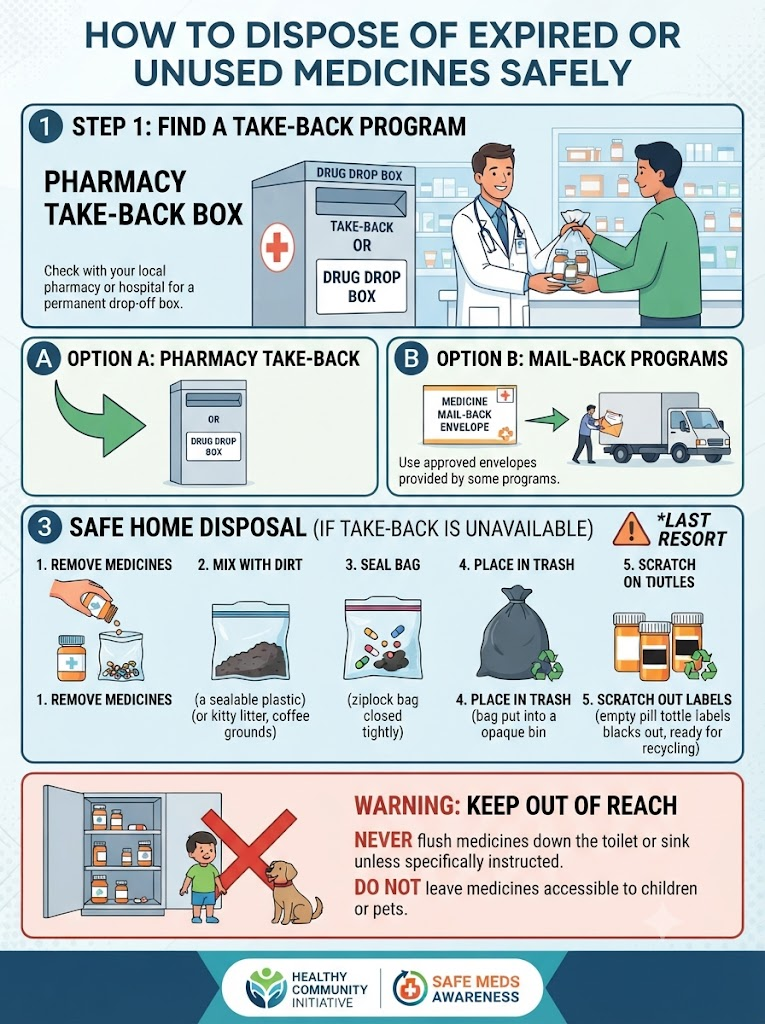
Safe disposal helps protect your household and prevents unnecessary exposure to medications that are no longer needed or suitable for use.
Safe disposal methods may include:
- Using local medicine take-back programs: Many communities offer collection programs where unused or expired medicines can be safely returned for proper disposal.
- Following disposal instructions on the medication label: Some medicines include specific guidance about how they should be discarded. Always check the packaging before disposing of them.
- Consulting your pharmacist about safe disposal options: Pharmacists can provide advice on the best way to dispose of certain medications, especially those requiring special handling.
Avoid keeping expired medicines in easily accessible places, such as kitchen counters, drawers, or bags. Never leave unused medications where children or pets can reach them.
Regularly removing unnecessary medicines helps maintain a safer and more organized home medicine storage system.
Teach Teach Children About Medicine Safety
Education is an important part of preventing accidental medicine-related injuries. While safe storage is essential, teaching children about medicine safety helps them understand that medicines are not toys or treats.
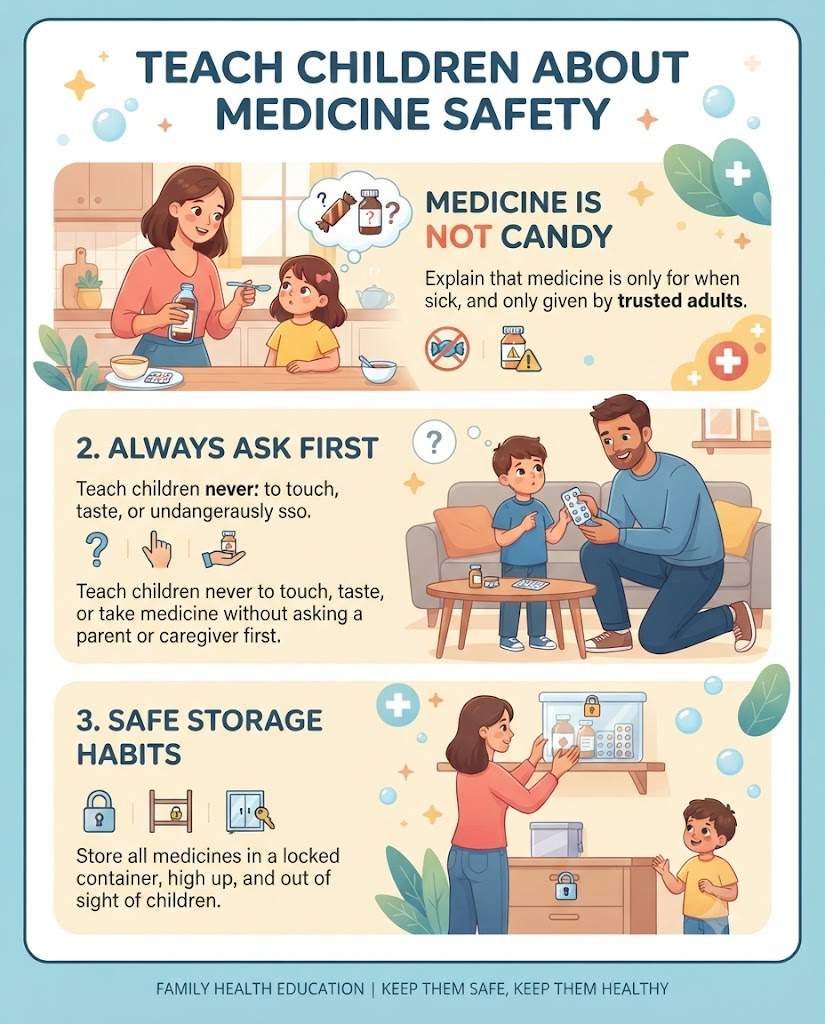
Children are naturally curious, so simple and clear conversations can help them develop safe habits from an early age.
Teach children that:
- Medicine is not candy: Explain that even if medicine looks colorful or tastes sweet, it is not a snack and can be harmful if taken without proper guidance.
- They should never take medicine without an adult: Children should understand that only a parent, caregiver, or healthcare professional should decide when medicine is needed.
- They should tell an adult if they find medicine: Encourage children to inform a trusted adult if they discover pills, bottles, or any medicine lying around.
- Only trusted adults should give medicine: Help children understand that medicines should only come from responsible adults and should never be shared with others.
Simple, age-appropriate conversations can help reinforce safe habits and make children more aware of the importance of medicine safety. Regular reminders are especially helpful as children grow and become more independent.
Common Mistakes to Avoid
Avoiding common medicine storage mistakes can greatly improve safety at home and reduce the risk of accidental poisoning, incorrect use, or damaged medications. Small oversights, such as leaving a bottle on a counter or forgetting to check expiration dates, can create unnecessary risks.
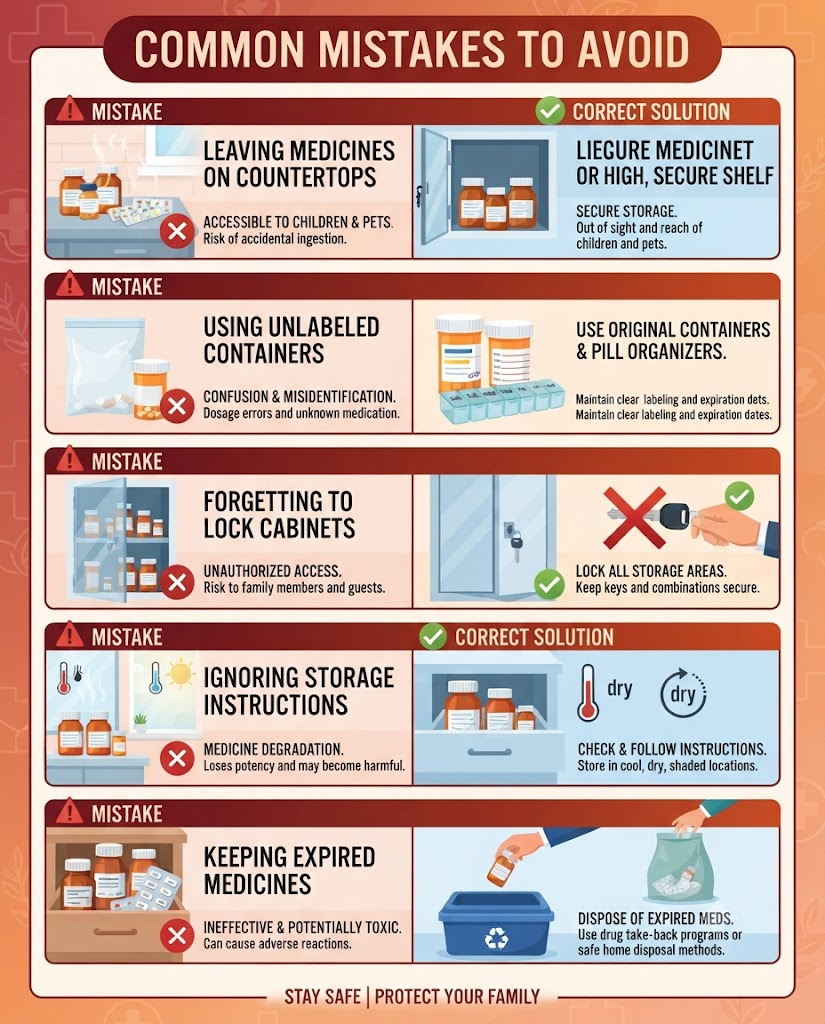
Avoid these common medicine storage mistakes:
Leaving Medicines Within Reach
Never leave medicines on kitchen counters, bedside tables, dining tables, or inside handbags where children can easily find them.
Children may quickly access medicines that appear harmless, especially colorful tablets, gummies, or flavored liquids. Always return medicines to a secure storage location immediately after use.
Using Unlabeled Containers
Removing medicines from their original containers can lead to confusion, incorrect dosing, and accidental misuse.
Original packaging provides important information such as:
- Medicine name
- Dosage instructions
- Expiration date
- Storage requirements
- Safety warnings
If you use a pill organizer, make sure it is clearly labeled and used carefully.
Forgetting to Lock Storage Areas
If your medicine cabinet has a lock, use it consistently. A locked storage area provides an additional layer of protection, especially in homes with young children.
Do not rely only on placing medicines in high locations, as children may climb or find ways to reach stored items.
Ignoring Storage Instructions
Different medicines may require different storage conditions. Some need refrigeration, while others should be protected from moisture, heat, or direct sunlight.
Always read the storage instructions carefully and follow the guidance provided on the medication label or by a healthcare professional.
Keeping Expired Medicines
Expired medications may not work as intended and should be removed from your medicine supply regularly.
Keeping old medicines increases the risk of accidental use or confusion with current medications. Check expiration dates periodically and dispose of expired products safely.
Creating safe storage habits and avoiding these common mistakes can help keep your household protected while ensuring medicines remain effective when needed.
Tips for Maintaining Safe Medicine Storage
Keeping medicines organized and properly stored helps improve both safety and convenience. A well-maintained medicine storage system makes it easier to find the right medication when needed while reducing the risk of accidental misuse.
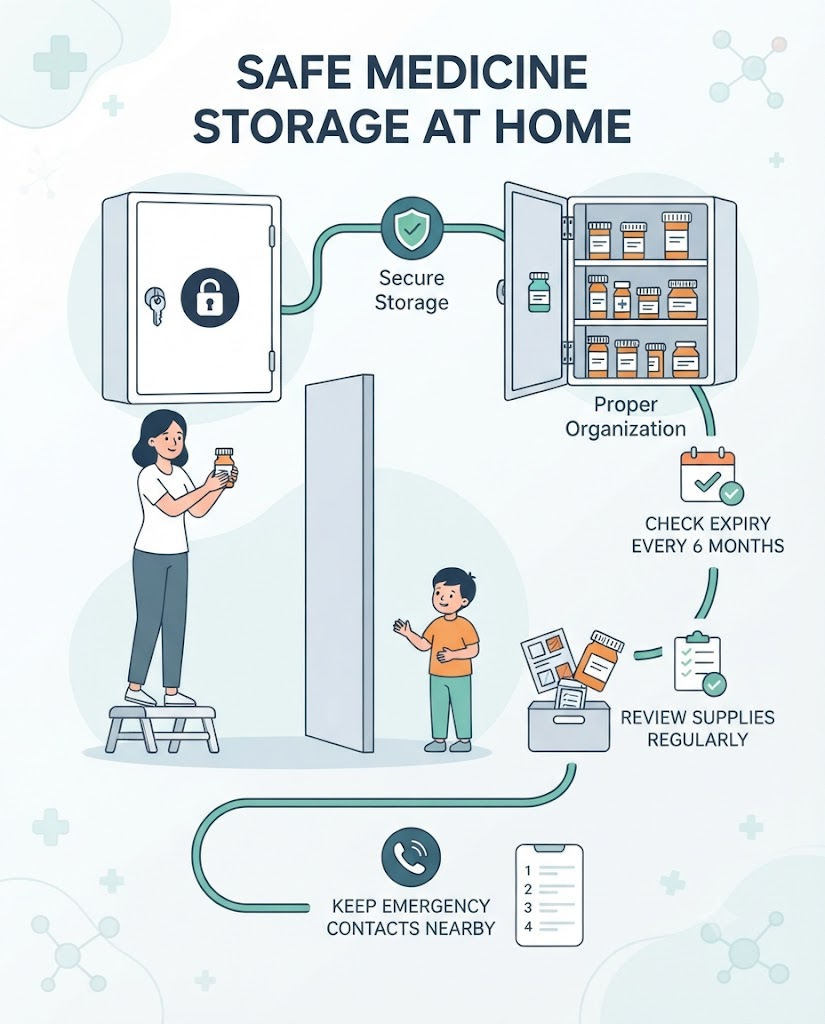
Developing simple, consistent habits can help keep your household medicine supply safe.
Helpful habits include:
- Check medicines every six months: Regularly review your medicine collection to remove expired products, check packaging, and ensure supplies are still needed.
- Lock medicines away after every use: Always return medicines to their secure storage location immediately after taking or giving a dose.
- Keep medicines in their original packaging: Original containers provide important information such as dosage instructions, expiration dates, and storage requirements.
- Read storage instructions before storing new medications: Different medicines may have different requirements, so check labels carefully before deciding where to keep them.
- Store medicines away from heat and humidity: Choose a cool, dry location away from direct sunlight, moisture, and temperature changes.
- Keep emergency phone numbers easily available: Maintain a list of important contacts, such as healthcare providers, emergency services, and poison control resources, where adults can quickly find them.
- Review your medicine supply regularly: Organize medications periodically and remove items that are expired, unused, or no longer required.
Consistency is the key to maintaining a safe home environment. Small storage habits followed regularly can help protect children, preserve medicine quality, and ensure medications are available when they are truly needed.
Conclusion
Knowing how to store medicines safely at home away from children is an important part of preventing accidental poisoning and protecting your family’s health. Children are naturally curious, and even a small mistake in medicine storage can create unnecessary risks.
Choosing a secure storage location, keeping medicines in their original containers, using child-resistant packaging, checking expiration dates regularly, and teaching children about medicine safety can significantly reduce the chances of accidental misuse.
Safe medicine storage does not require complicated changes. Simple habits, such as returning medicines to their proper place after every use, keeping them away from heat and moisture, and reviewing your medicine supply regularly, can make a big difference.
By following these practical storage practices, you can help ensure that medications remain safe, effective, and available when they are needed most while creating a safer environment for everyone at home.
Medical Disclaimer: This article is for informational and educational purposes only. It is not intended to replace professional medical advice, diagnosis, or treatment. Always consult a qualified healthcare provider for medical concerns or before making healthcare decisions.